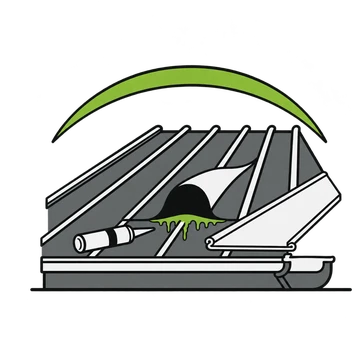
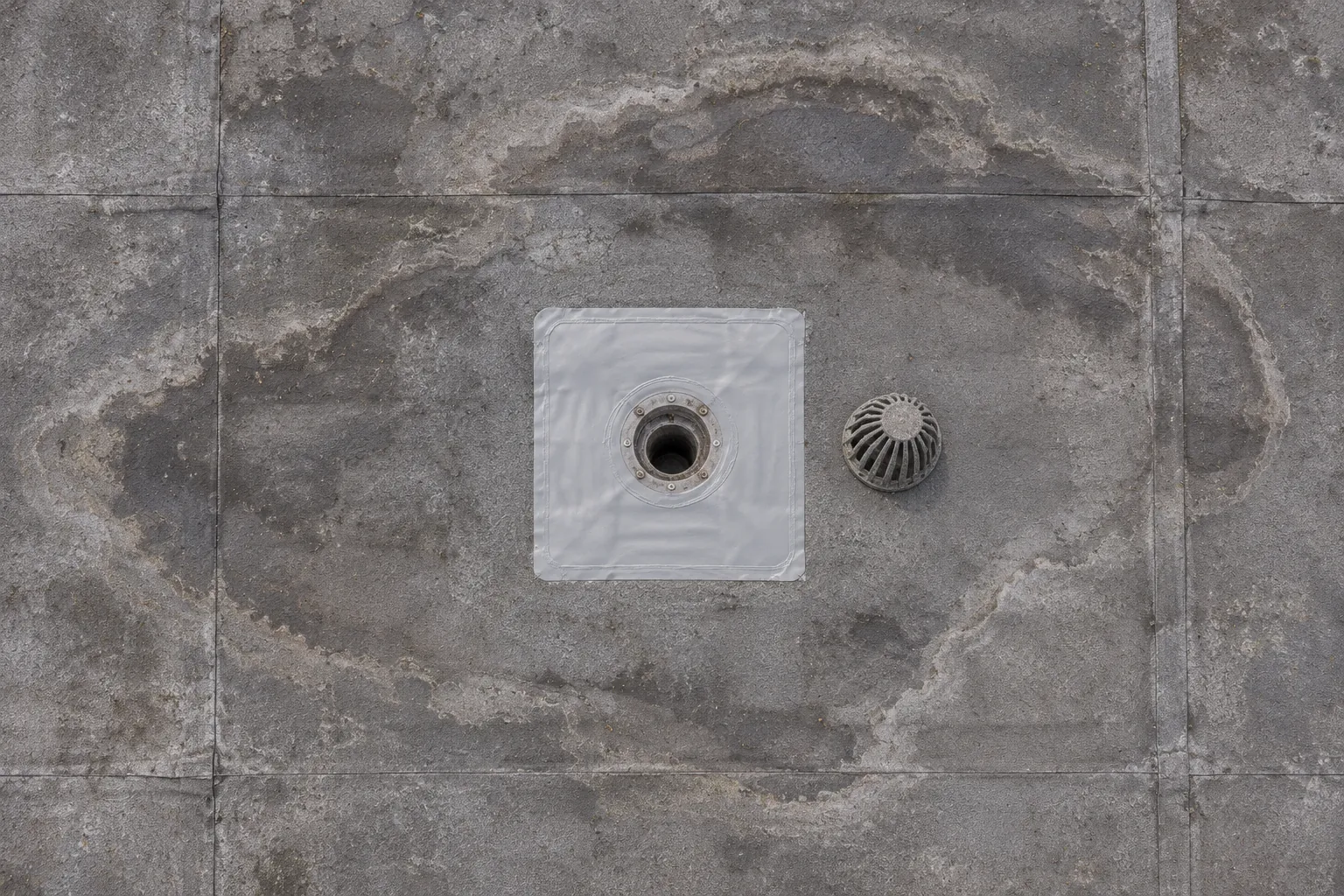
Exhaust Deposits on Membrane
Grease, flour, and process residue from exhaust fans settle around the curb and soften or shrink some membranes. The damaged ring around the fan needs new material once the source is understood.
As a York industrial roof repair contractor, we repair flashing, membrane, and drains on plant roofs crowded with equipment, staging the work around production below.
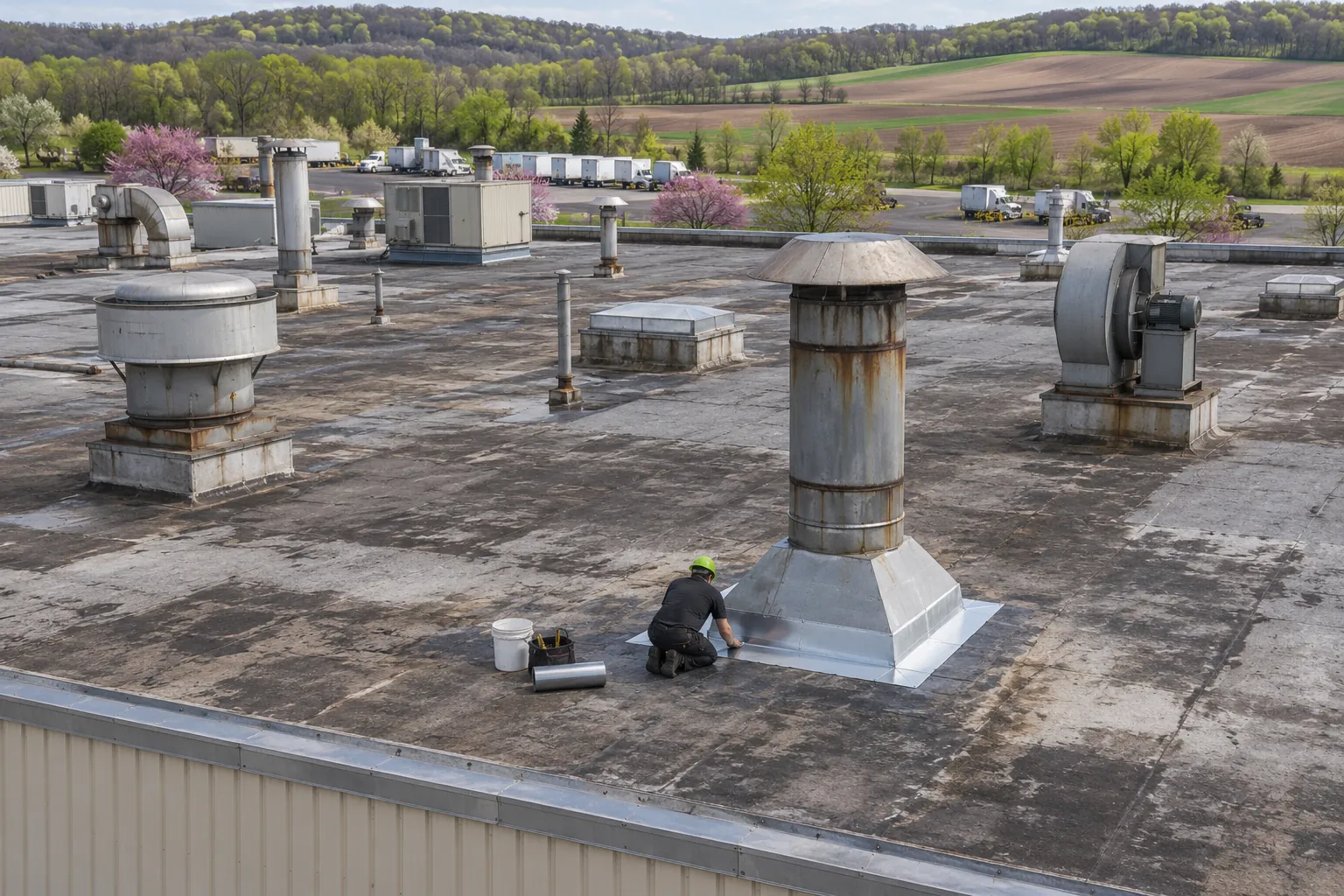
Before a York industrial roof repair visit, compare what you see around the equipment with the job it usually leads to.
| What You See | Detail Repair | Section Rebuild | Equipment Work First |
|---|---|---|---|
| Cracked flashing at one stack collar | Usually Fits | Rarely | Rarely |
| Membrane softened by exhaust residue around a fan | Sometimes | Usually Fits | Sometimes |
| Seams torn along a service path | Usually Fits | Sometimes | Rarely |
| A curb that rocks when the unit runs | Sometimes | Rarely | Usually Fits |
| Wet insulation spreading from several equipment curbs | Rarely | Usually Fits | Rarely |
Equipment problems such as a loose fan base get fixed by the mechanical contractor first, so the roof repair around that curb holds once it is done.
Plant roofs carry loads and traffic that ordinary warehouse roofs never see, and these conditions follow.
Grease, flour, and process residue from exhaust fans settle around the curb and soften or shrink some membranes. The damaged ring around the fan needs new material once the source is understood.
Fans and process units shake their curbs every shift. That movement cracks base flashing and pulls fasteners at the corners where the curb meets the deck.
Dropped tools, ladders, and repeated foot traffic puncture membrane along the routes technicians take between units. Walkway pads along those routes cut the damage.
Filters, packaging, and residue collect at drains near equipment and hold water against the membrane and the drain flashing.
Hot exhaust stacks dry out storm collars and sealant at the flashing. Cracked collars let water run straight down the stack into the building.
Years of small leaks at curbs soak the insulation around them, which keeps feeding leaks after the flashing is fixed until the wet boards are replaced.
Production rules shape access and timing, while the roof damage sets the repair itself.
We work out which roof areas can be reached during production, which need a shutdown window, and where interior protection goes first.
Roof access, material lifts, and paths around hot or moving equipment are agreed with your safety contact ahead of the visit.
Cleaning methods for exhaust fans and residue are matched to the roof system so servicing stops damaging the membrane.
Notes on deposits, movement, and traffic go into a maintenance record so repeat causes get fixed instead of patched again.
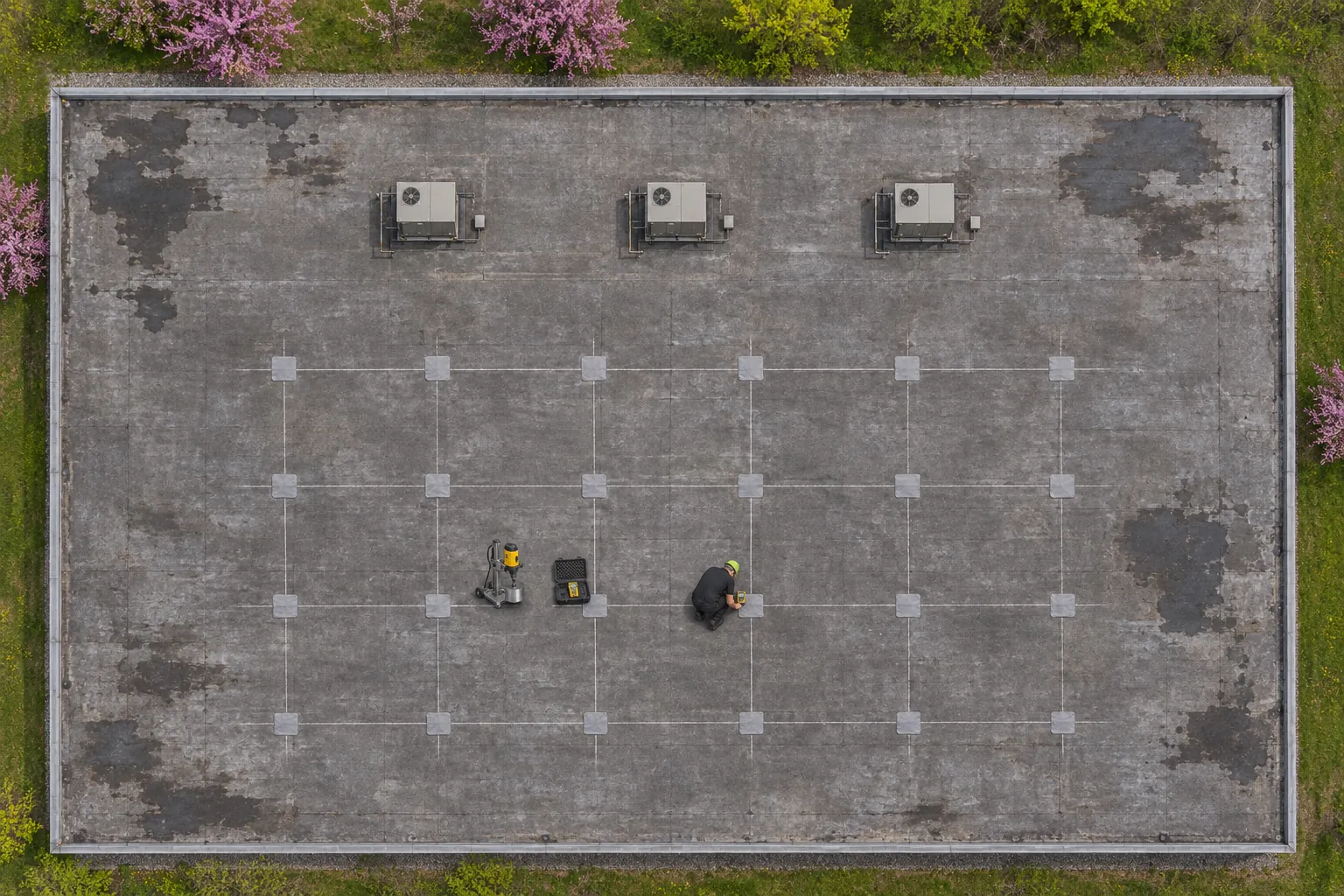
Repairs planned around equipment protect production as much as the roof.
Sealing curbs and stacks keeps water away from controls, conveyors, and product zones under the equipment.
Replacing residue-damaged membrane stops the damage from spreading outward from each fan.
Recorded causes let your maintenance staff deal with deposits and traffic before they become leaks.
Walkway pads and clear drains make the paths technicians use less likely to tear the roof.
Call us with the area, the equipment above it, and any shutdown windows coming up. We will plan the roof visit around them.
Four steps move a plant roof repair from planning to finished flashing.
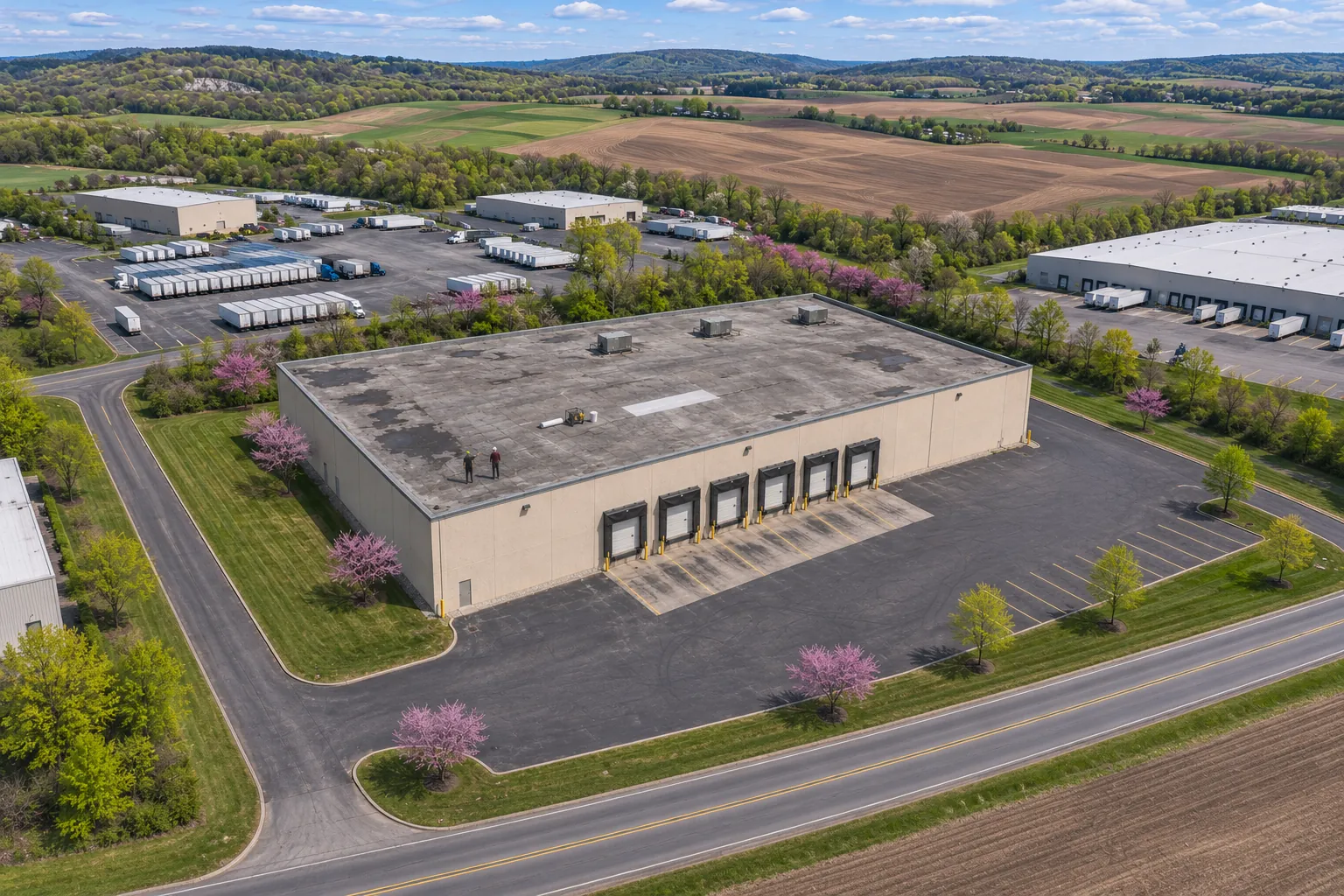
Before the visit we confirm roof access, restricted zones, hot work rules, and any equipment that must be shut down near the work.
Stack collars, fan curbs, ductwork supports, drains, and service routes are checked, with core cuts where moisture is suspected.
Your price comes from tracing, the roof system, damage size and count, core results, flashing, drains, access, and repair or section replacement, with staging explained.
Flashing and membrane are rebuilt, drains are cleared, and the causes we found go into a record for your maintenance staff.
Plant properties often mix flat, metal, and equipment-heavy roof areas.
Membrane seams, drains, and blisters on the flat sections between equipment.
Flat roof repair details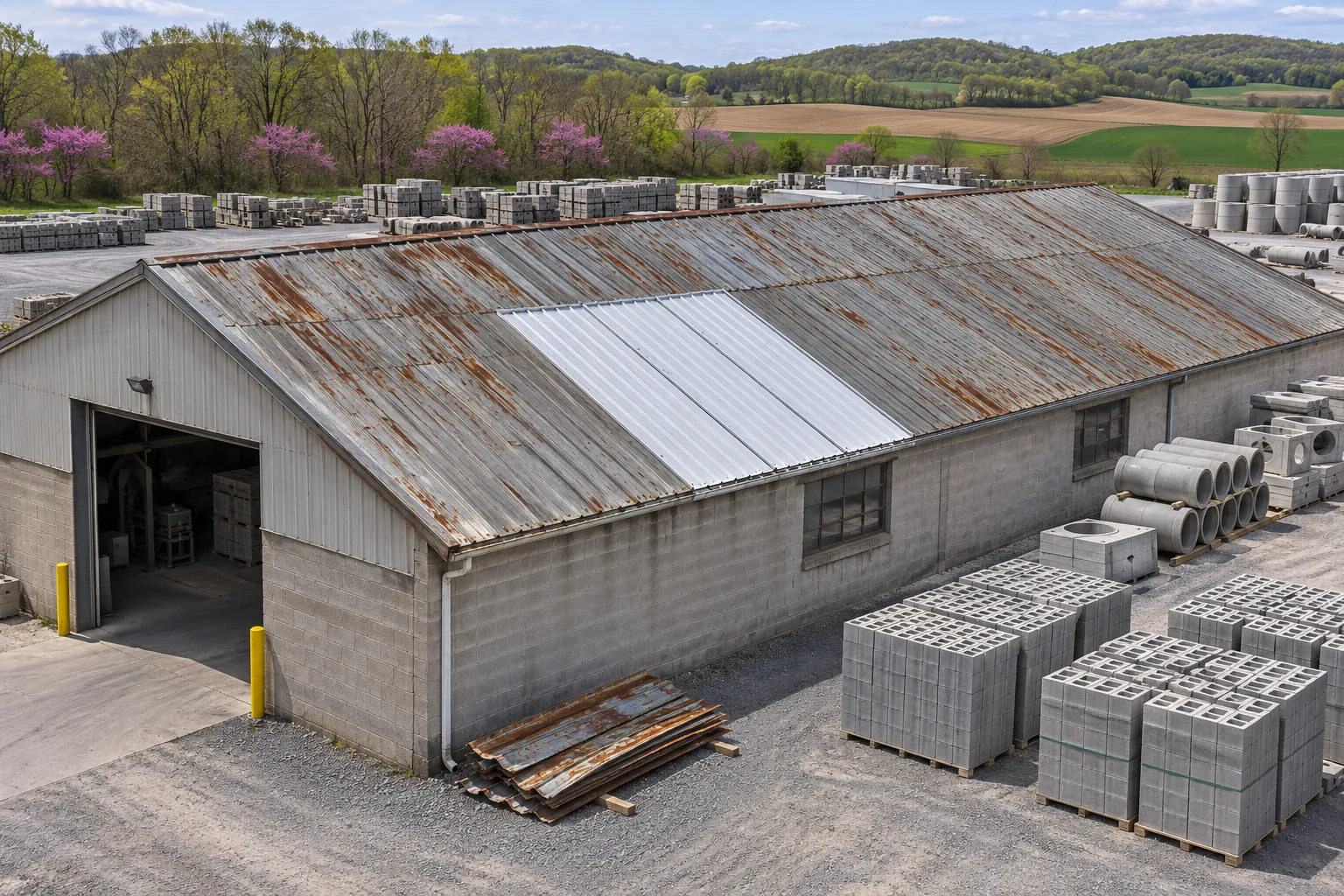
Panel ends and fasteners on metal warehouses and additions beside the plant.
Metal roof repair details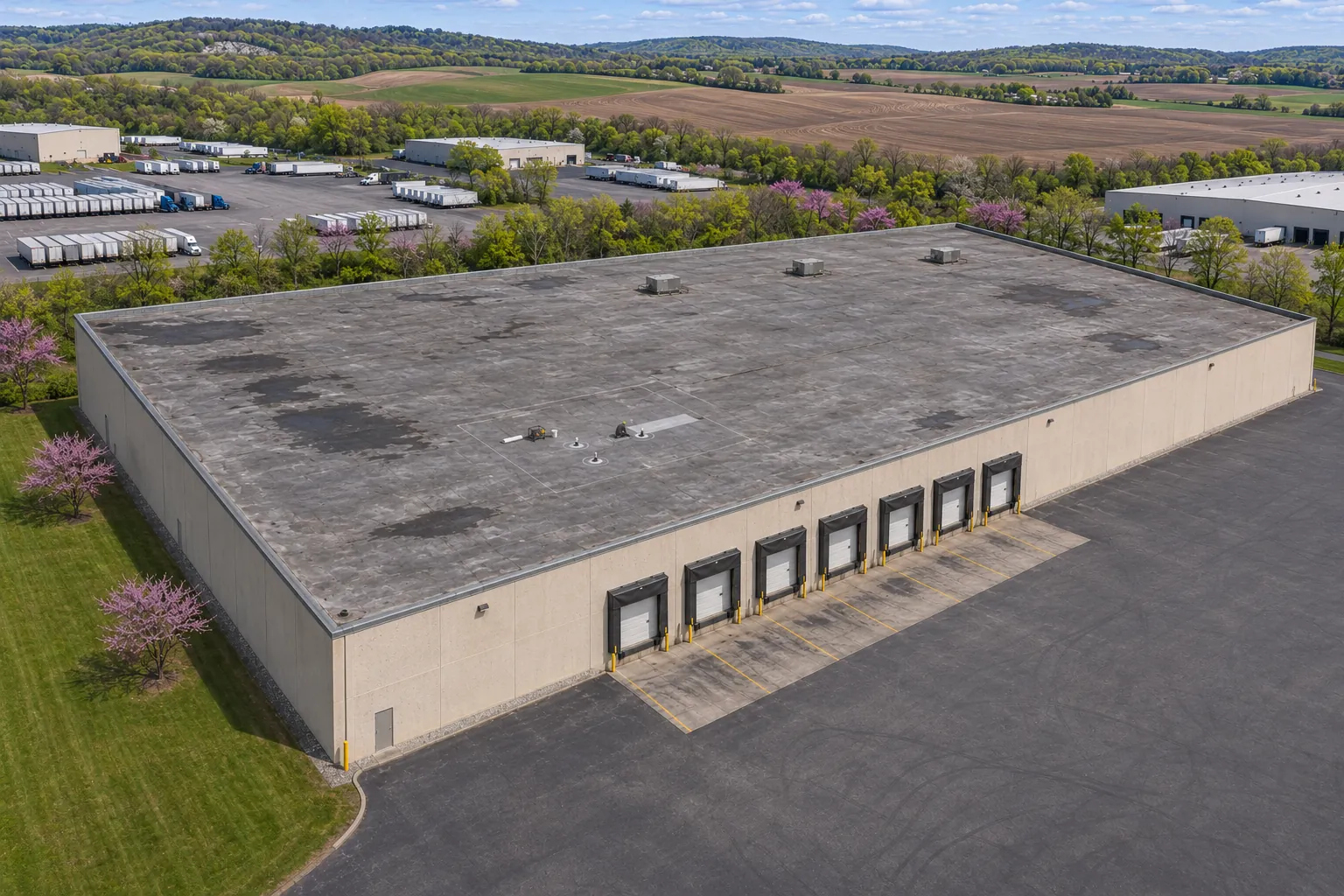
Leak tracing when water shows inside and the source is unclear.
Leak repair detailsAnswers on upkeep, inspections, cost, and what to share before a plant roof visit.
Upkeep around exhaust equipment should deal with deposits, flashing condition, and clear drainage without harming the roof materials. We inspect what servicing has done to the roof and coordinate cleaning methods with the roof system. A good maintenance plan also records recurring contamination or movement, so those causes get fixed.
Often, yes, by comparing roof findings with moisture evidence and recent weather. We ask when the area was last wet and whether equipment operation affects it. A stain on its own does not prove an active roof opening, but it is a useful marker for where to look next.
Production restrictions affect access and sequencing, while the inspected roof damage sets the repair itself. Our on-roof inspection builds the price from leak tracing, the roof system, damage size and count, core-cut moisture findings, flashing and drains, access, and repair versus section replacement.
Share the reported leak locations, access arrangements, and any restrictions around production areas. Roof records and recent equipment work help too. Those details prepare the investigation, while the repair recommendation still rests on what is found on the roof and inside the affected assembly.
Many plants schedule a roof walk in spring and fall, plus a check after major storms and after equipment work on the roof. Heavy exhaust or process loads can justify more frequent looks around the busiest curbs. The right interval follows how fast deposits build up and how much service traffic the roof sees.
Yes, and shutdown weeks are often the best time for work next to exhaust stacks, process fans, and hot equipment. We inspect ahead of the shutdown, order matching materials, and stage the repair so the curbs that need the equipment off are finished while it is off.
Tell us about the plant, the equipment on the roof, and your shutdown windows. We will inspect and price the repair around how your plant runs.