Lifted Curb Flashing
Panels removed for fan cleaning get set back without resealing the curb cap or counterflashing, leaving an opening at the corner.
As an Elizabethtown commercial roof repair contractor, we inspect fan curbs and exhaust flashing on food plant roofs and repair what servicing and residue have damaged.
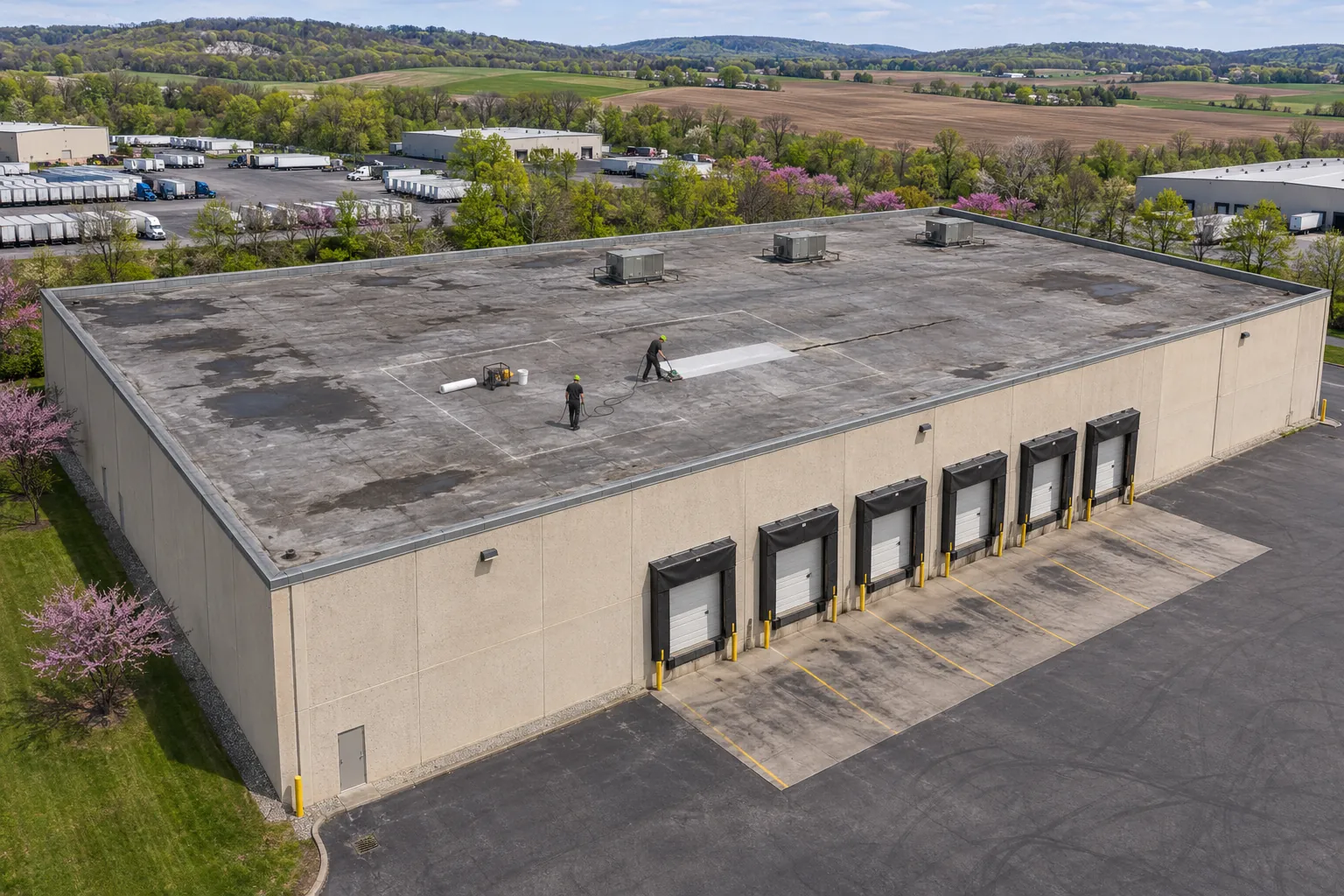
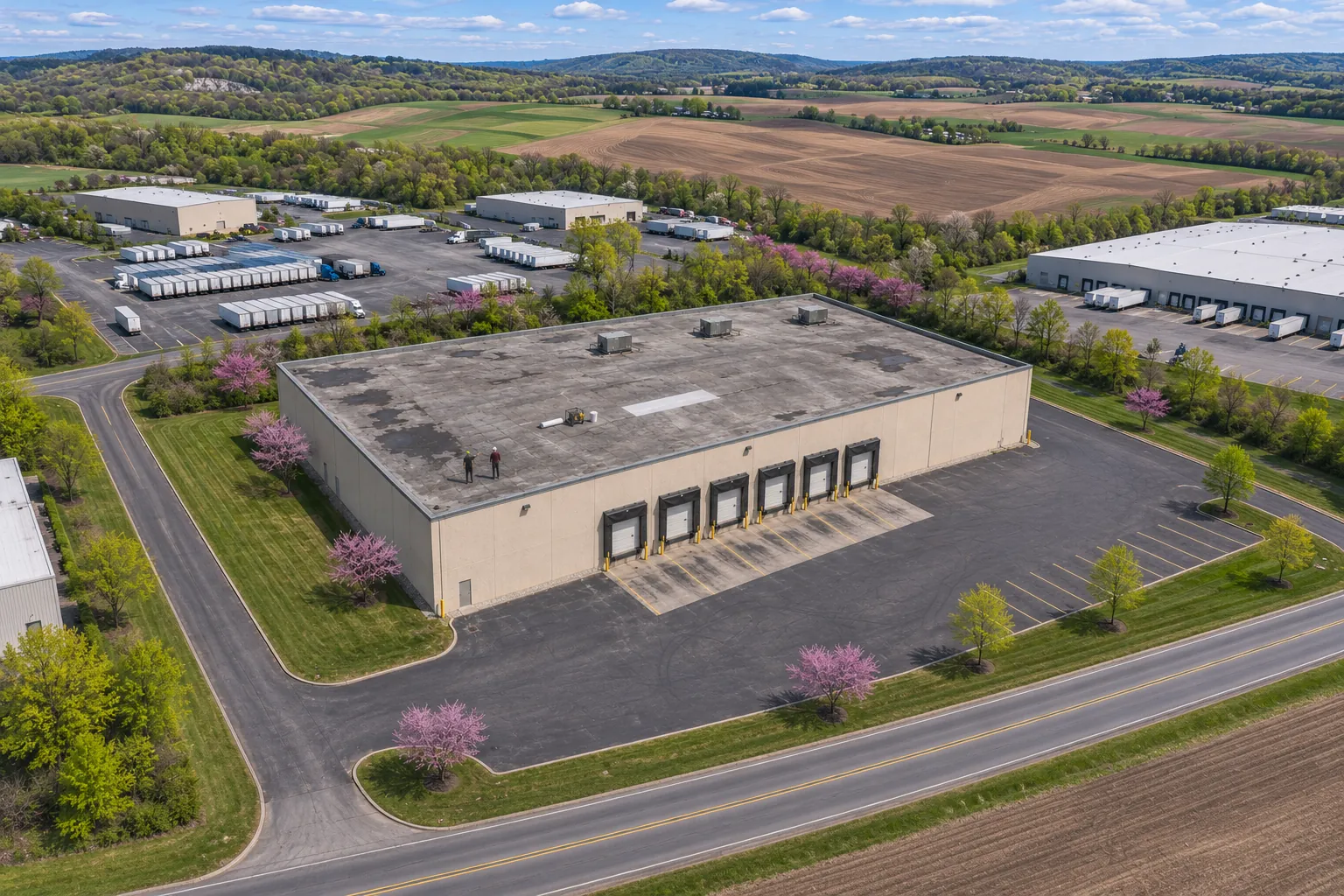
Elizabethtown commercial roof repair calls at food plants often follow a visit from the exhaust service crew.
Cleaning and servicing exhaust fans can lift curb flashing, crack storm collars, drop tools on the membrane, or leave drain lines emptying onto the roof. A leak that starts the week after service points us to those spots first.
Timing is a clue, so we compare our findings with the service work performed. The repair still follows the actual water path, which sometimes leads to an older defect the servicing never touched.
Food plant roofs in Elizabethtown wear in ways tied to the equipment above production.
Panels removed for fan cleaning get set back without resealing the curb cap or counterflashing, leaving an opening at the corner.
Heat and handling crack the collars on exhaust stacks, and water runs straight down the stack into the room below.
Residue from cooking and frying exhaust settles around the fan and softens some membranes until they split.
Condensate and wash lines that end on the membrane keep one spot wet and push water toward the nearest seam.
Tools and parts dropped between the hatch and the fans leave small punctures that leak weeks later.
Repeated small leaks at fan curbs soak the boards around them, so leaks continue after the curb is resealed.
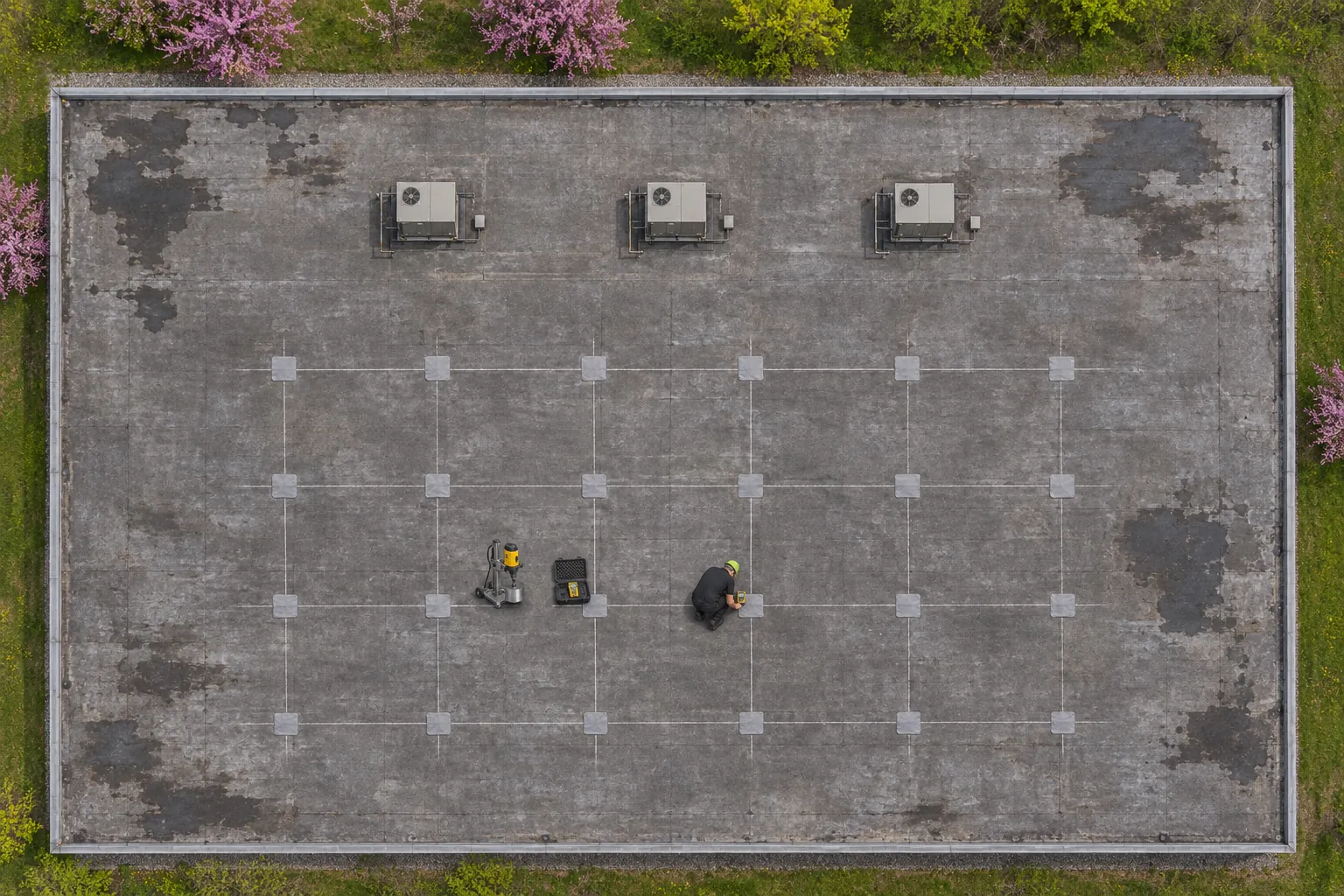
Leaks over food production carry costs beyond the roof itself.
Stopping water at fan curbs keeps drips out of processing and packaging rooms below the equipment.
Replacing residue-damaged membrane stops each fan's damaged ring from spreading across the roof.
Recorded findings let your exhaust service crew see what their visits to the roof disturb and adjust how they work.
Rerouted drain lines and clear outlets keep water moving away from curbs and seams.
The four repair services, as they apply to Elizabethtown food plants and their neighbors.
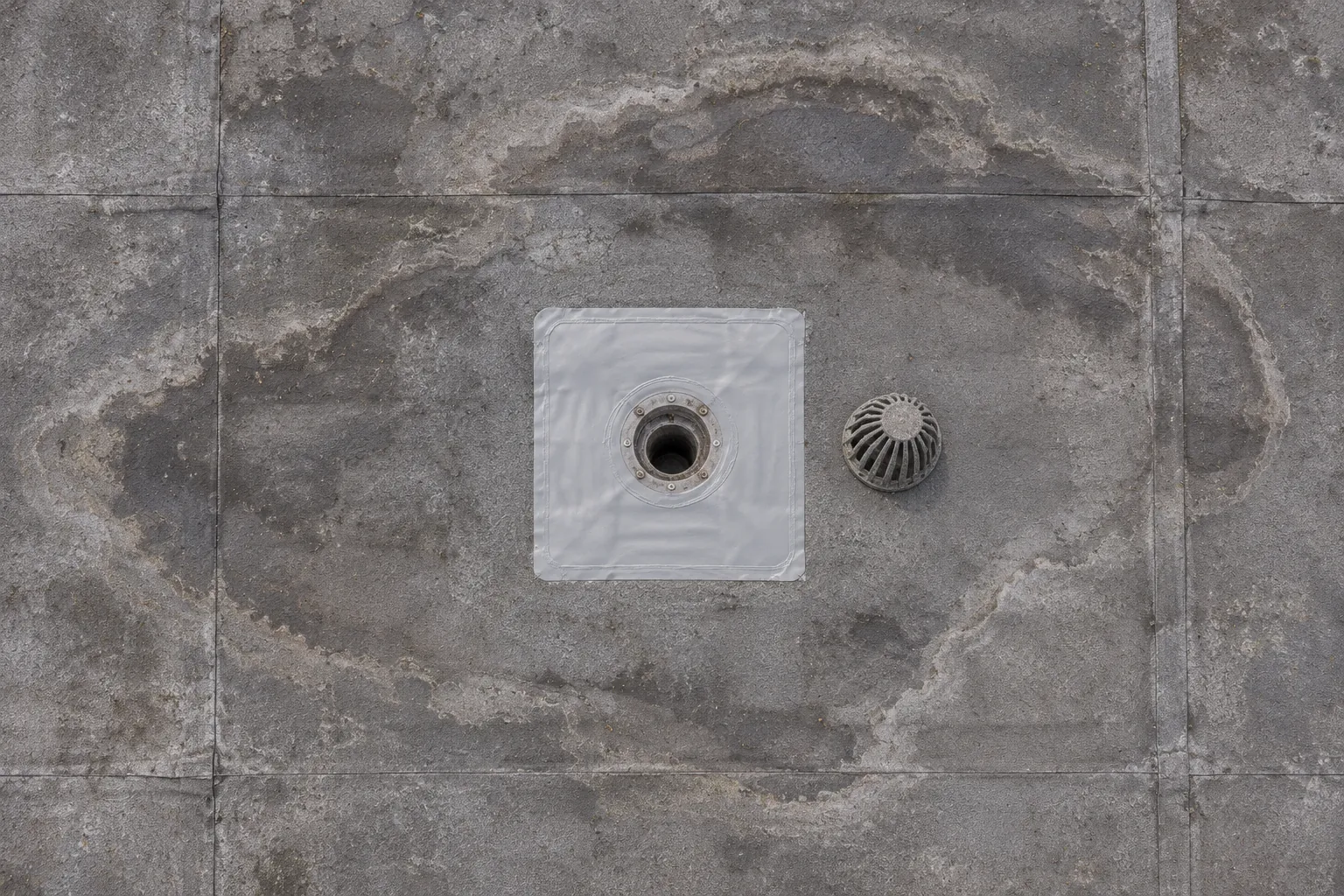
Elizabethtown food plant membranes with seams and drains near exhaust equipment that hold water or residue.
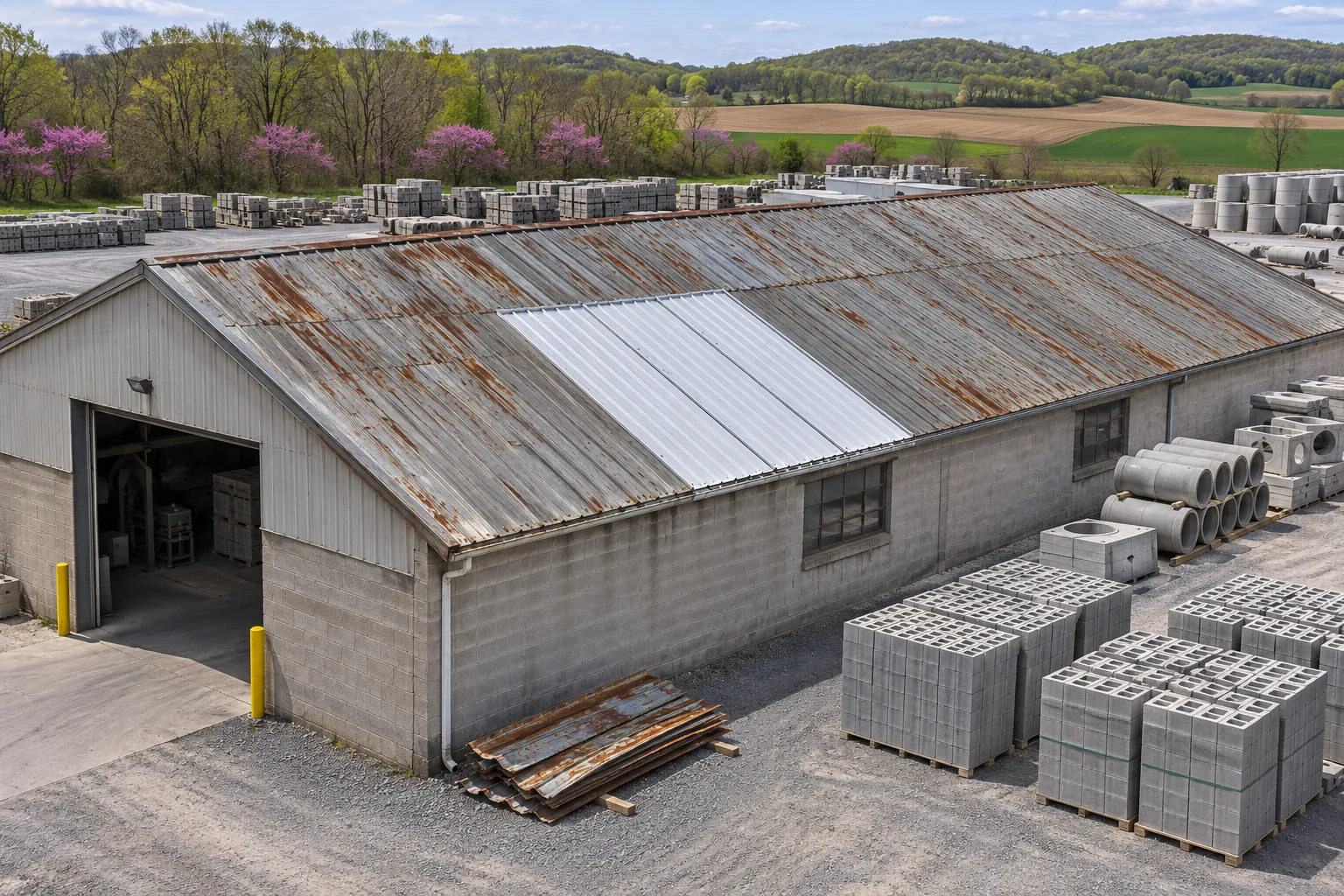
Metal warehouses and storage buildings beside Elizabethtown plants with rusted panel ends and loose fasteners.
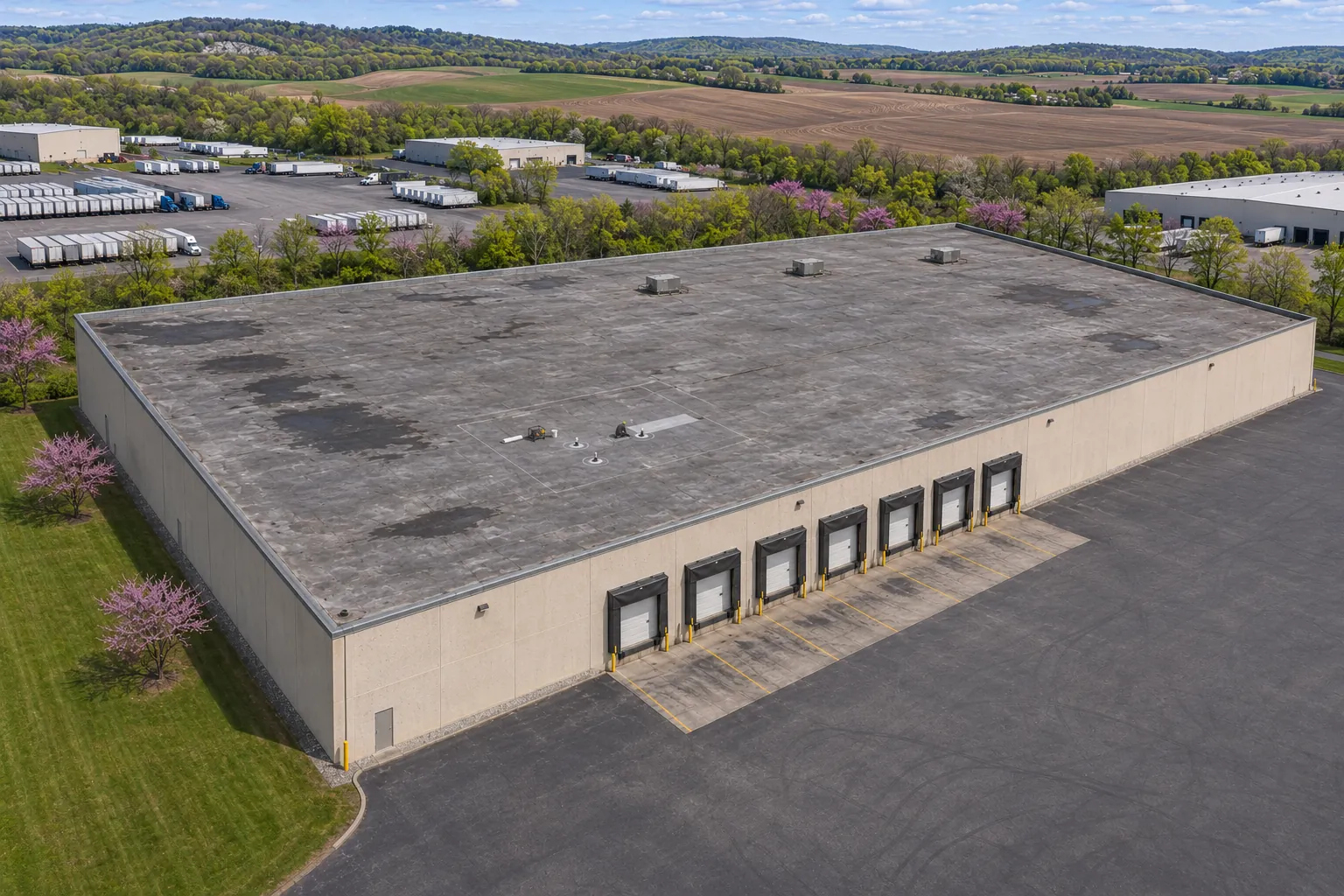
Leaks that start after exhaust servicing in Elizabethtown, traced to the curb, collar, or drain line involved.
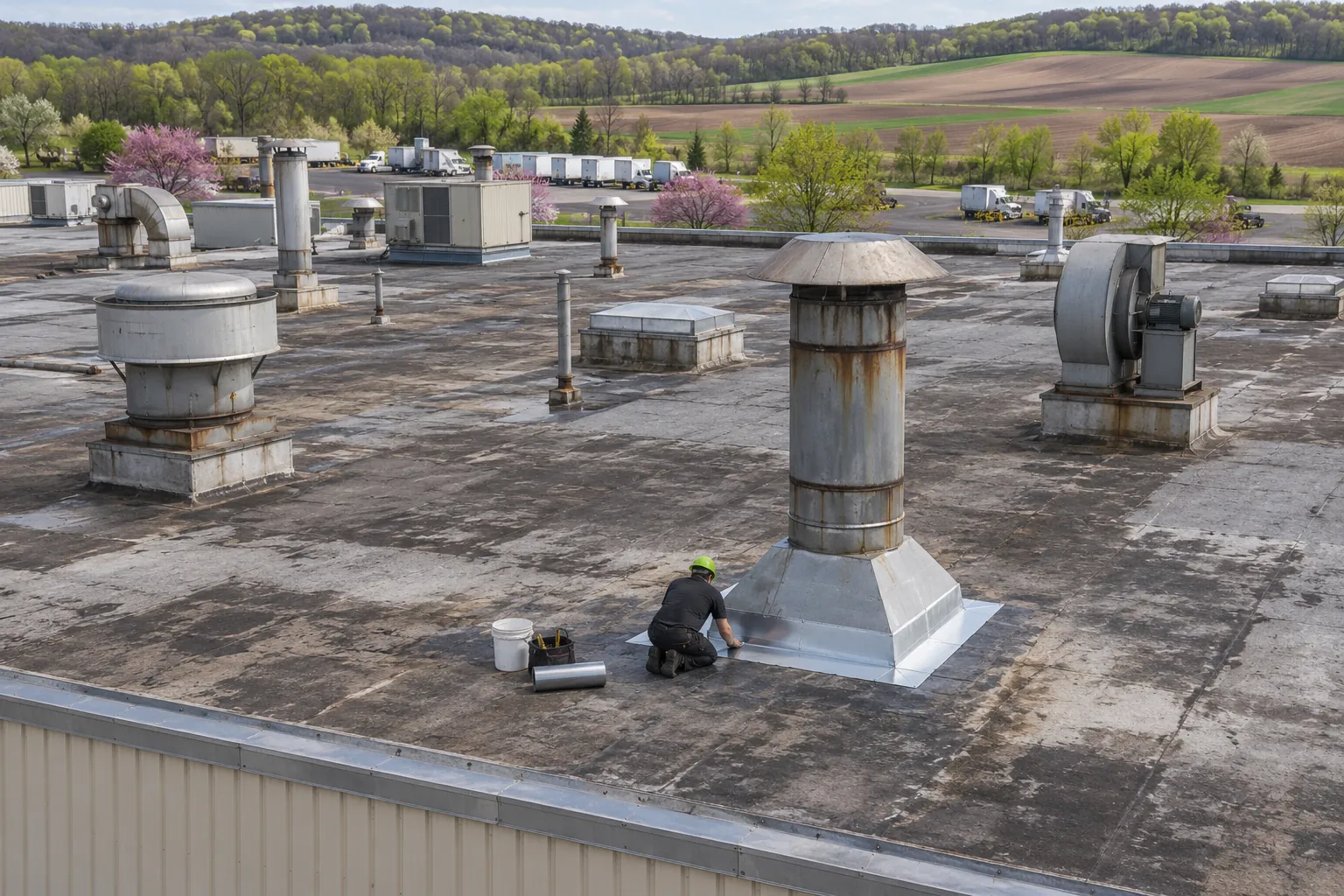
Fan-heavy plant roofs in Elizabethtown where residue, heat, and service traffic wear flashing and membrane.
Call us with the service date and which units were worked on. That timing helps us start in the right place on the roof.
Four steps tie a post-service leak to the roof detail behind it.
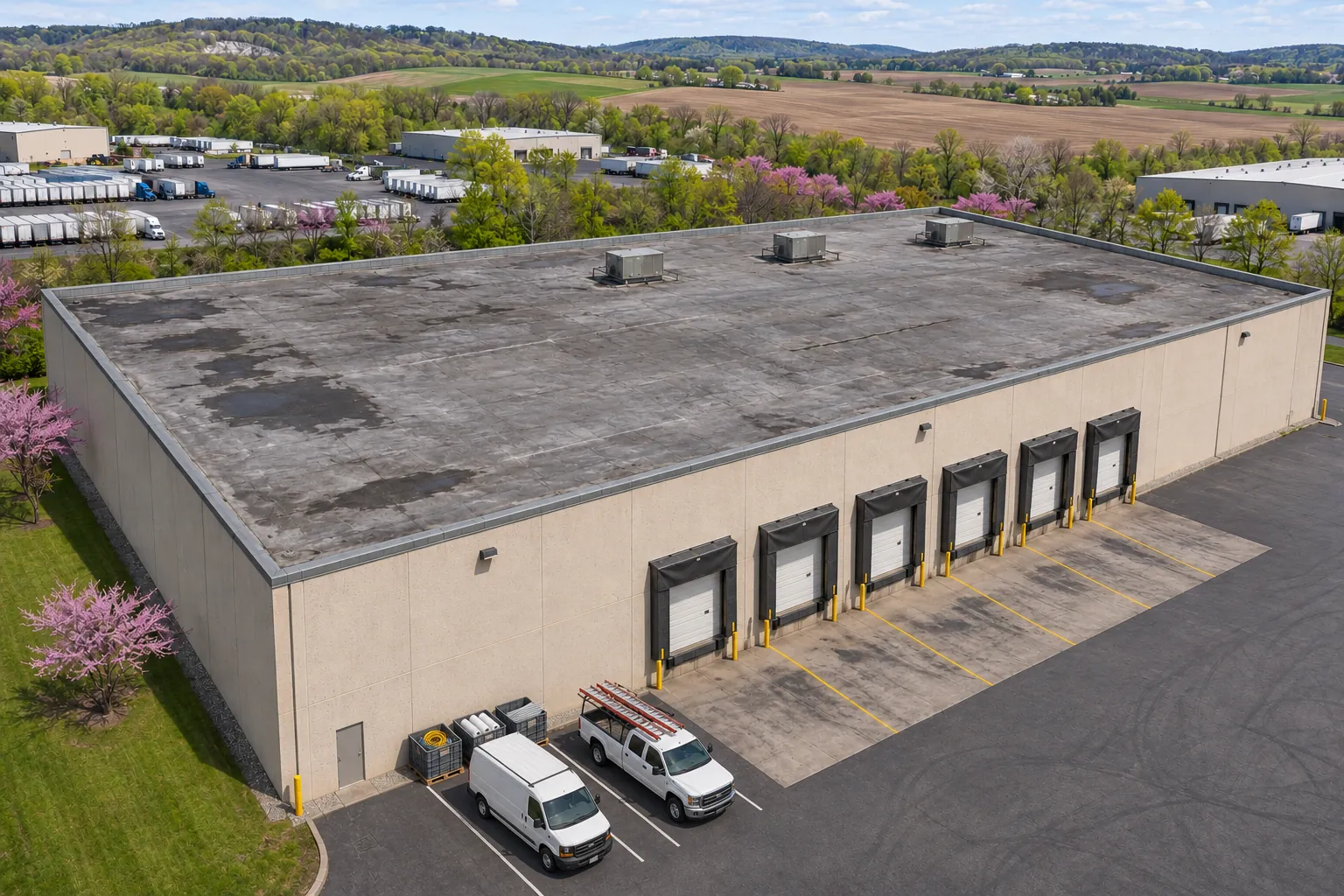
We ask which fans were serviced, what was removed or replaced, and when the leak first appeared afterward.
Curbs, caps, collars, drain lines, and the service route between the hatch and each unit are checked.
Water traced from the interior mark confirms whether the serviced unit, an older defect, or both are involved.
Flashing and membrane are repaired, and you get notes your service crew can use on the next visit to the roof.
Besides Elizabethtown, we repair commercial roofs in York and the four towns listed. If your building is elsewhere, call us or send us a message.
| Town | County | What We See On Roofs There |
|---|---|---|
| YorkHome Base | York County | Our home base, where snack food plants carry the same exhaust-heavy roofs as Elizabethtown's food plants. |
| Hanover | York County | Machinery and equipment shops where leaks often show above overhead door tracks. |
| Red Lion | York County | Older commercial roofs carrying unused antenna mounts and other leftover penetrations. |
| Steelton | Dauphin County | Plant roofs where owners weigh competing repair boundaries. |
| Oxford | Chester County | Equipment businesses finishing interior repairs after a roof leak. |
Answers for Elizabethtown food plant and warehouse owners.
The leak can come from disturbed flashing, equipment drainage, or a roof defect that has nothing to do with the service. We inspect the reported area at the plant and compare what we find with the work performed. Timing guides the search, but the repair follows the actual water path instead of blaming the latest visitor.
Most exhaust fan curb leaks come from cracked base flashing, an unsealed curb cap, residue-damaged membrane around the curb, or vibration that opens the corners. We check each of those, along with the fan's drain line, before choosing a repair so the fix matches the cause.
The roof systems are the same, but food plants add residue, frequent fan servicing, and strict rules about work over production rooms. Repairs are planned around sanitation schedules, interior protection, and the plant's own requirements for crews on the roof, and residue-damaged membrane is replaced instead of patched.
When leaks keep following service visits, a joint walk helps. The service crew can show how panels and caps come off, and we can show which steps disturb the flashing. Agreeing on a method protects the roof without slowing the equipment work.
Sometimes, when the membrane is still firm and flexible after cleaning. Membrane that has softened, swollen, or cracked from grease and residue needs replacing in the damaged ring around the fan. We test the material near each unit and replace only the area that has failed.
Tell us which fans were serviced and where the water shows. We will inspect the units and price the repair from what we find.