Coping Joints Above Doors
Open joints in coping and edge metal let water behind the wall flashing, and it often reappears over the nearest door opening.
As a Hanover commercial roof repair contractor, we trace leaks above overhead doors and docks on machinery shops and repair the roof details that feed them.
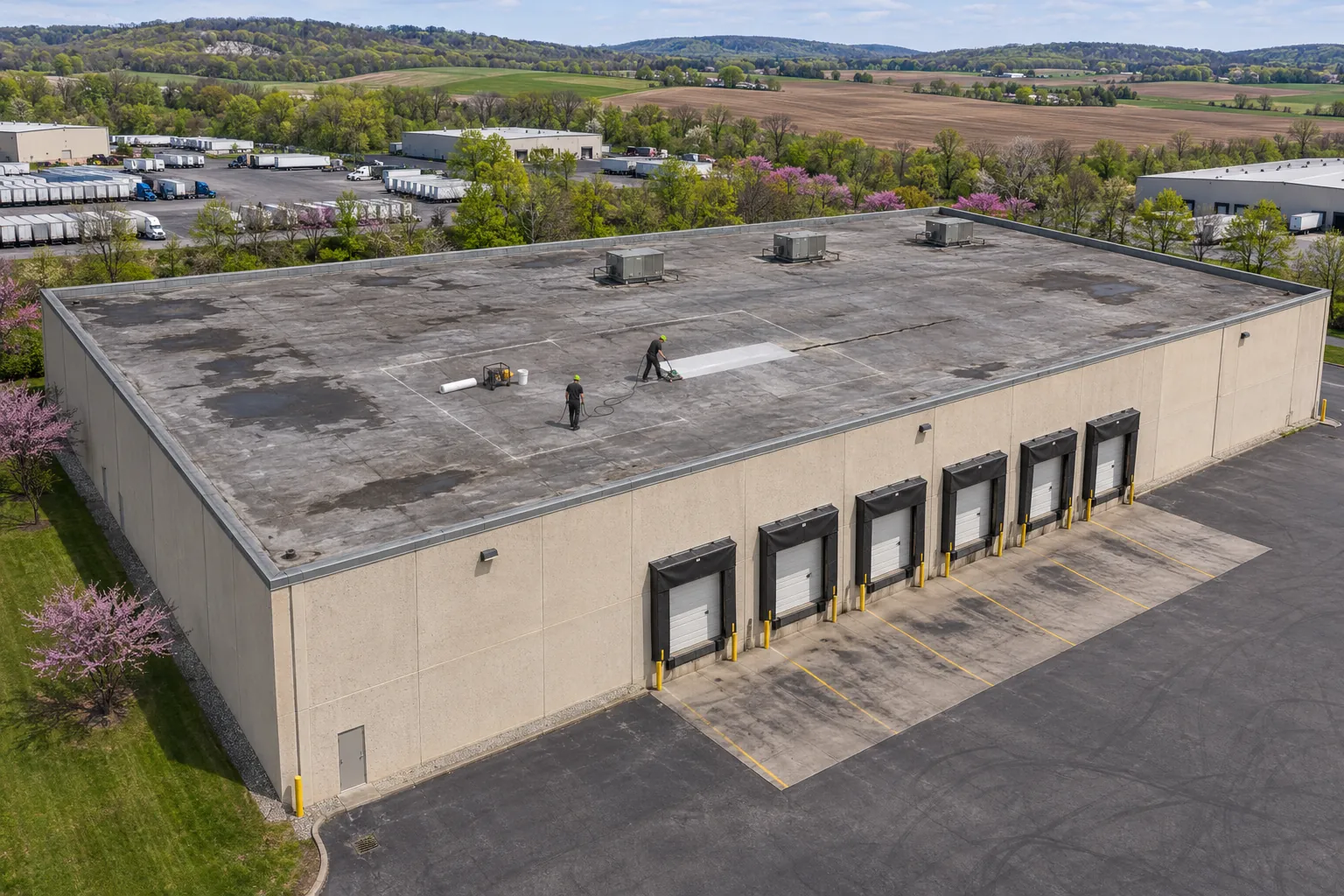
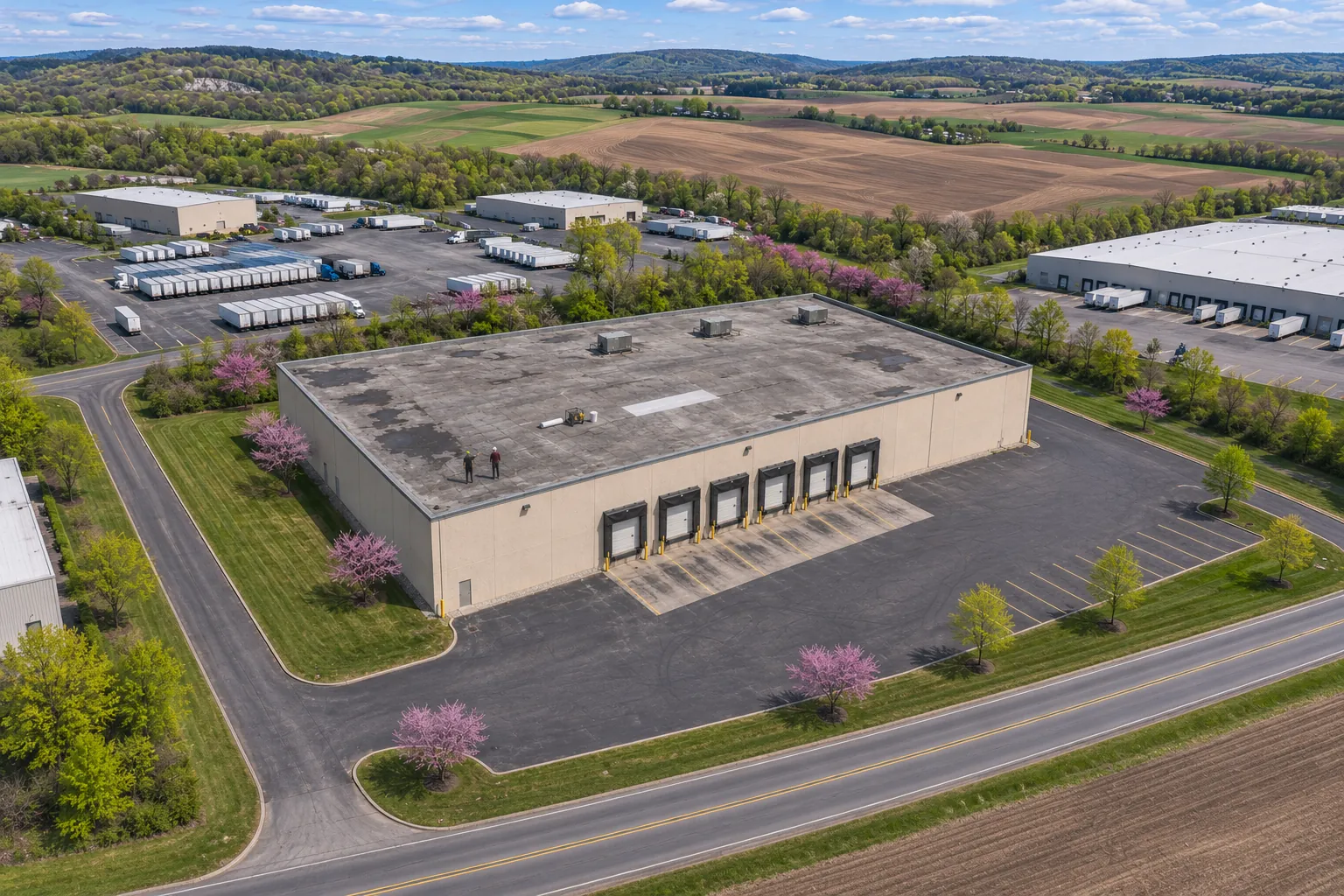
Many Hanover commercial roof repair calls we plan for machinery shops involve water landing on or near an overhead door track.
Door tracks sit right under the wall line, so water that enters at the parapet, the roof edge, or a wall penetration often runs along framing and drips onto the track. The opening can sit several feet away along the wall or upslope on the roof.
We plan interior and roof access together, keep doors usable for deliveries and equipment moves, and protect machinery near the work while the source is traced and repaired.
These conditions show up most on Hanover shop and warehouse roofs, usually close to the wall lines.
Open joints in coping and edge metal let water behind the wall flashing, and it often reappears over the nearest door opening.
Where a dock canopy meets the main wall, flashing tears and gaps open as the two structures move differently through the seasons.
Overflowing gutters and crushed downspouts dump water against the wall above shop doors and soak the framing behind it.
Rusted panel ends and loose fasteners on metal additions leak into the bays most shops use for parts and storage.
Membrane seams near the wall carry more movement and dirt, and they open first on many older flat shop roofs.
Insulation along the wall line soaks up water from slow edge leaks long before a drip shows over the door.
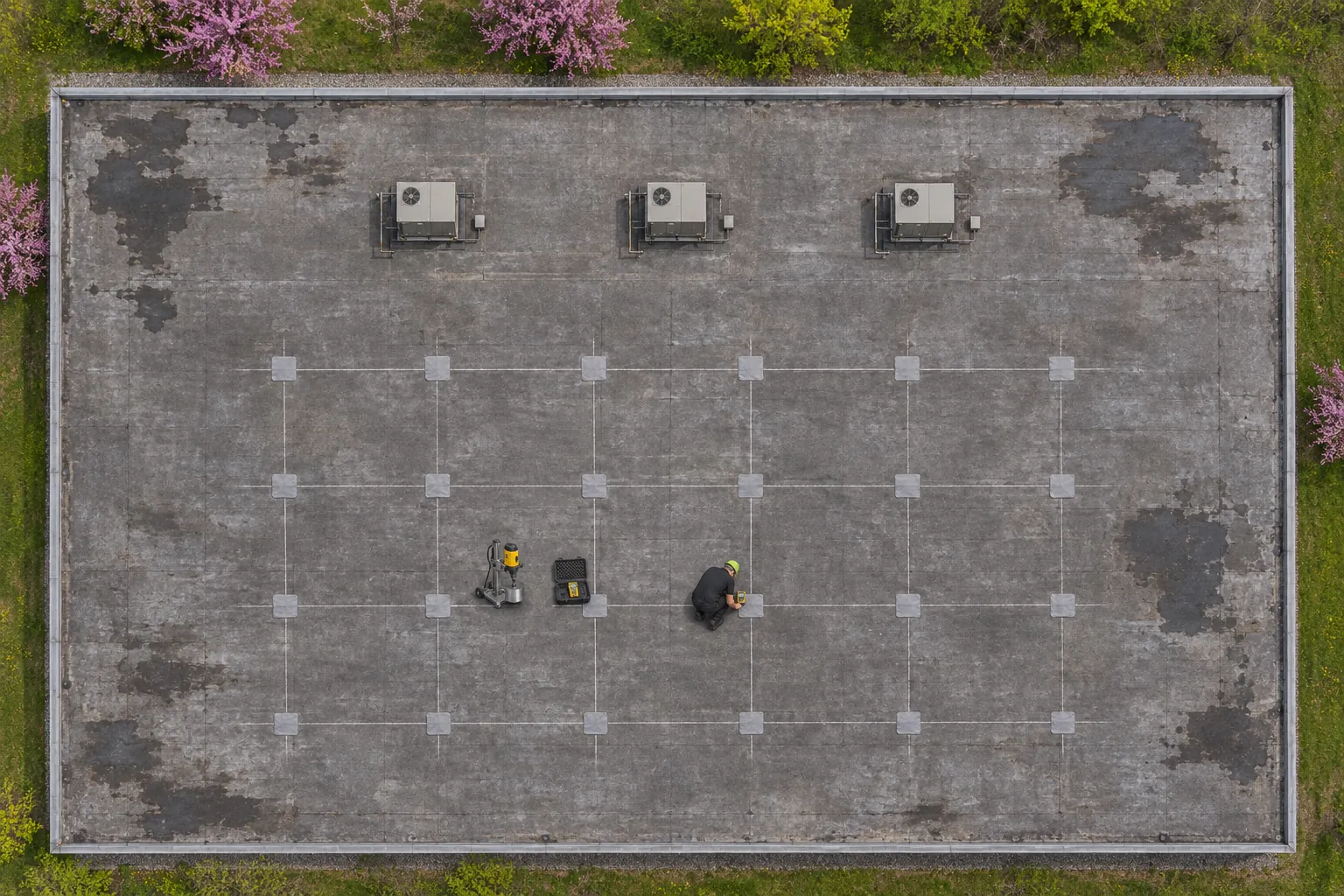
A traced and repaired leak keeps a shop working through the next storm.
Water kept off the track saves openers, springs, and weather seals from rust and electrical faults.
Shops often stage machines near the doors, and a repaired roof edge and wall keeps them dry.
Replacing wet boards at the wall line stops the slow soak that keeps edge leaks coming back.
Photos of the wall, edge, and door area help sort a new leak from an old one later.
Each repair service applies to Hanover buildings in its own way.
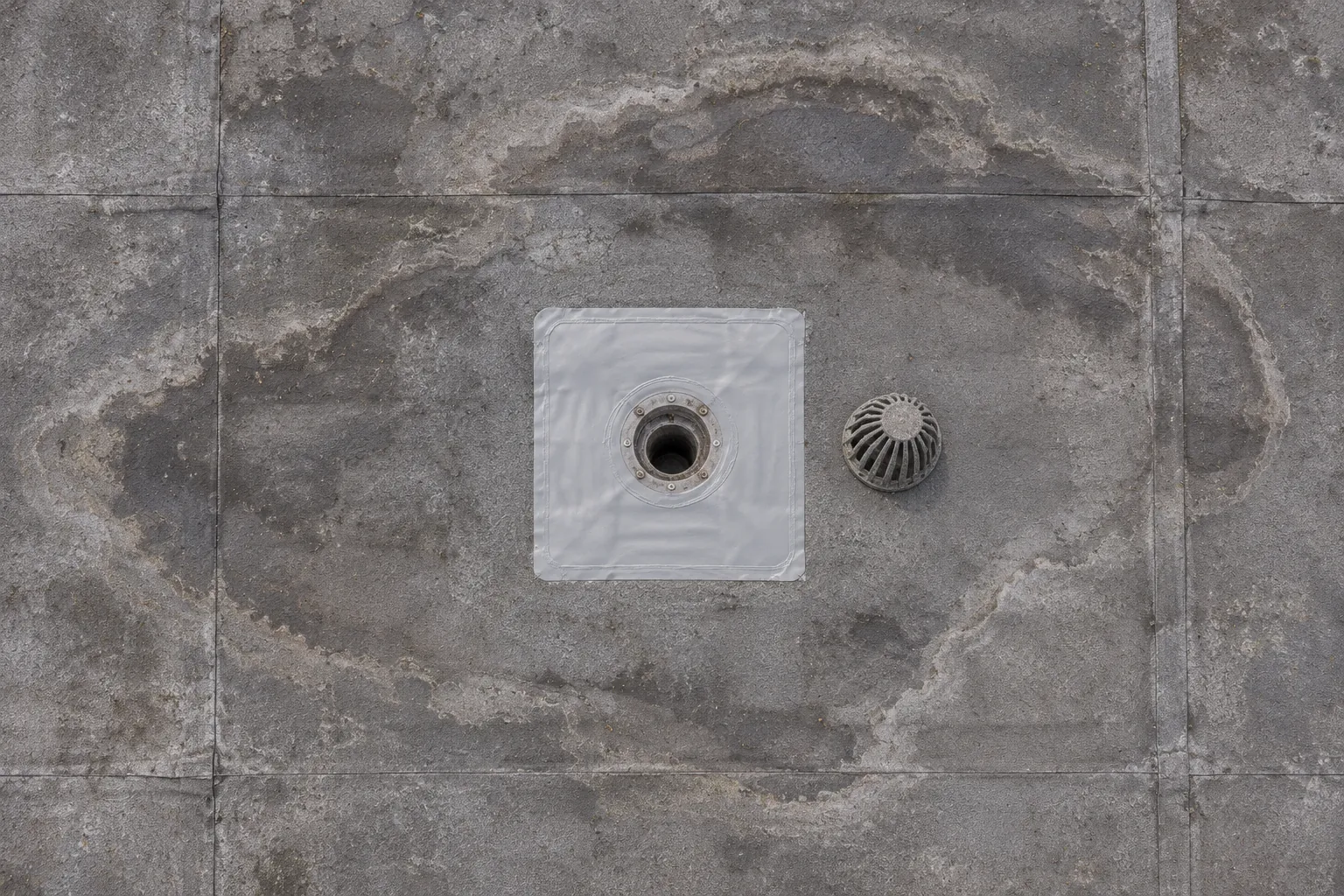
Flat roof sections over Hanover shop bays where seams near the wall line and slow drains push leaks toward the doors.
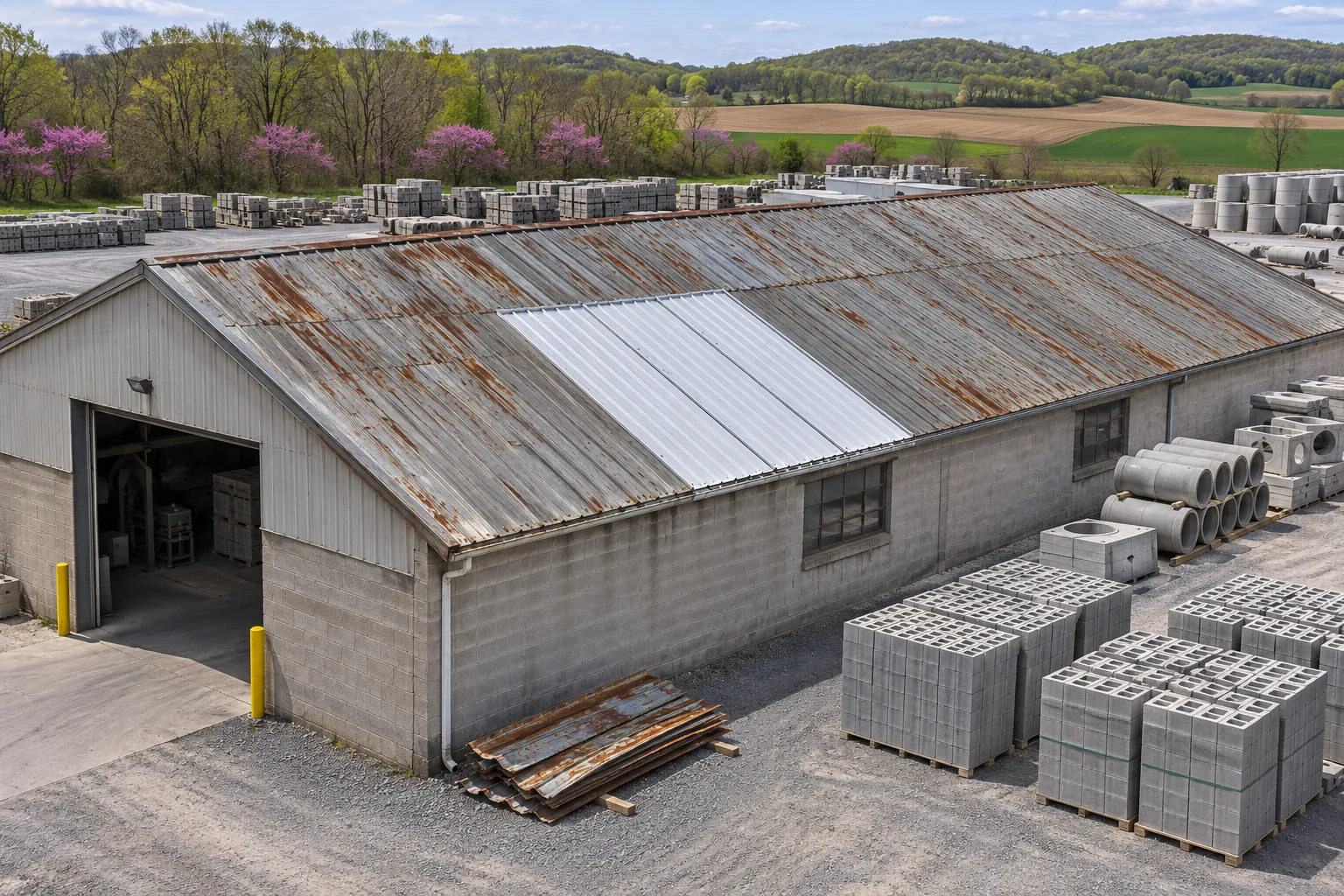
Metal shop roofs and additions in Hanover with rusted ends, loose fasteners, and laps that leak into storage bays.
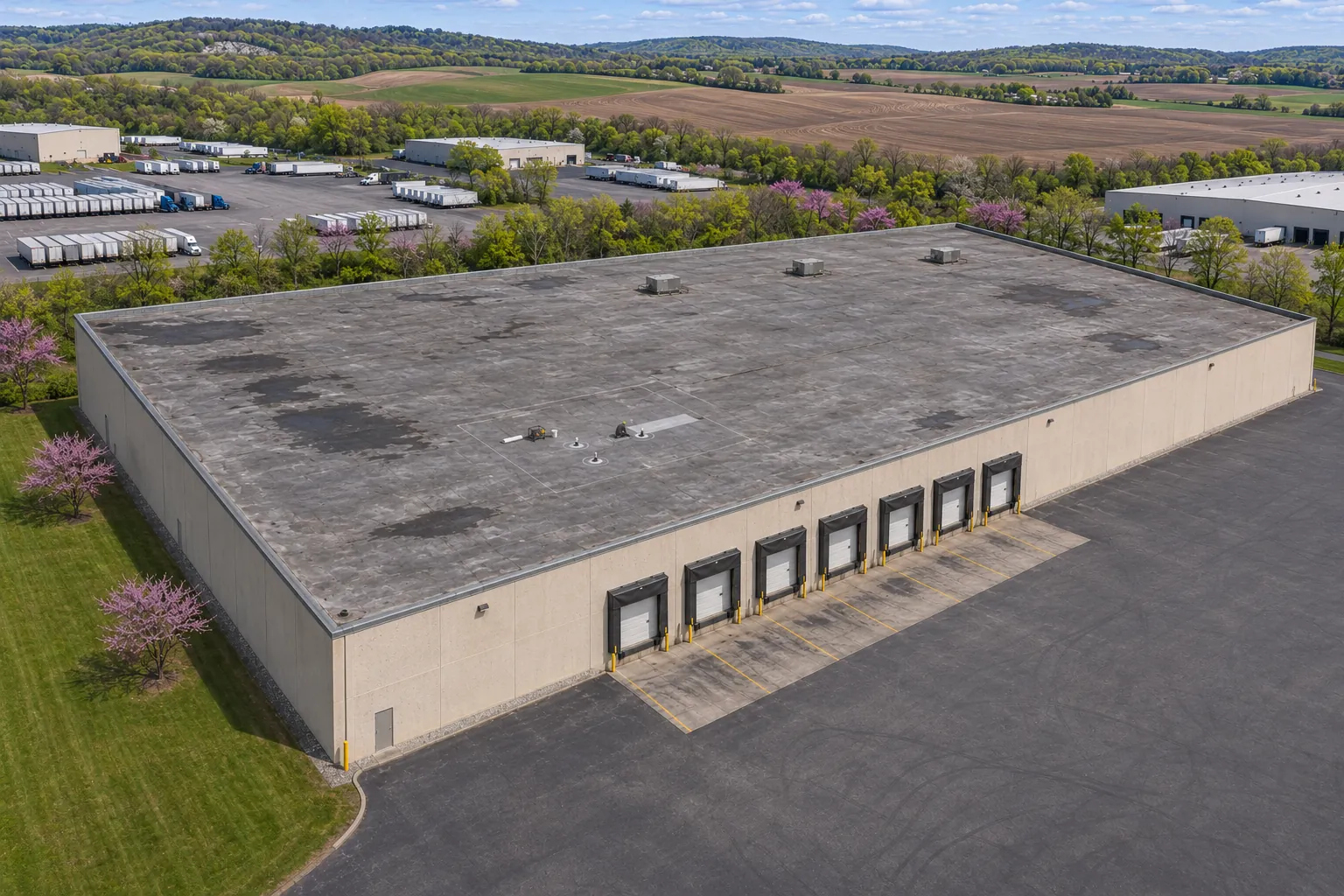
Drips over Hanover door tracks traced back along framing to the wall, edge, or roof opening that feeds them.
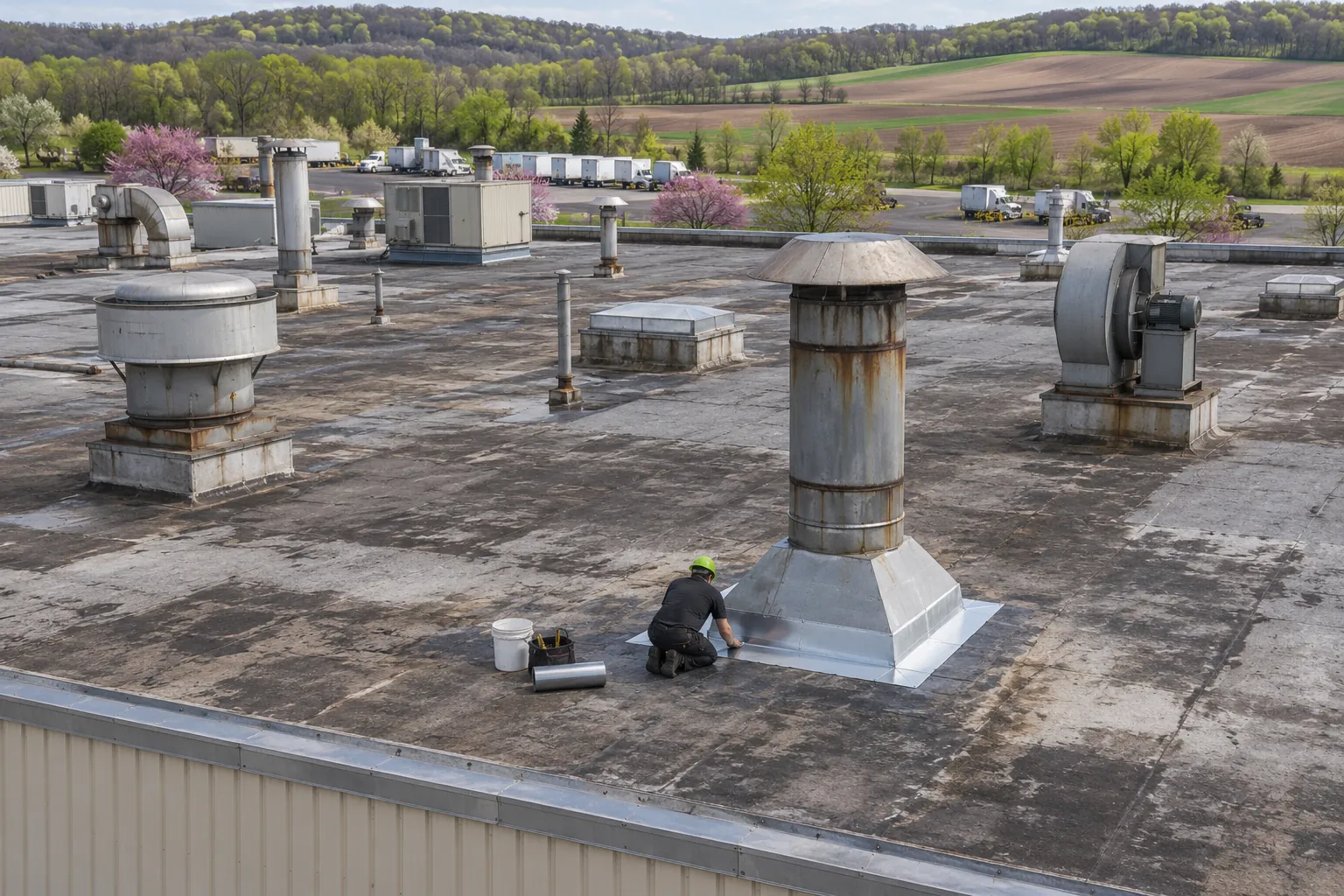
Hanover plants where exhaust curbs and service traffic sit close to the wall lines above loading doors.
Call us and tell us which door is leaking and what sits above it. Keep the door area clear, and we will plan the trace.
Four steps take a door-line leak from the first drip to a repaired wall detail.
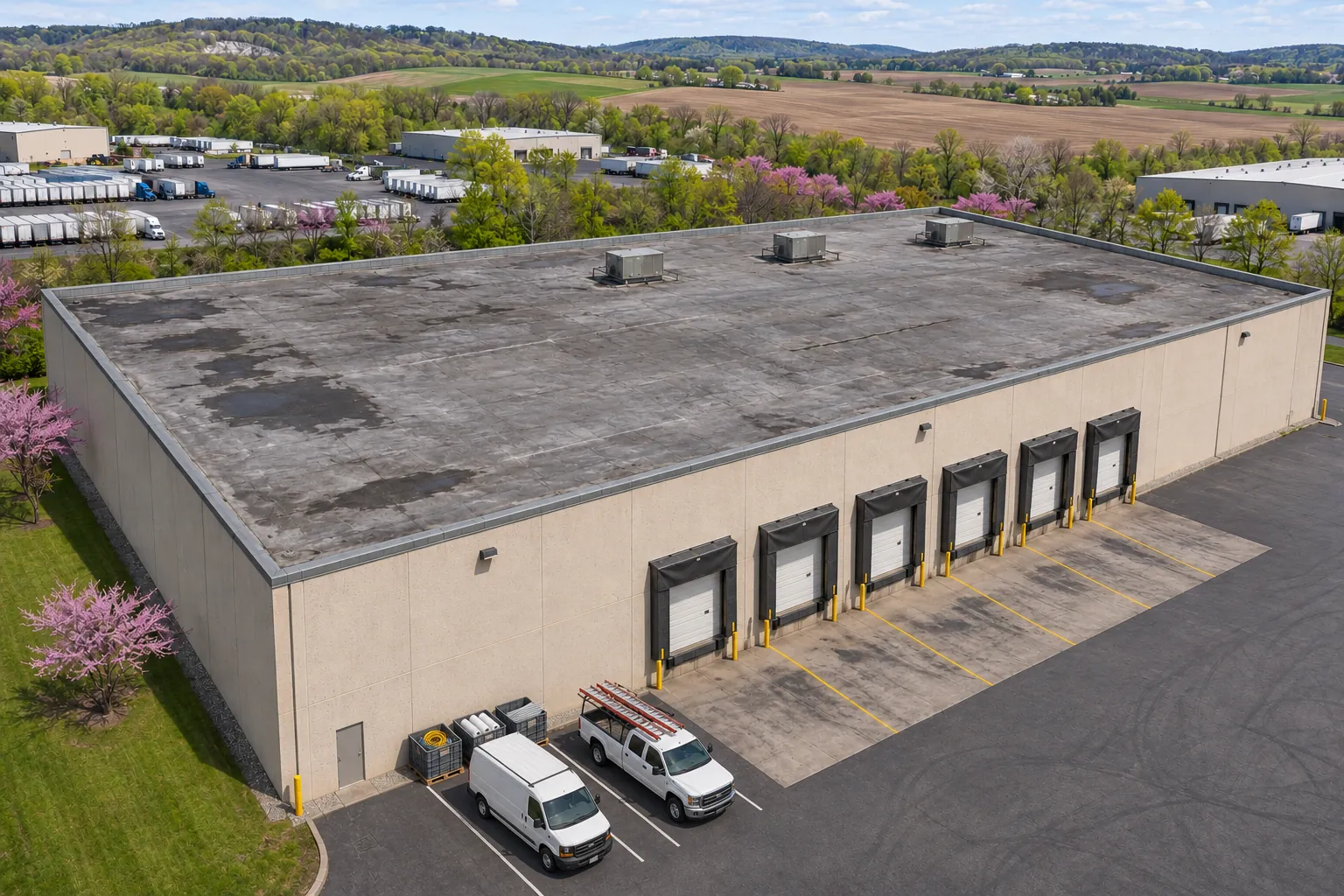
We note which door leaks, how far along the track the water drips, and whether it follows rain, wind, or snowmelt.
Coping, edge metal, wall flashing, and the roof field above the door are checked, then water paths are followed along the framing.
Repair timing is set around deliveries and equipment moves so the door stays usable while the roof work goes on.
The roof opening is repaired, wet boards along the wall are replaced, and the door area is checked after the next storm.
We also handle commercial roof repairs in York and the towns below. Outside them? Call us or send us a message.
| Town | County | What We See On Roofs There |
|---|---|---|
| YorkHome Base | York County | Our home base, with plant and warehouse roofs much like Hanover's shop buildings, only larger. |
| Elizabethtown | Lancaster County | Food plants with exhaust equipment that gets serviced on the roof. |
| Red Lion | York County | Older commercial roofs carrying unused antenna mounts and other leftover penetrations. |
| Steelton | Dauphin County | Plant roofs where owners weigh competing repair boundaries. |
| Oxford | Chester County | Equipment businesses finishing interior repairs after a roof leak. |
Answers for Hanover shop and warehouse owners dealing with door-line leaks.
Yes, with roof and interior access planned together. We trace water past the door track, since framing can carry it from an entry point well away from the door. Door use and equipment protection are planned into the job so the roof repair moves ahead without blocking the access your shop needs.
Dock walls carry roof edges, canopies, gutters, and wall flashing within a few feet of each other. Water that gets past any of them runs down inside the wall and shows over the dock door. We check the whole wall line above the dock so the repair covers the detail that actually leaks.
Requirements follow the scope of work and the municipality. Pennsylvania's Uniform Construction Code sets the statewide framework, and the local code office decides what a given repair needs. We describe the work clearly, separating deck repairs from membrane patching, so the reviewing office has an accurate scope.
In most cases, yes. Roof-side repairs to coping, edge metal, and membrane run above the shop while work continues below. A short closure of one door can be needed when the crew works directly over it, and we schedule that around your deliveries and equipment moves.
Write down which door leaks, where along the track the drip falls, and the weather when it happens. Note any recent work on the wall, gutters, or rooftop equipment. Photos of the stain or drip help too, since door-line leaks often stop between storms and the pattern points us to the right part of the wall.
Tell us which door or wall is leaking and how the shop uses it. We will trace the source and price the repair around your schedule.