Split and Lifted Seams
Seams on aged single-ply roofs lose their bond and peel at the edge, often near walls and curbs where the membrane was stressed. We clean back to well bonded material and rebuild the full run that let go.
As a York flat roof repair contractor, we fix seams, drains, and damaged membrane on low-slope commercial roofs, checking the insulation underneath before any patch goes down.
Before a York flat roof repair visit, match what you see on the roof to the job it usually leads to. Core cuts settle the close calls.
| What You See | Patch or Seam Repair | Section Rebuild | Roof Replacement |
|---|---|---|---|
| A single split seam over dry boards | Usually Fits | Rarely | Rarely |
| Blisters along one run of membrane | Usually Fits | Sometimes | Rarely |
| Ponding that wets the insulation around a drain | Sometimes | Usually Fits | Rarely |
| A puncture with wet insulation several feet around it | Rarely | Usually Fits | Rarely |
| Moisture in core cuts across most of the roof | Rarely | Sometimes | Usually Fits |
These flat roof problems send water into York, PA buildings most often, each tied to the repair it needs.
Seams on aged single-ply roofs lose their bond and peel at the edge, often near walls and curbs where the membrane was stressed. We clean back to well bonded material and rebuild the full run that let go.
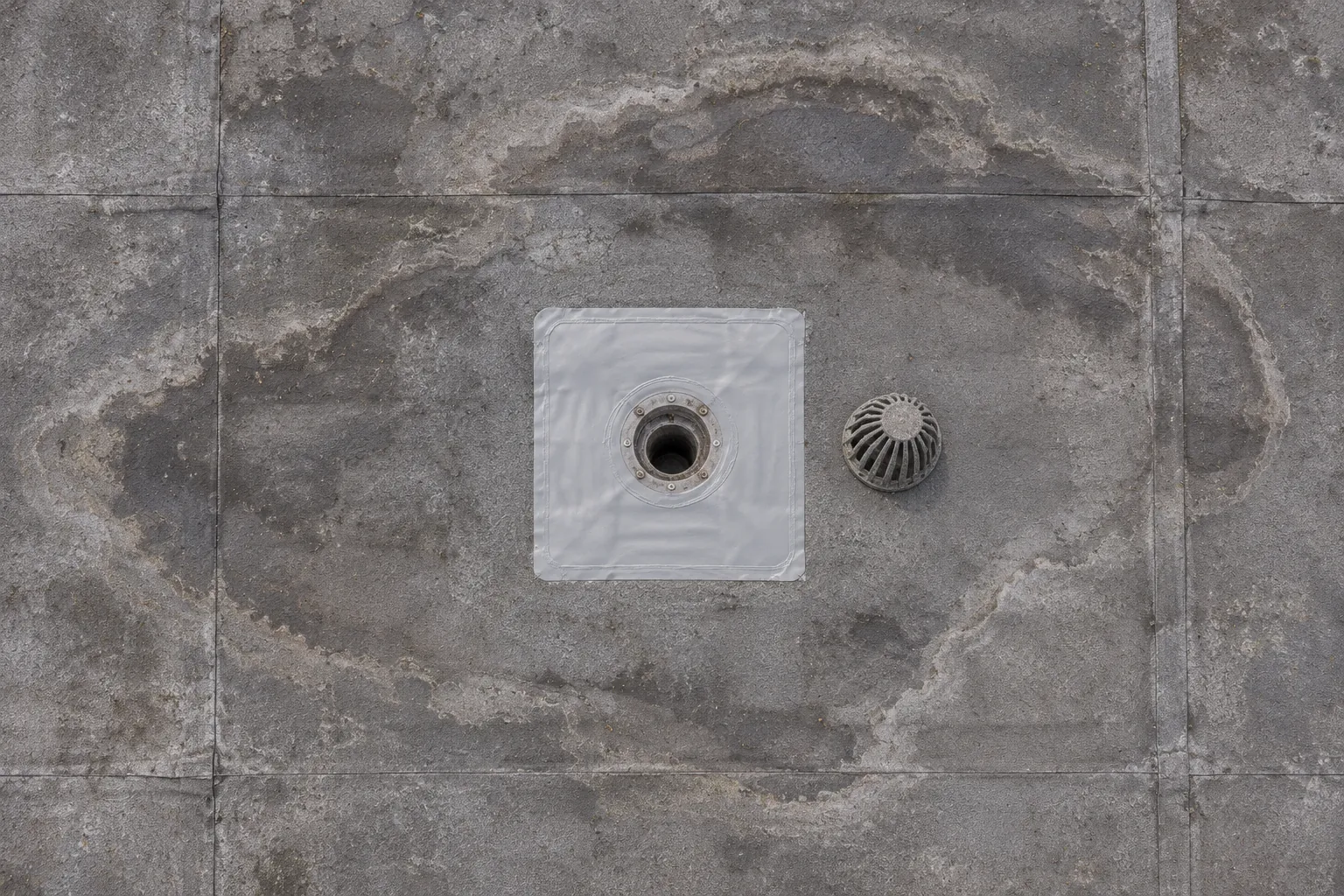
Clamping rings loosen and old flashing cracks where the membrane meets the drain bowl. Water then runs straight into the deck around the opening, even when the drain itself flows freely.
Standing water that stays more than a couple of days points to a sunken area, crushed boards, or a raised drain. Repairing the flashing alone leaves that low spot holding water against the new work.
Trapped moisture or poor adhesion pushes up blisters and long ridges in built-up and modified roofs. Cut open, they show whether the plies underneath are dry enough to repair in place.
Soft spots underfoot and dark rings in core cuts mean the insulation is holding water. Wet boards have to come out, since membrane laid over them keeps the moisture locked in.
Wind and thermal movement open the joints in edge metal and lift membrane at parapet walls. Those details get new flashing tied into the field membrane rather than a bead of sealant.
Each repair starts by identifying the membrane, since the wrong material or adhesive can fail even when a patch looks tight.
TPO, PVC, EPDM, modified bitumen, and built-up roofs each take different materials and attachment. We confirm the system and check older patches before choosing how to prepare the surface.
Core cuts and probing mark how far wet insulation and loose membrane reach. That boundary sets the size of the repair, and it often runs well past the visible hole.
Damaged membrane and wet boards come out, new insulation goes in, and the new membrane laps onto clean, well bonded roofing with seams welded or adhered to match the system.
At drains we reset the clamping ring and flashing and, where the area sits low, build up the surrounding insulation so water reaches the outlet.

Done to the edge of the damage, a flat roof repair protects the parts of the building owners care about most.
Replacing only the wet boards keeps the dry insulation across the rest of the roof doing its job through York winters.
Fixing seams and drains where water enters keeps it off racks, product, and machinery under the roof.
Removing trapped moisture slows the rust that starts on deck flutes when wet insulation sits on them for months.
A solid repair on a roof nearing the end of its run buys time to budget for replacement on your own schedule.
Call us before the next storm adds more water at the outlet. Tell us where the drain sits and what shows inside below it.
Four steps take a flat roof from reported leak to repaired section, each one recorded with photos.
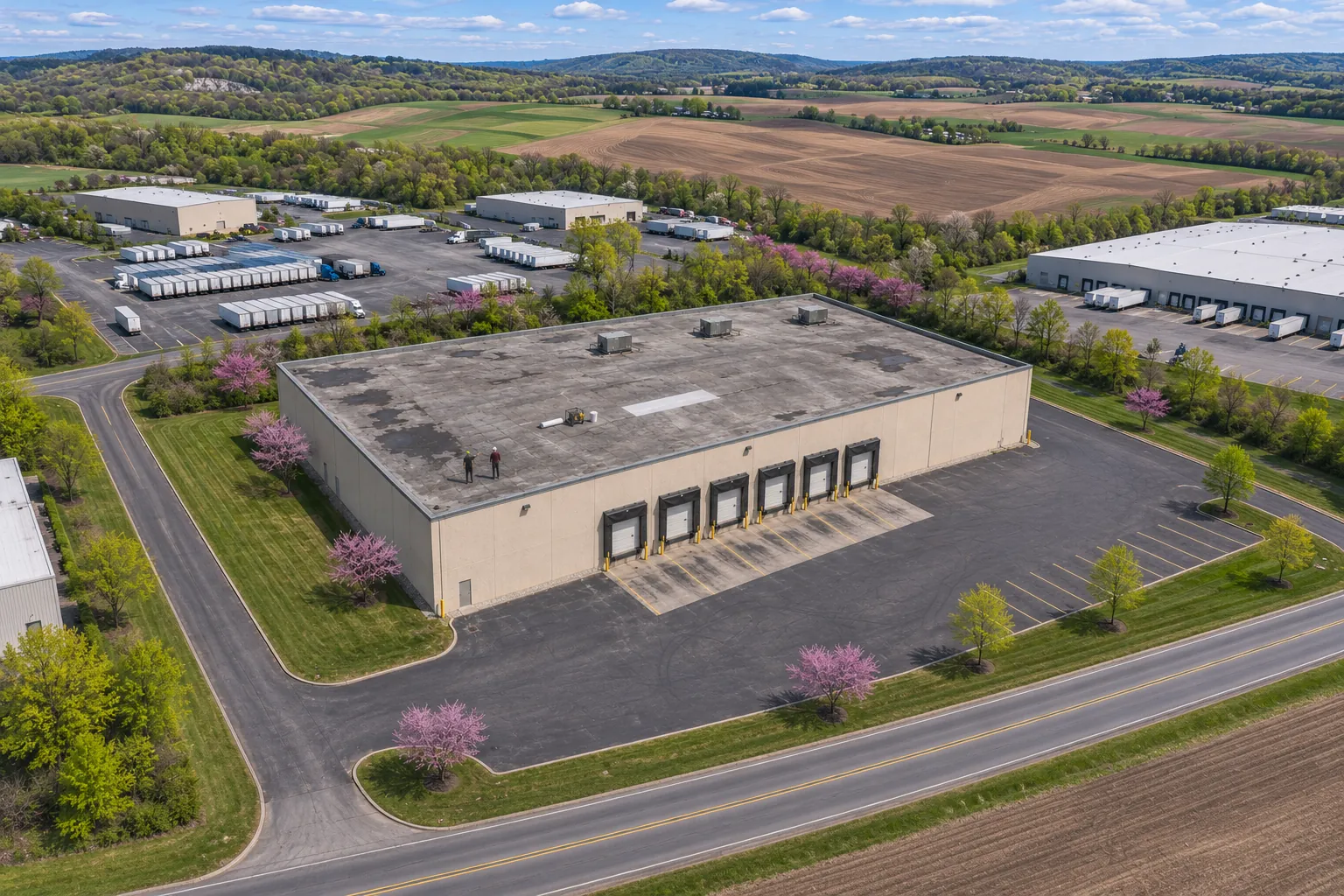
We walk the roof, probe seams near the reported area, and check every drain for loose rings, cracked flashing, and debris that holds water.
Core cuts at the suspected spots show where insulation is wet. The edge goes on a roof plan so you can see the repair size.
Flat roof repair cost depends on tracing time, roof system, damaged area size and count, core results, flashing and drain work, and access, so patching and section replacement are priced side by side.
New insulation and membrane go in, seams are welded or adhered, and drain flashing is reset before the area goes back into service.
Flat roof problems often sit beside metal, leak, or plant roof issues on the same property.
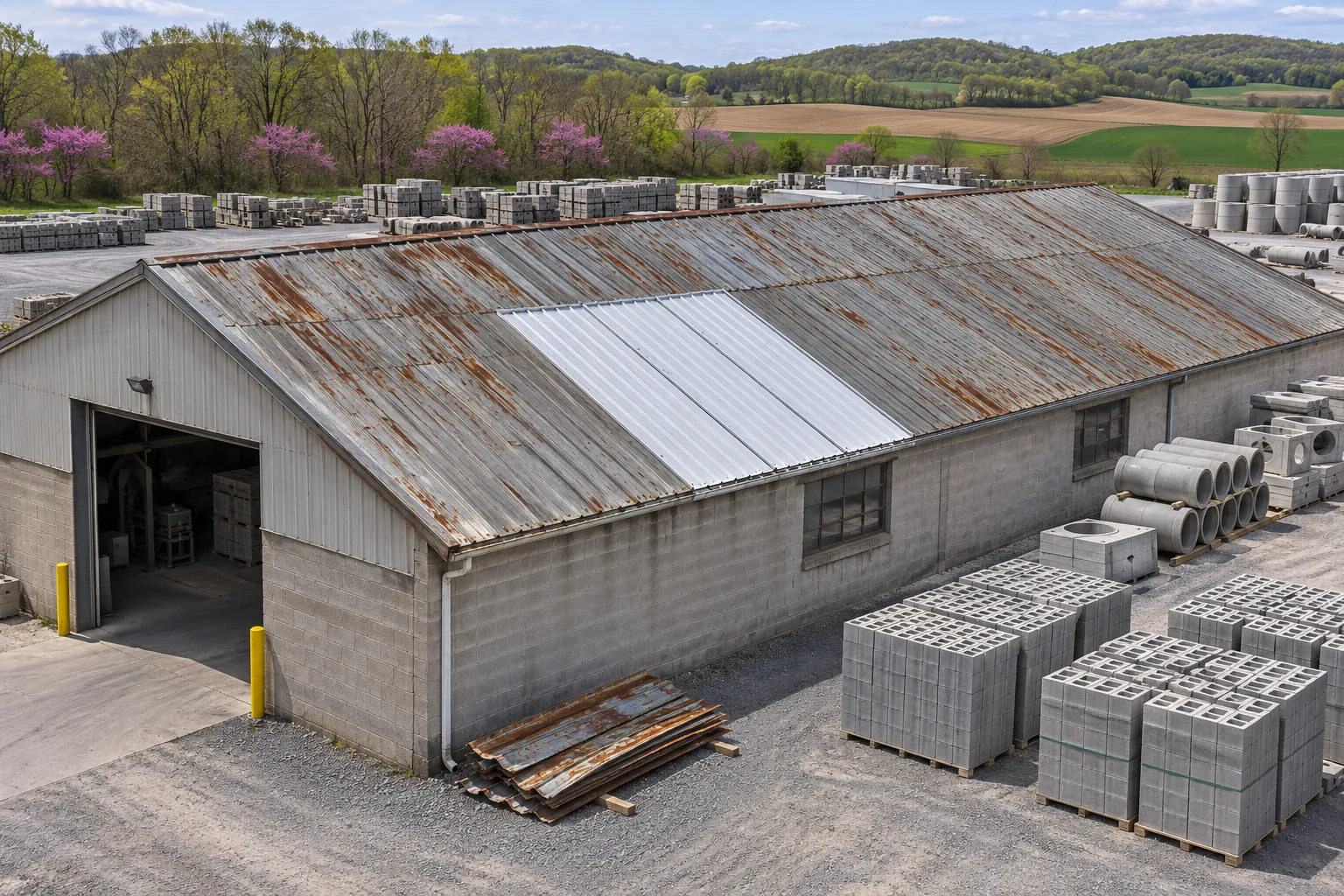
Rusted panel ends and loose fasteners on metal shop roofs and additions.
Metal roof repair details
Leaks that show inside long before anyone finds the opening on the roof.
Leak repair details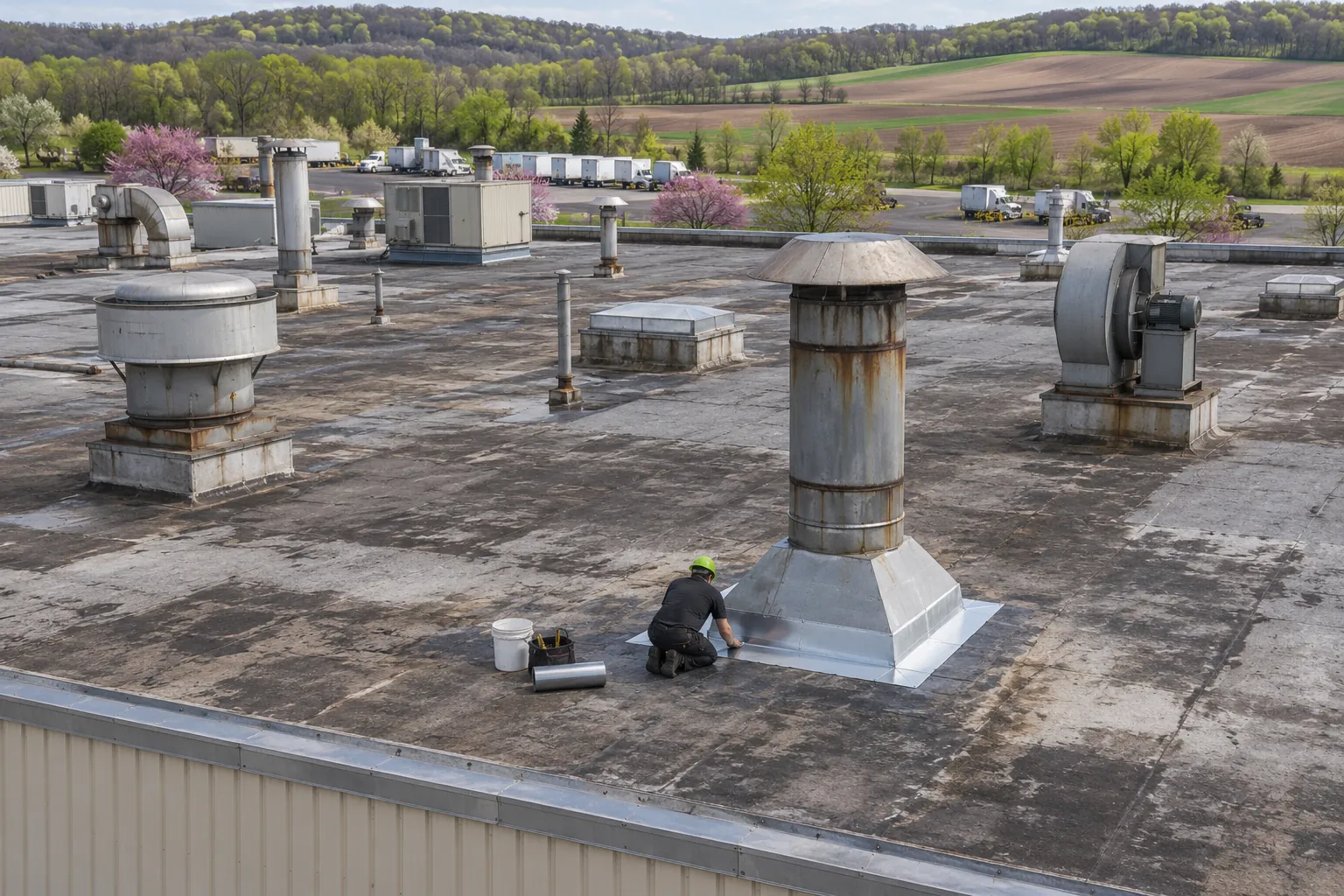
Plant roofs where exhaust stacks, fans, and service traffic wear the flashing.
Industrial roof repair detailsAnswers on patches, drains, cost, and repair methods for flat commercial roofs.
A surface patch on its own is an incomplete repair when the insulation below is wet. We find how far the moisture reaches and decide what has to come out before the roof connection is rebuilt. Depending on those findings, a defect that looks small from above can turn into a section replacement.
New flashing can make the drain watertight while the area around it still holds water. The cause is usually slope: a sunken deck, crushed insulation, or a drain set too high. We inspect the drain opening and the materials that form the low spot, because a sealed drain and a working drainage path are separate repairs.
The price comes from an on-roof inspection. We weigh leak tracing, the roof system, the size and number of damaged areas, core cuts for wet insulation, flashing, drains, and access, then compare repair with section replacement. Protecting product below and sequencing the work have to fit that inspected scope.
Start by identifying the membrane and confirming which materials and attachment methods work with it. We look at earlier patches and the surrounding surface before deciding how to prepare it. A familiar product applied to an unidentified roof can bond poorly, even when the finished patch looks tight on the day it goes down.
Some can. Cold-weather repairs hinge on the membrane, the adhesive or welding method, and whether the surface can be dried and kept clear of snow. Temporary repairs can stop active leaks in winter, with the permanent detail finished once materials can bond properly. We tell you which kind of repair you are getting.
Send the roof address and where water shows inside. We will inspect the seams, drains, and insulation and price the repair from what we find.