Rusted Panel Ends
Water and debris sit at the low ends of panels, so rust starts at the eave and works upslope. Once holes form, the end needs new metal tied into firm panel, since coating over it leaves weak steel underneath.
As a York commercial metal roof repair contractor, we rebuild rusted panel ends, reseal laps and curbs, and replace failed fasteners on shop and plant roofs.
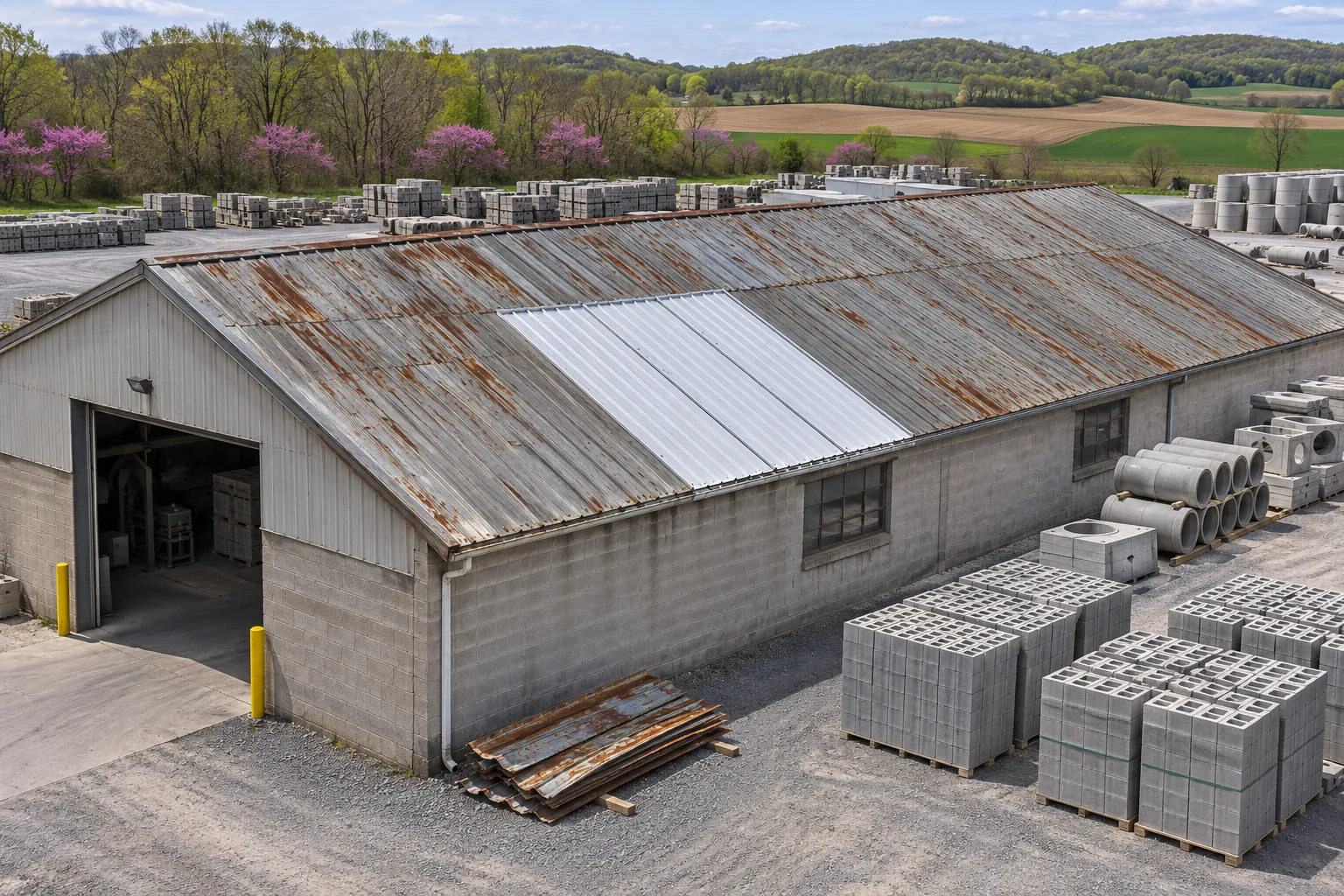
Before a York commercial metal roof repair visit, compare the panel condition you see with the job it usually points to.
| What You See | Targeted Repair | Panel Replacement | Full Reroof |
|---|---|---|---|
| Surface rust with firm steel underneath | Usually Fits | Rarely | Rarely |
| Rust holes at a few panel ends along the eave | Sometimes | Usually Fits | Rarely |
| Backed-out screws and torn washers in one area | Usually Fits | Rarely | Rarely |
| A seam pulling apart beside an exhaust curb | Usually Fits | Sometimes | Rarely |
| Rust-through across many panels and supports | Rarely | Sometimes | Usually Fits |
Metal roofs on York, PA shops and plants fail at the same few details, and each one calls for its own fix.
Water and debris sit at the low ends of panels, so rust starts at the eave and works upslope. Once holes form, the end needs new metal tied into firm panel, since coating over it leaves weak steel underneath.
Daily heating and cooling works screws loose and tears the rubber washers under them. Each failed fastener becomes a pinhole leak along the purlin line.
Side laps open when sealant tape dries out or panels shift. Water then wicks along the lap and drips well away from where it entered.
Curbs cut into metal roofs interrupt the panel ribs and carry equipment vibration. Seams beside them crack open when the curb or its supports move more than the panels can take.
Asphalt mastic, roofing tape, and caulk patches crack, lift, and hold water against the steel. We remove them to find the original defect before repairing it.
Rust at the eave often travels into gutter hangers and the trim that joins panel ends to the gutter. Those parts are repaired together so water still leaves the roof edge cleanly.
Each metal repair has to restore water shedding and attachment, which takes more than covering the weak spot.
Purlins, clips, and eave supports have to hold new metal. We check them at every repair area before ordering panels or trim.
Replacement panels and end pieces match the existing rib spacing and height so laps close tightly and the new metal sheds water with the old.
Stripped holes get oversized fasteners with new sealing washers, and the full row near a leak is checked, since one loose screw rarely fails alone.
If a curb or its support is moving, we flag it for correction so the rebuilt seam is spared a load that belongs to the equipment.
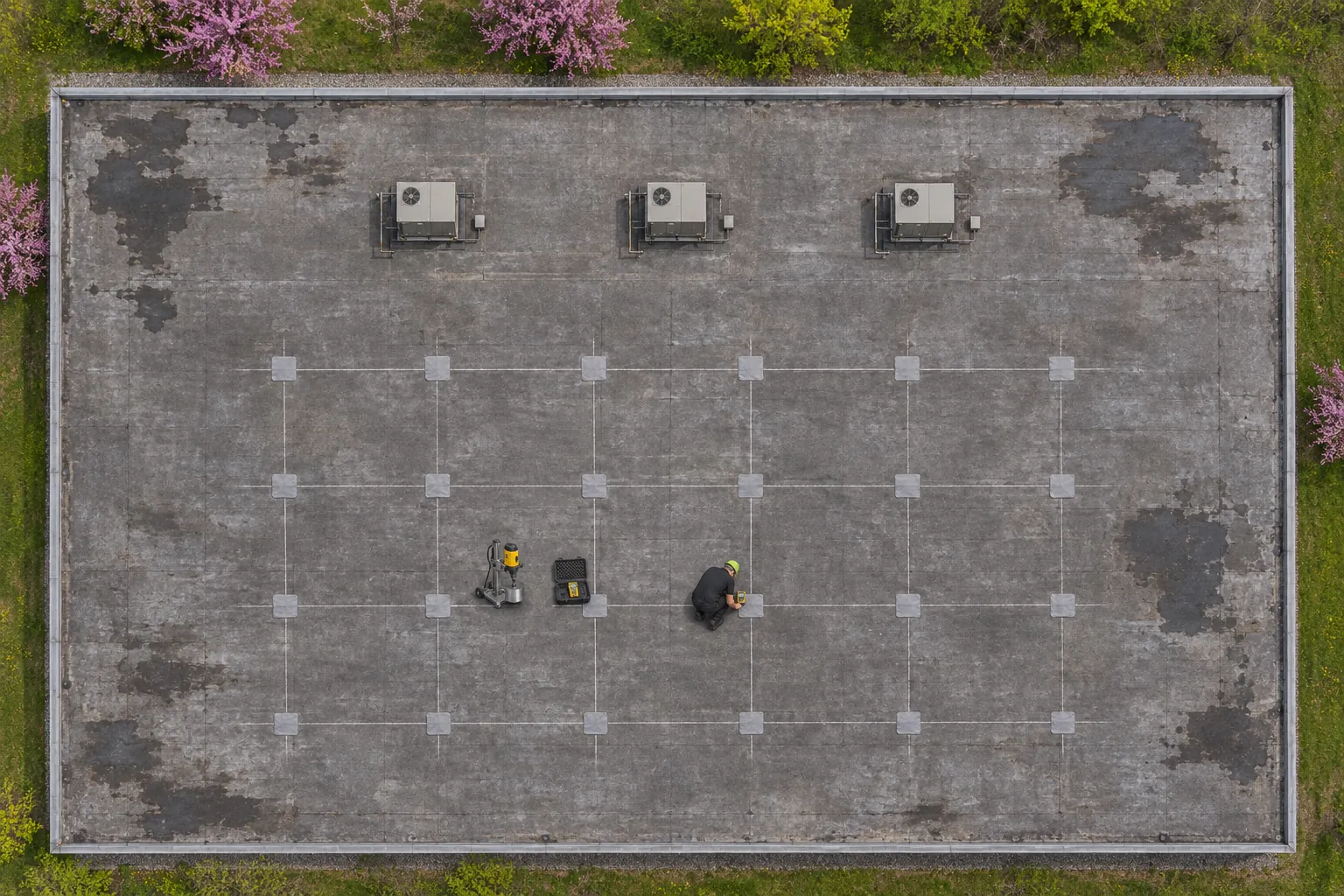
Targeted metal repairs keep a working roof working while you plan for what comes next.
Rebuilding only the rusted ends and laps keeps the good panels across the rest of the roof doing their job.
Panel and fastener repairs run from the roof side, so shop floors and production lines below can keep operating.
Notes on corrosion, fastening, seams, and flashing give you a baseline to measure future wear against.
Catching rust at the panel ends early keeps small repairs from turning into a rushed roof replacement.
Call us with the building type and where the drips land inside. Panel ends near the gutters are the first place we look.
Four steps carry a metal roof repair from the first call to resealed panels.
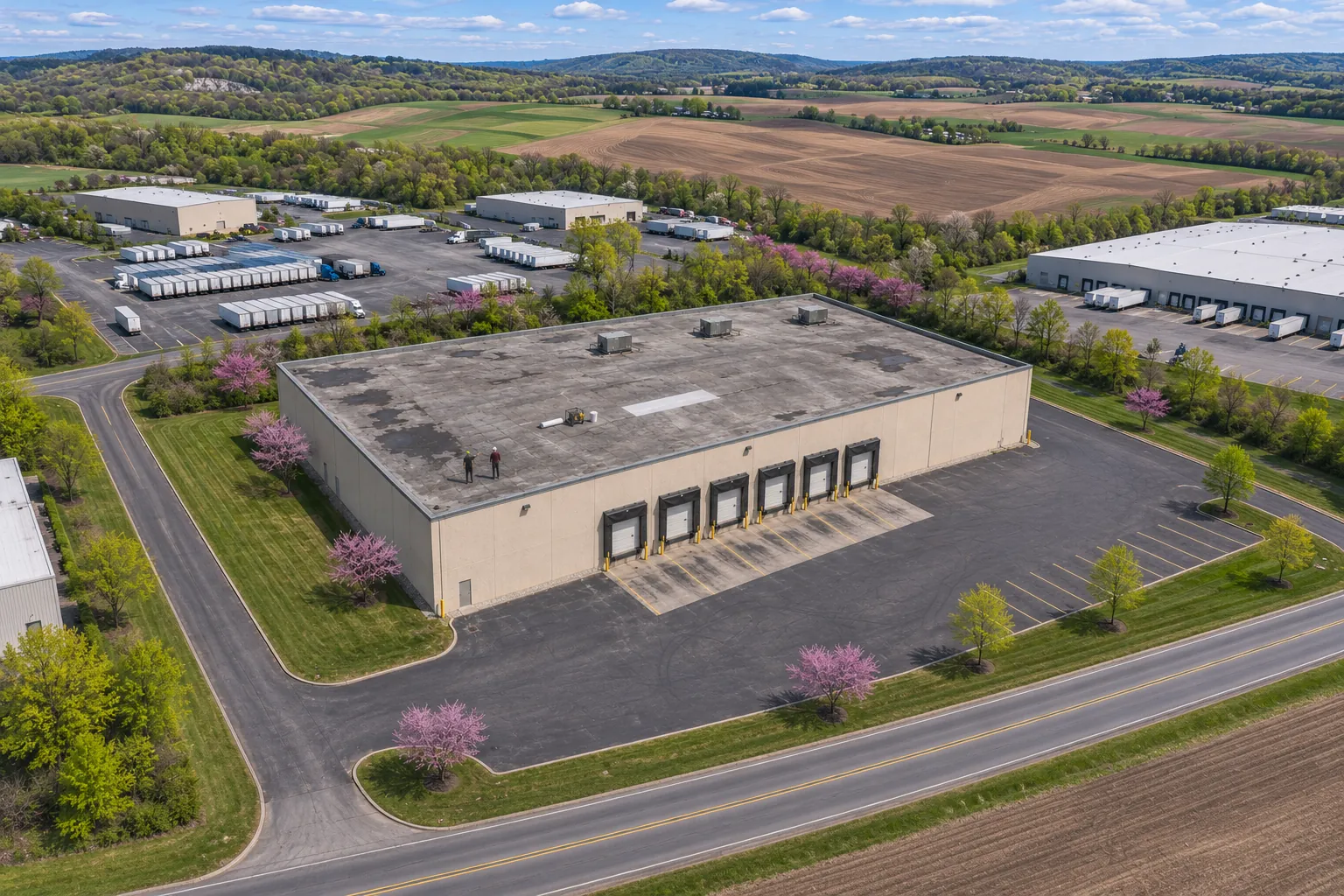
We check panel ends, laps, fastener rows, and curbs along the reported area and the runs above it, since water travels down the ribs.
Failed patches come off where needed so the original defect and the steel beneath it can be seen.
The repair extends to firm metal at every edge. You see the marked areas, the panel count, and the price before work is scheduled.
Rusted ends are cut back, new metal is lapped in with fresh sealant, and fasteners are replaced where washers or holes have failed.
Metal shop roofs often share a property with flat additions and plant roofs.
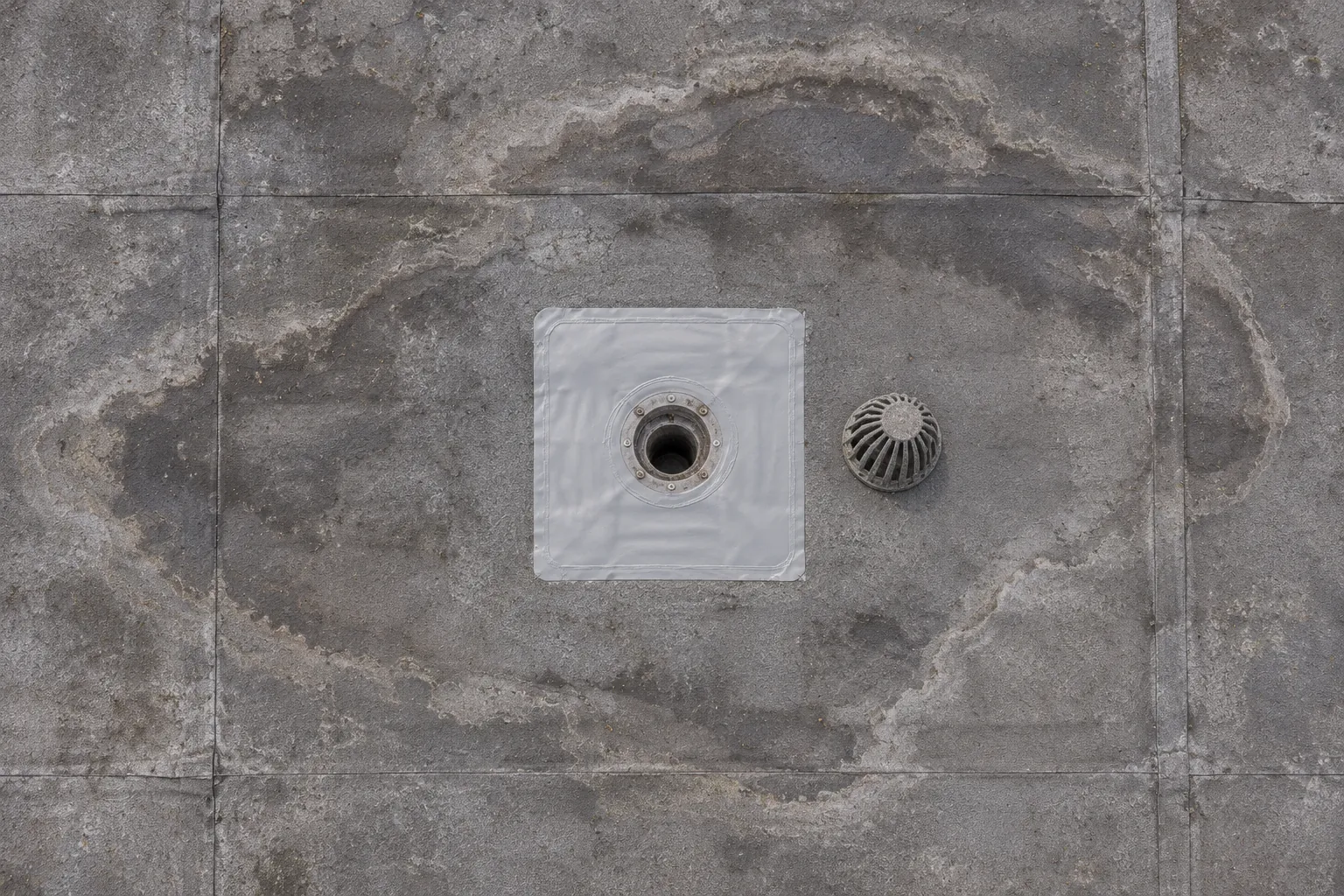
Low-slope membrane additions with open seams, leaking drains, or wet insulation.
Flat roof repair details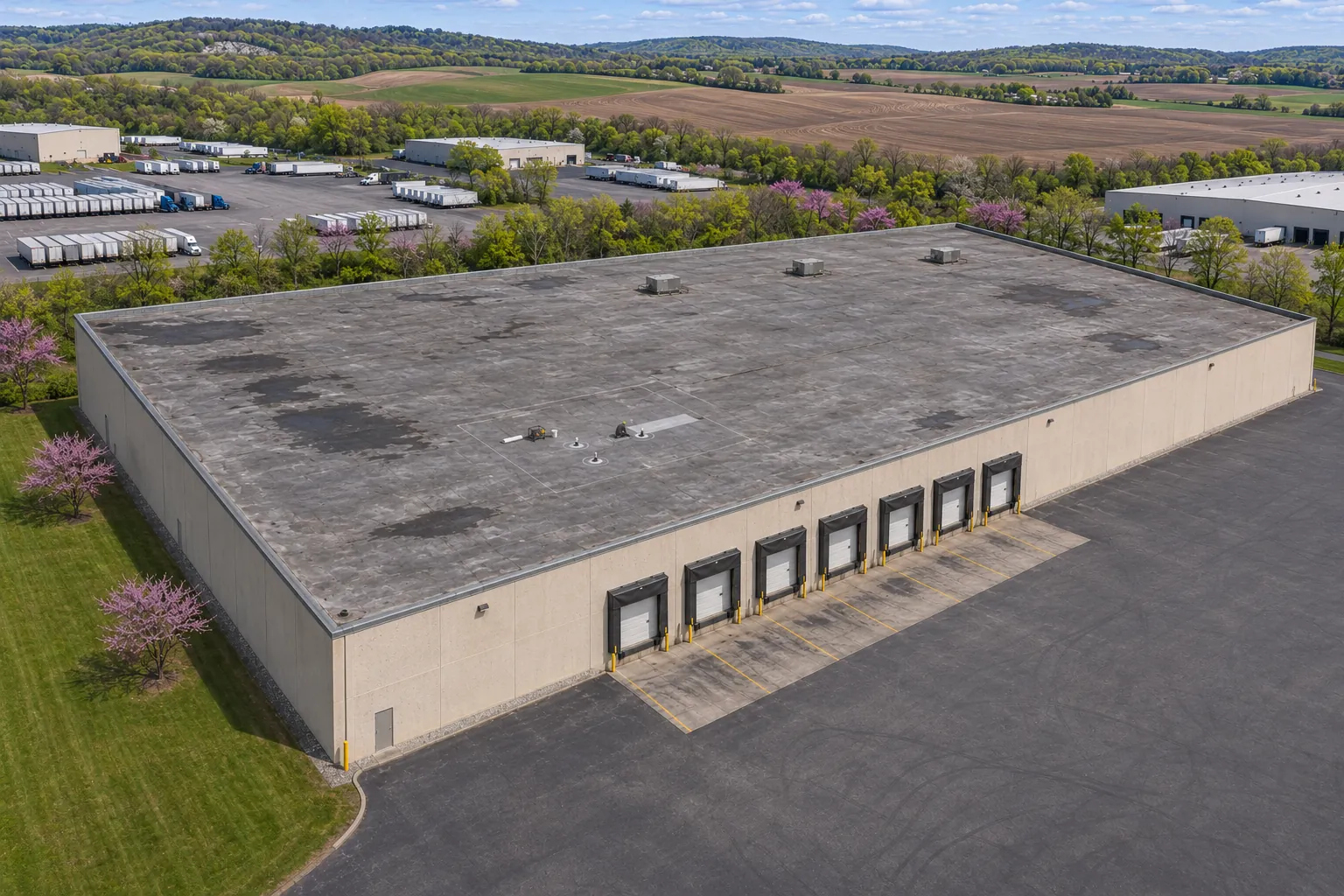
Drips with no obvious source, traced from the ceiling back to the roof.
Leak repair details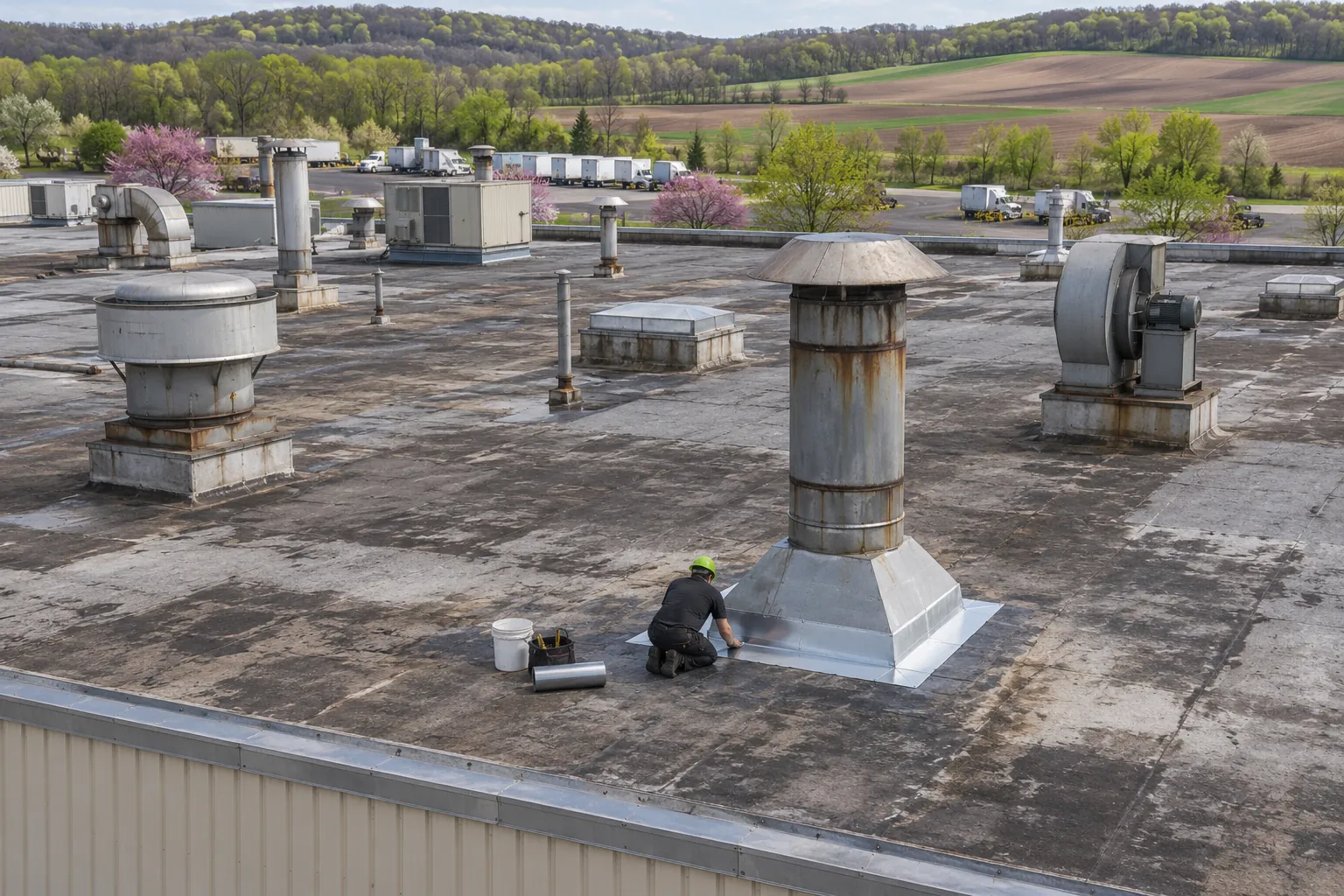
Plant roofs where stacks, fans, and ductwork crowd the membrane.
Industrial roof repair detailsAnswers on rust, seams, old patches, and how long a metal roof can stay in service.
Yes, when the rust is limited and the steel around it is still firm. We inspect the eave connection, supports, and neighboring laps to set the repair extent. The new detail has to restore water shedding and attachment at the panel end, because covering weakened metal there only hides the problem for a while.
Seams beside a curb open when panel movement, loose attachment, or the curb detail itself puts stress on the joint. We inspect the whole junction before choosing a repair. If the equipment or its supports are moving, that gets corrected separately so the rebuilt seam is spared a load it was never meant to carry.
Usually, if the unsuitable patch materials can be removed and the panels beneath them are still firm. We open failed patches where needed to find the original defect. The new repair connects to stable metal and never relies on an aging patch whose bond or fastening is already in question.
Panel condition shows whether targeted repairs can keep the roof in service, but fastening, seams, and supports matter just as much. We look at corrosion, fasteners, laps, and flashing together with the leak history. A single lifespan number cannot describe every roof, so we explain present condition and upkeep needs instead.
Often both happen in the same visit. A rusted screw head or a cracked washer leaks even when the panel around it is firm, so fastener rows near any repair are checked and replaced where needed. Replacing panels while leaving failed fasteners in the next row tends to move the leak a few feet instead of stopping it.
Tell us the building, the panel type if you know it, and where the drips show. We will inspect the panel runs and price the repair from the findings.