Rooftop Unit Curbs
Cracked base flashing, open curb corners, and condensate lines that spill onto the membrane all send water down beside the unit, often to a ceiling several feet away.
As a York commercial roof leak repair contractor, we trace water from the stain back to its entry point, then repair the opening and the wet material around it.
Before a York commercial roof leak repair visit, match the leak pattern you notice with what it usually leads to.
| What You See | Leak Tracing and Repair | Equipment Service First | Wider Roof Repair |
|---|---|---|---|
| Drips only when a rooftop unit runs | Sometimes | Usually Fits | Rarely |
| A stain that grows after every rain | Usually Fits | Rarely | Rarely |
| Leaks that start during snowmelt | Usually Fits | Rarely | Sometimes |
| Water at several bays after each storm | Sometimes | Rarely | Usually Fits |
| Old stains with no recent wet weather | Usually Fits | Rarely | Rarely |
Water rarely drops right under the opening. These are the entry points we check first when a leak shows inside.
Cracked base flashing, open curb corners, and condensate lines that spill onto the membrane all send water down beside the unit, often to a ceiling several feet away.
Loose counterflashing, open coping joints, and cracked mortar let water behind the base flashing, where it runs down the inside of the wall.
Curbs around skylights and roof hatches age with the roof, and their corners open first. Condensation on the glass can mimic a leak, so we check both.
Snow and ice block the normal drainage path, and meltwater backs up into laps, curb flashing, and roof edges that shed ordinary rain without trouble.
A cracked drain bowl or a loose clamping ring leaks into the deck right at the outlet, while a blocked scupper pushes water over the edge flashing.
Rubber pipe boots crack in the sun, and vent stacks lose their flashing collars, leaving small openings directly above offices and production areas.
Leak work starts inside the building and ends on the roof detail that let water in.
Stain shape, drip timing, and what sits above the ceiling tell us which roof area to search first.
When leaks line up with a unit running, we coordinate with its service people and observe it operating while inspecting the curb and flashing.
Water moves along deck flutes, insulation joints, and framing. We trace it upslope from the interior mark rather than patching the spot directly above.
The entry point gets repaired and wet material along the path comes out, so the area dries instead of leaking again through soaked boards.
Finding the real entry point saves more than the ceiling tile under it.
Stopping water at its source keeps it off machinery, electrical gear, and stored product in the bays below.
Removing wet material along the water path keeps moisture from spreading under the membrane after the repair.
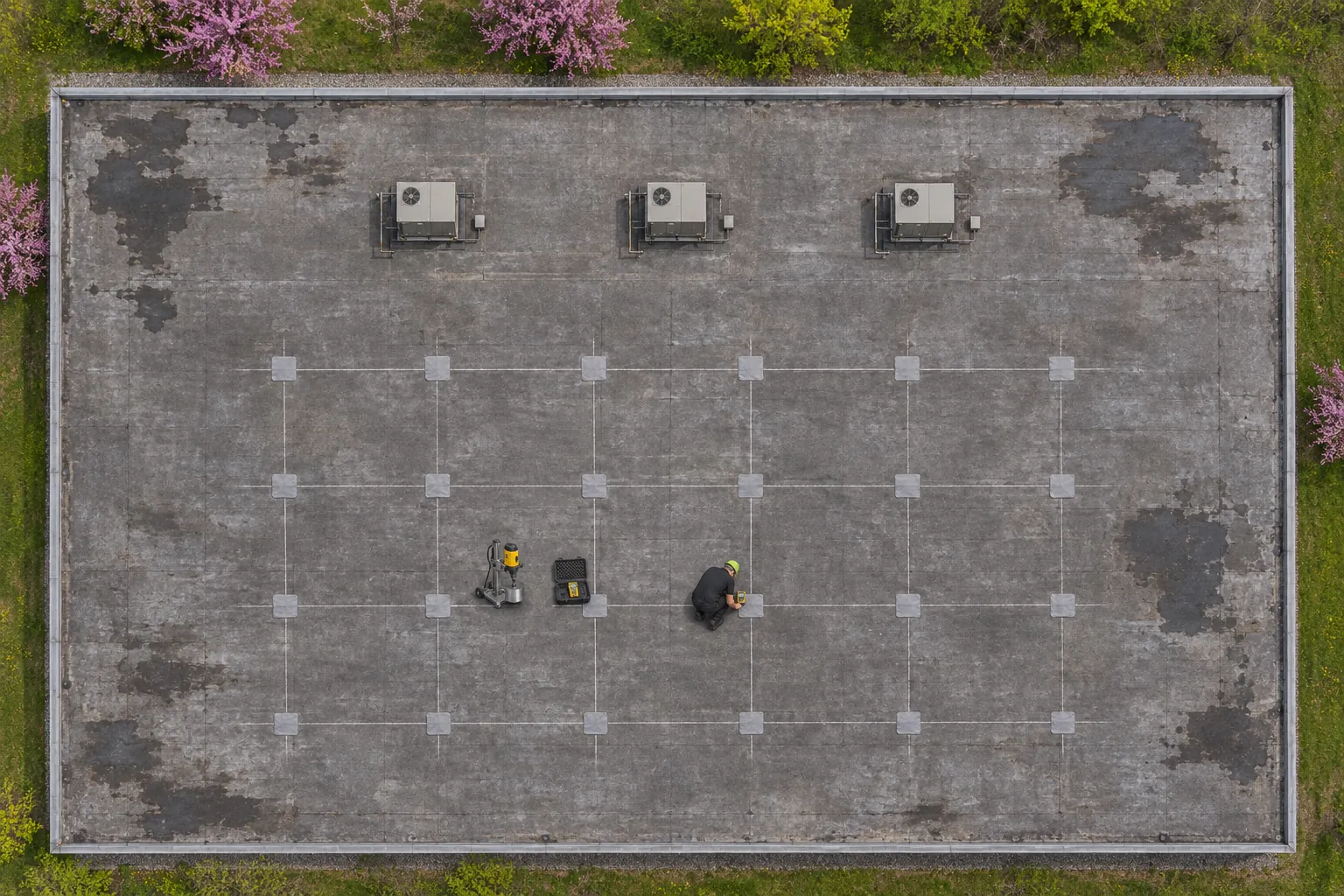
Photos and a marked plan of each entry point help sort new leaks from old ones later.
Repairing the actual opening ends the routine of patching the wrong spot after every storm.
Call us and tell us where the water lands and what equipment sits above it. Protect the area inside, and we will talk through next steps.
Four steps take a leak from a stain on the ceiling to a repaired entry point.
When it leaks, how long it has leaked, what weather or equipment work came first, and whether interior repairs were made all narrow the search.
We inspect curbs, walls, penetrations, and seams upslope of the interior mark, and test suspected spots when conditions allow.
Photos and a marked roof plan show where water is getting in and how far wet material reaches, with a price for the repair.
The opening is sealed, wet material is replaced, and the roof detail is checked so you can watch the interior spot through the next storm.
The source of a leak decides which repair follows the tracing.
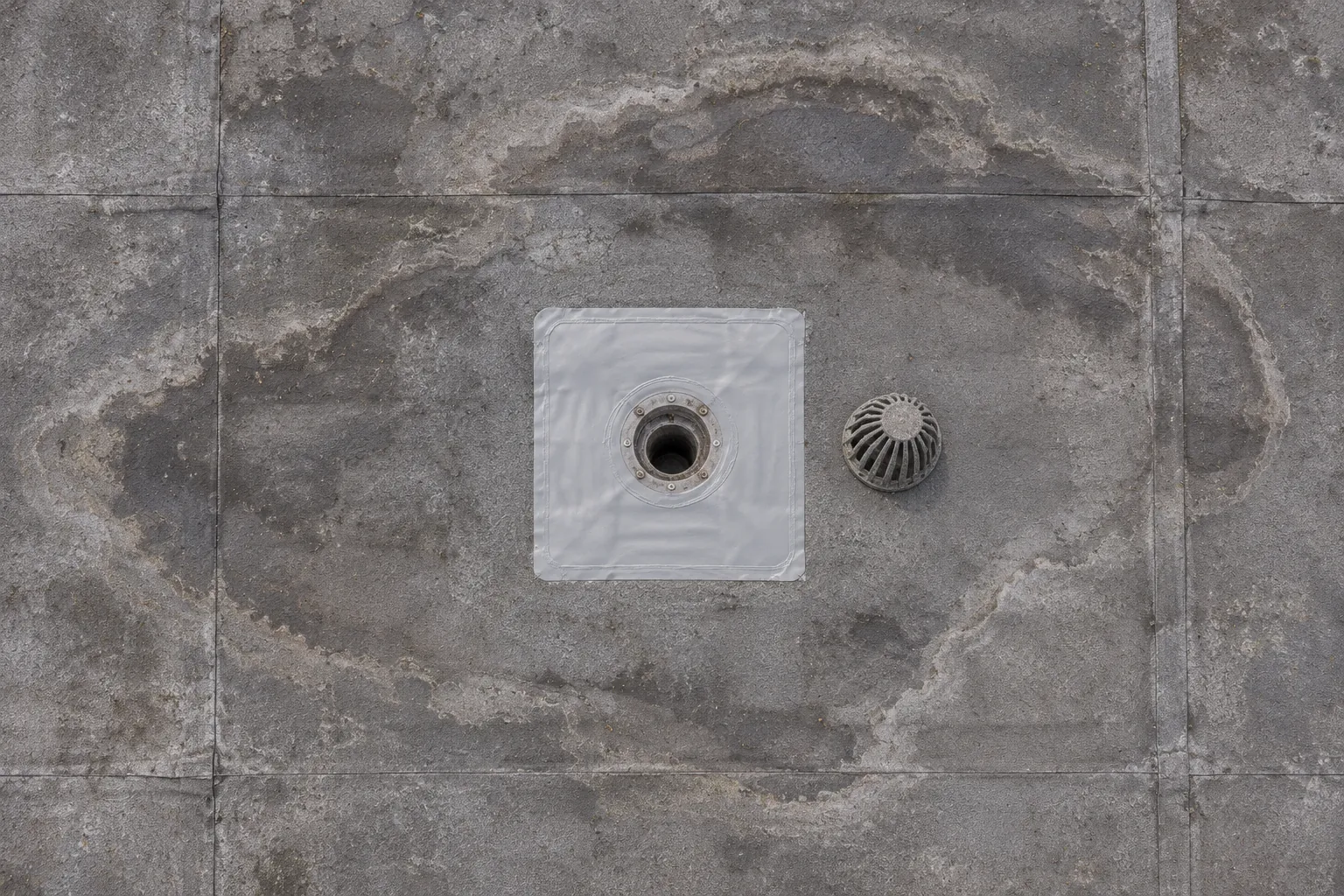
Seam, drain, and blister repairs when the entry point is in the membrane.
Flat roof repair details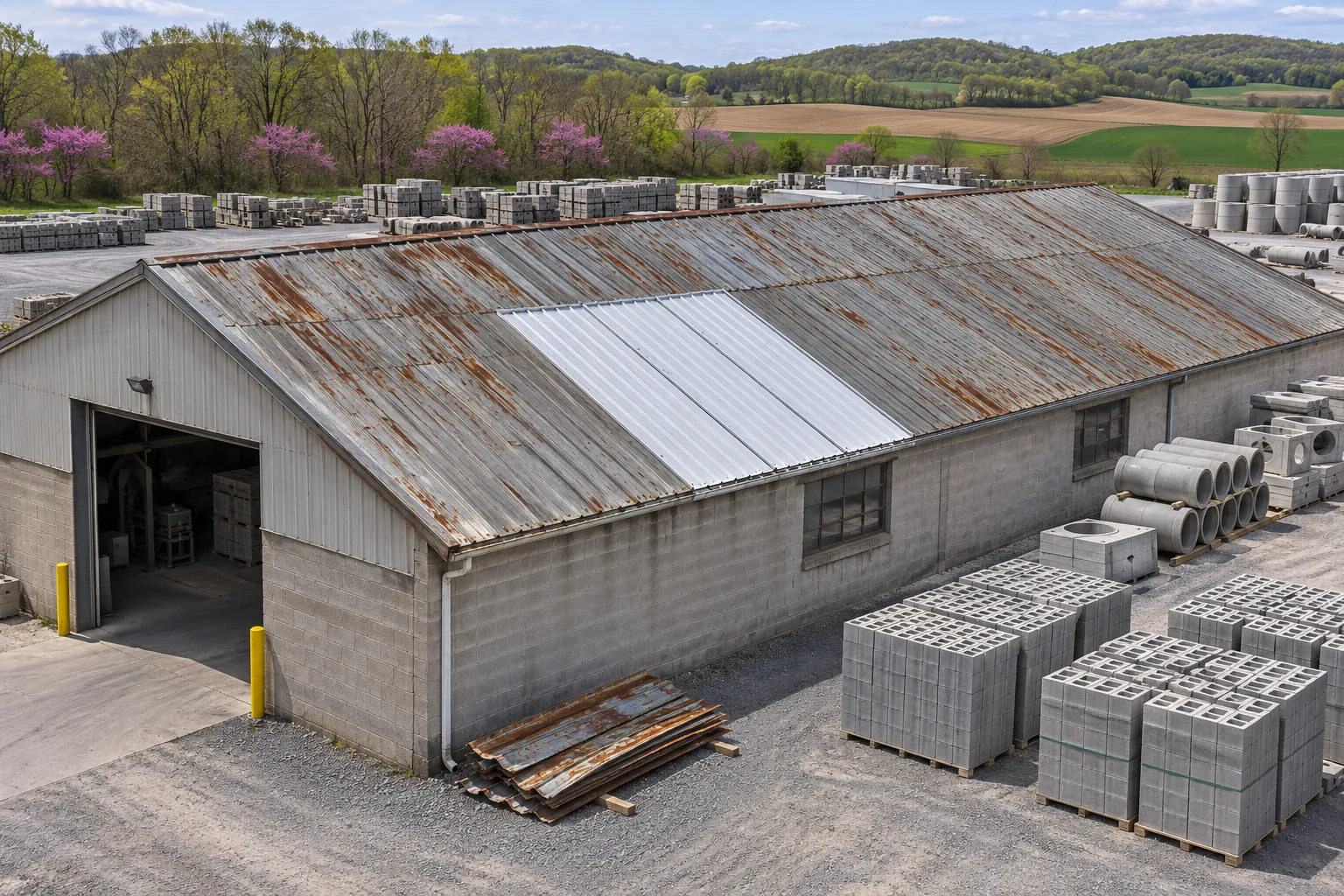
Panel end, lap, and fastener repairs when the leak traces to metal roofing.
Metal roof repair details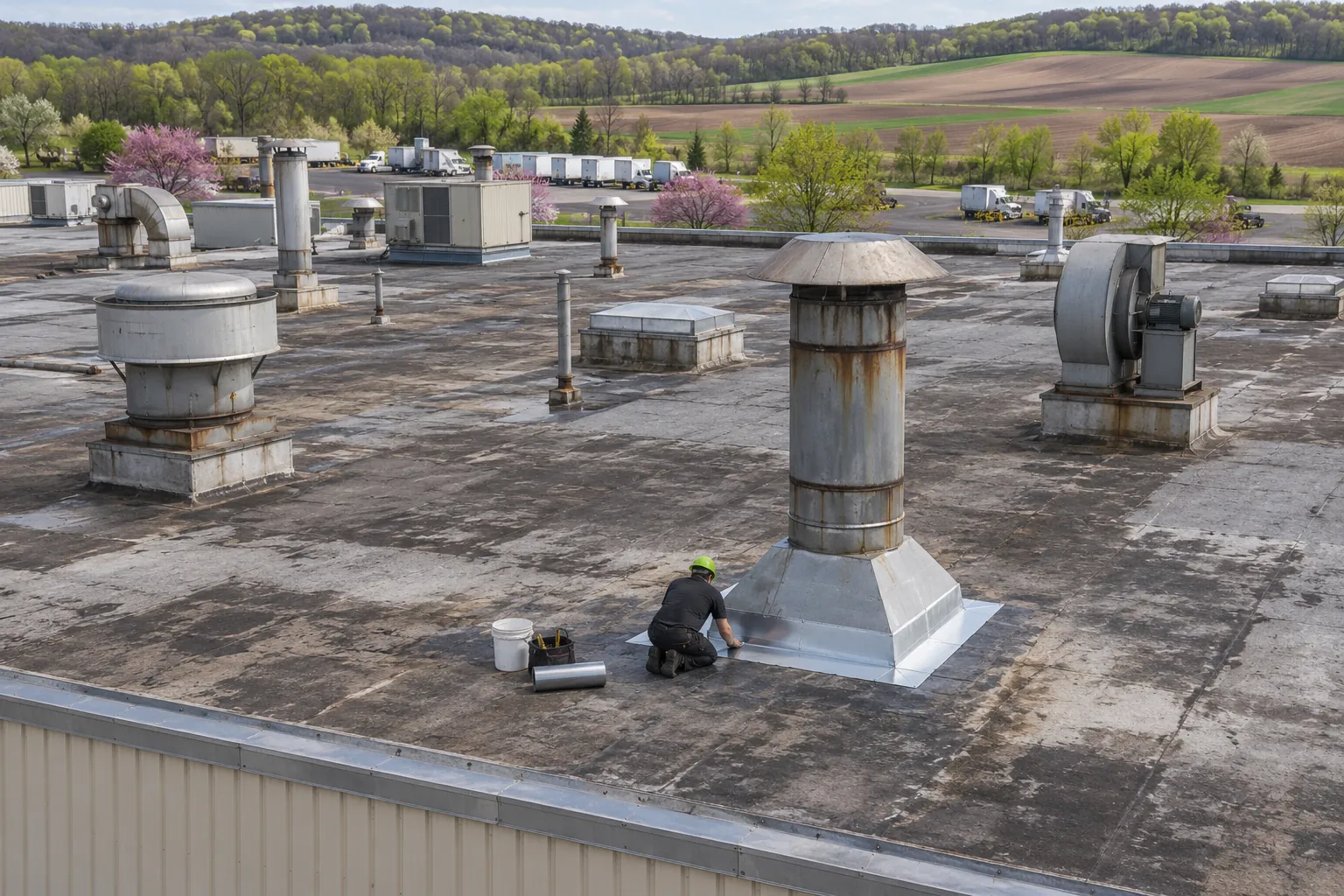
Curb and stack flashing repairs when plant equipment is the source.
Industrial roof repair detailsAnswers on equipment leaks, cost, leases, snowmelt, and timing.
Often, yes, when the timing points to condensate or another equipment source. We coordinate with the responsible service technicians and watch the unit operate while inspecting the curb and roof flashing. Test conditions should match the reported problem, because shutting everything off can erase a useful clue without fixing anything.
Hidden leaks sometimes need exploratory work to find water paths and damaged materials that a surface look cannot show. Our on-roof inspection sets the price using tracing time, the roof system, the size and number of damaged areas, core cuts for wet insulation, flashing, drain work, and access.
A maintenance clause alone rarely settles every roof leak question, since the full lease terms and circumstances matter. Landlord and tenant should check their agreement rather than rely on a general roofing answer. We document the physical defect and the repair scope, while responsibility for related losses stays between the parties.
Snow and ice can block the usual drainage path, letting meltwater back up into laps, curb flashing, and roof edges. We inspect those details and compare the reported leak with thaw conditions. A metal plant roof that sheds rain can still have a defect that only backed-up water exposes, so a dry-weather look leaves the question open.
As soon as the roof can be reached safely. Water that keeps entering spreads through insulation and along deck flutes, which enlarges the repair with every storm. If access has to wait for weather, protect the interior and note when and where the leak appears, since that timing helps narrow the search.
Tell us where the water lands and when it happens. We will trace the entry point and price the repair from what the roof shows.