Wet Insulation Past the Stain
Moisture often reaches well beyond the visible defect, and the repair edge has to clear all of it.
As a Steelton commercial roof repair contractor, we set repair boundaries from core cuts and moisture findings, and we show you what each edge connects to.
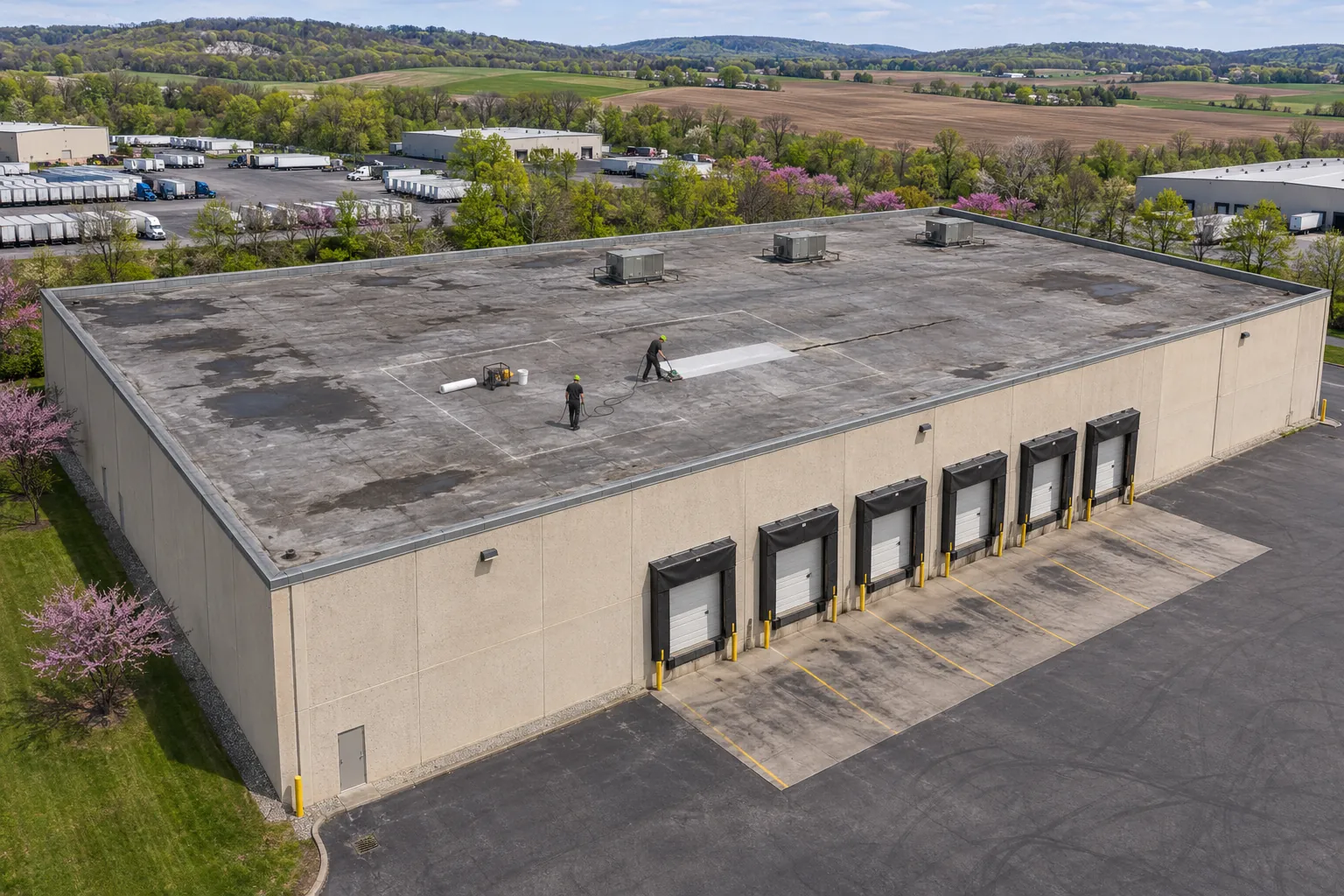
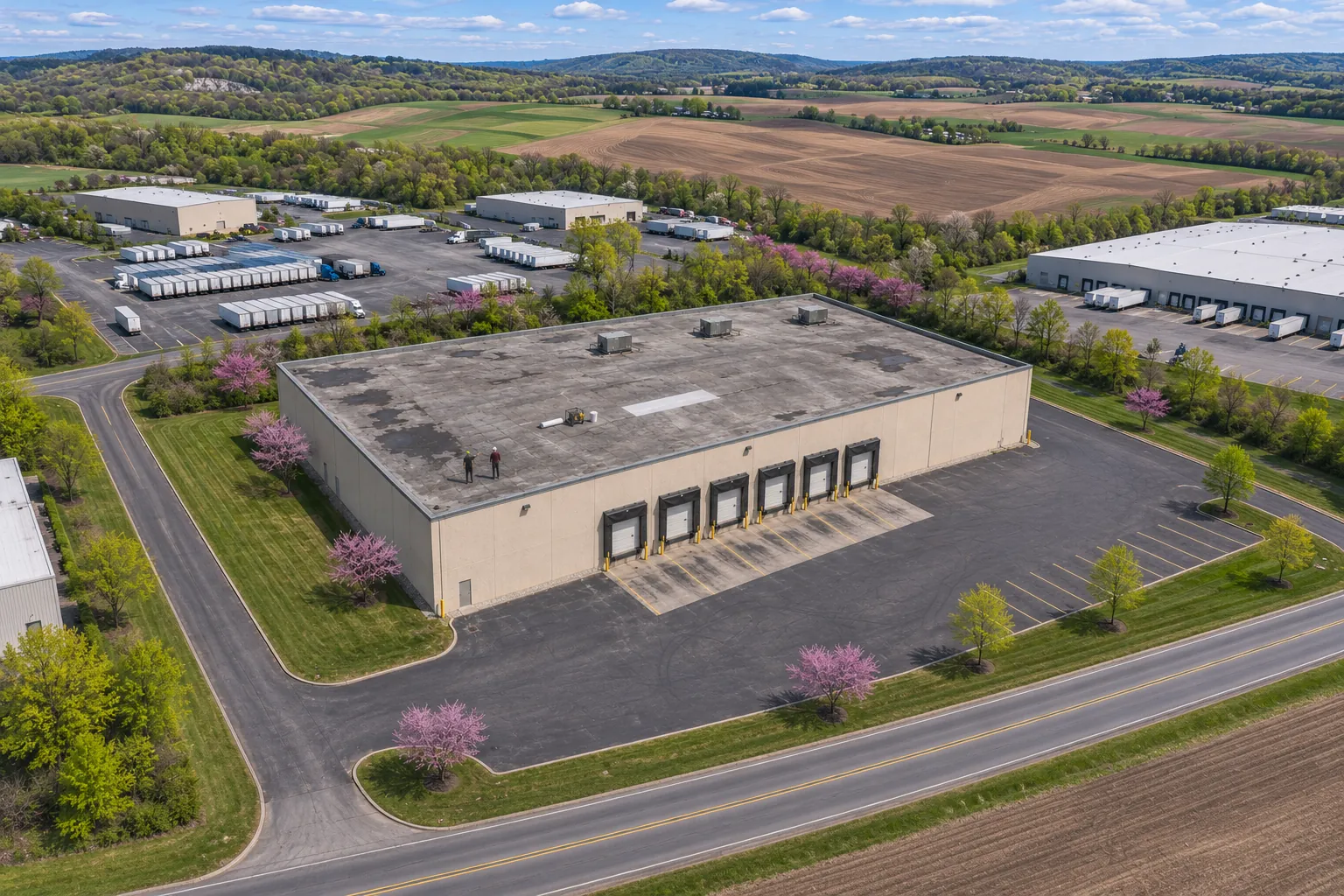
Steelton commercial roof repair proposals for the same plant roof can draw very different edges, and owners often ask us to explain the difference.
A useful comparison asks how each proposed edge relates to the moisture findings and to solid roofing. A larger area is only better when the extra material is wet or failing.
We mark the damaged locations, show which materials come out and which stay, and explain why each edge sits where it does, so you can compare proposals on the same terms.
These roof conditions decide where a Steelton repair can start and where it can stop.
Moisture often reaches well beyond the visible defect, and the repair edge has to clear all of it.
New membrane needs well bonded seams on every side, so loose seams near the edge push the boundary outward.
Wet insulation left in place rusts the steel deck, and deck damage widens the repair area once it is found.
Edges that land on old patches have nothing reliable to bond to and need to move out to clean roofing.
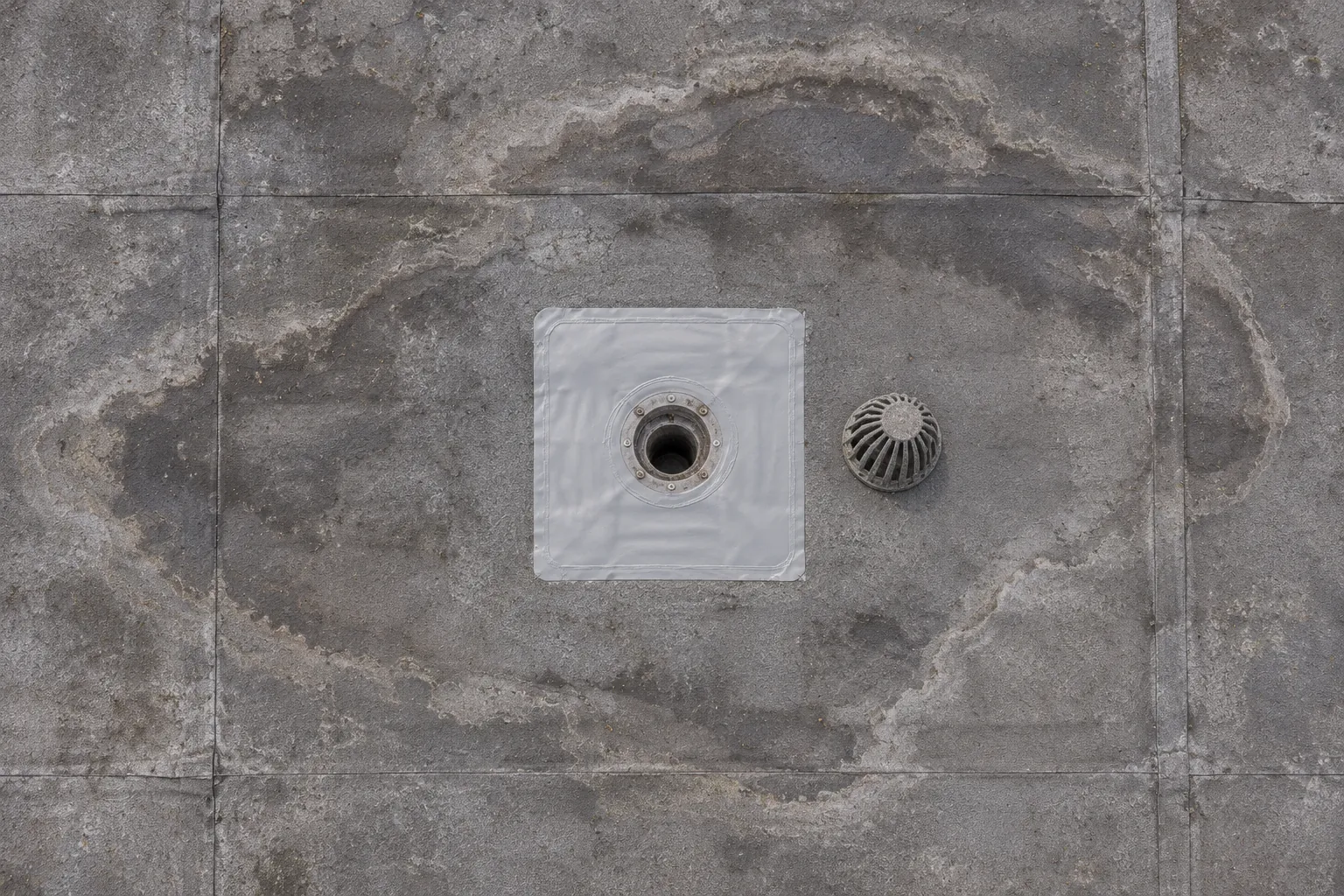
A drain near the edge is usually brought fully inside the repair so its flashing is rebuilt in one piece.
Curbs and walls close to the edge make natural stopping points when their flashing is part of the work.
A boundary set from findings protects both the budget and the roof.
Removing only wet and failed material keeps the repair sized to the damage on the roof.
Dry, well bonded roofing outside the edge stays in service instead of being torn off for no reason.
Tying into solid roofing keeps the new edge from becoming the next leak.
A marked roof plan makes it easy to set two proposals side by side.
How each repair service sets its boundary on Steelton buildings.
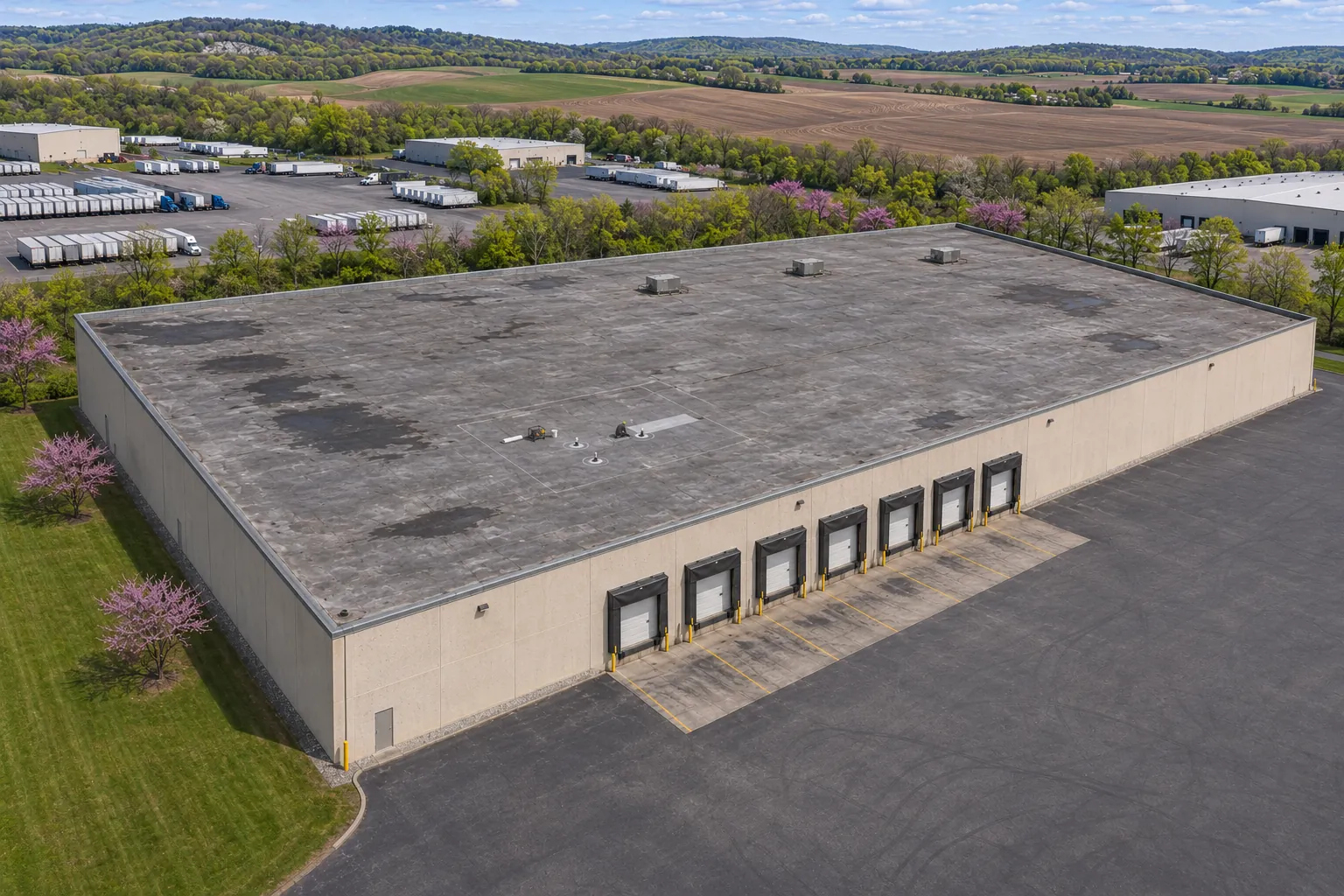
Steelton flat roofs where core cuts set the edge of seam, drain, and membrane repairs.
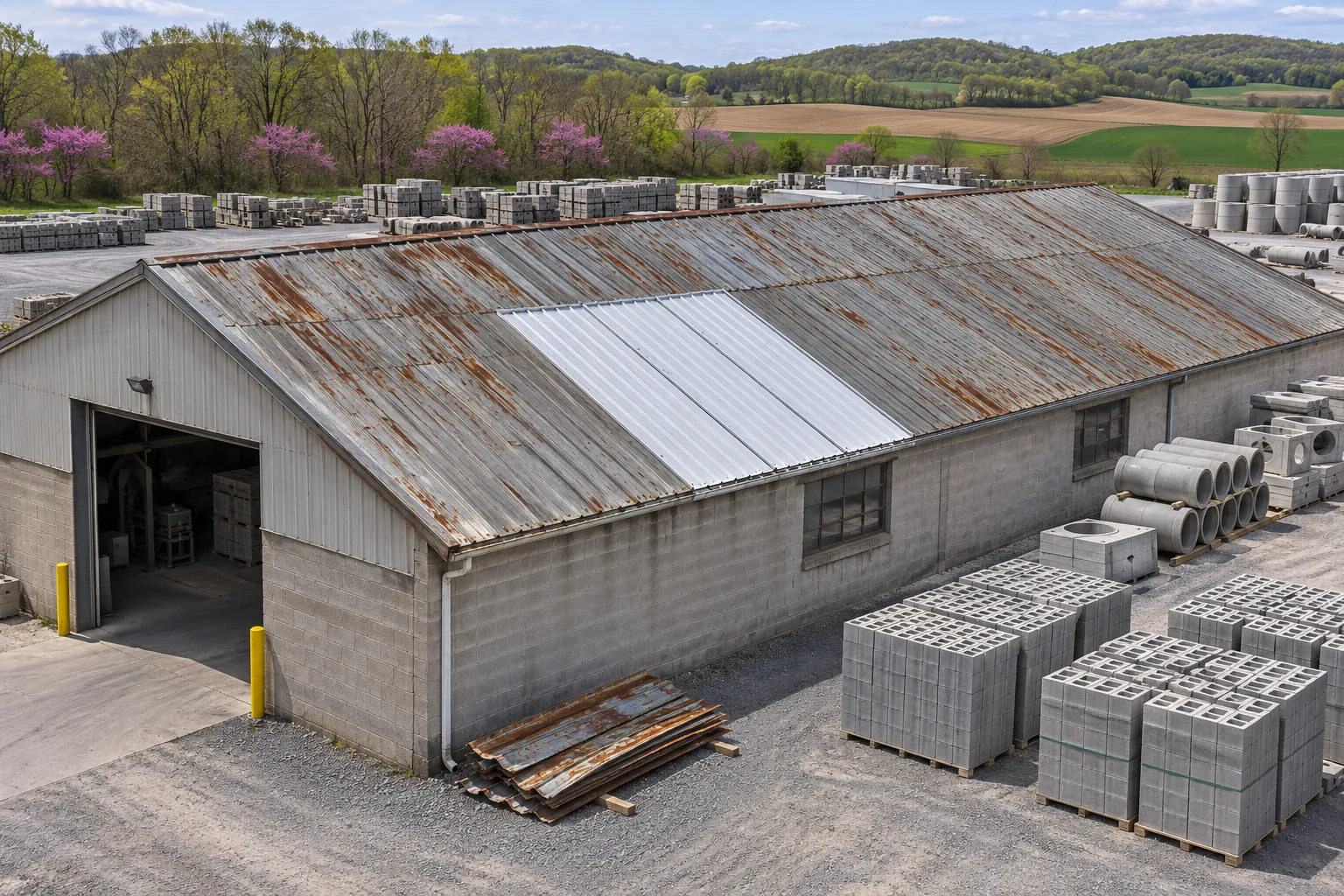
Metal buildings in Steelton where rust extent sets how many panel ends are replaced.
Leaks in Steelton traced to their entry point so the repair area follows the water path.
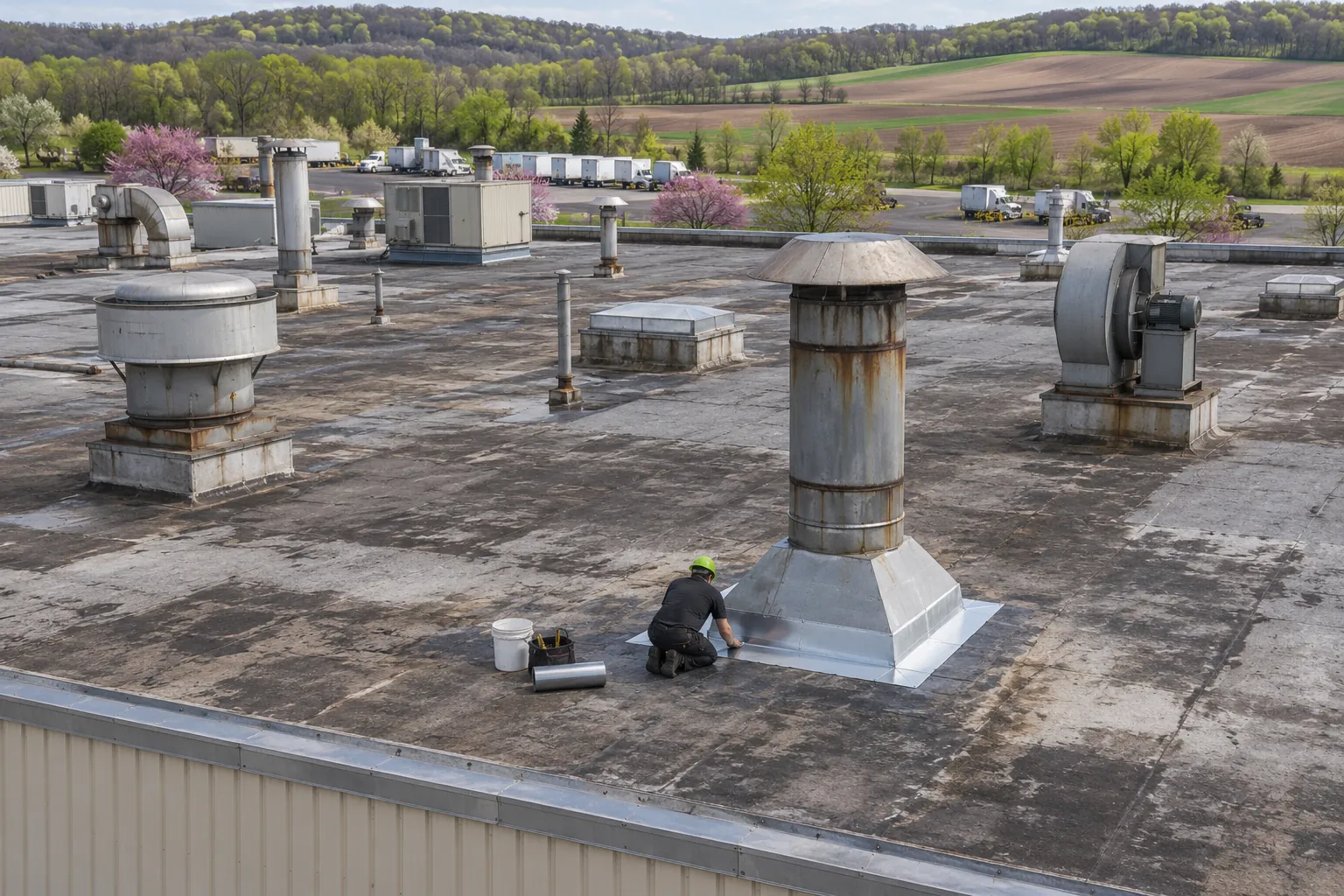
Plant roofs in Steelton where equipment curbs and the wet boards around them set the boundary.
Call us and we can talk through what each edge connects to. Have the core-cut results handy if you have them.
Four steps turn moisture findings into a repair edge you can check.
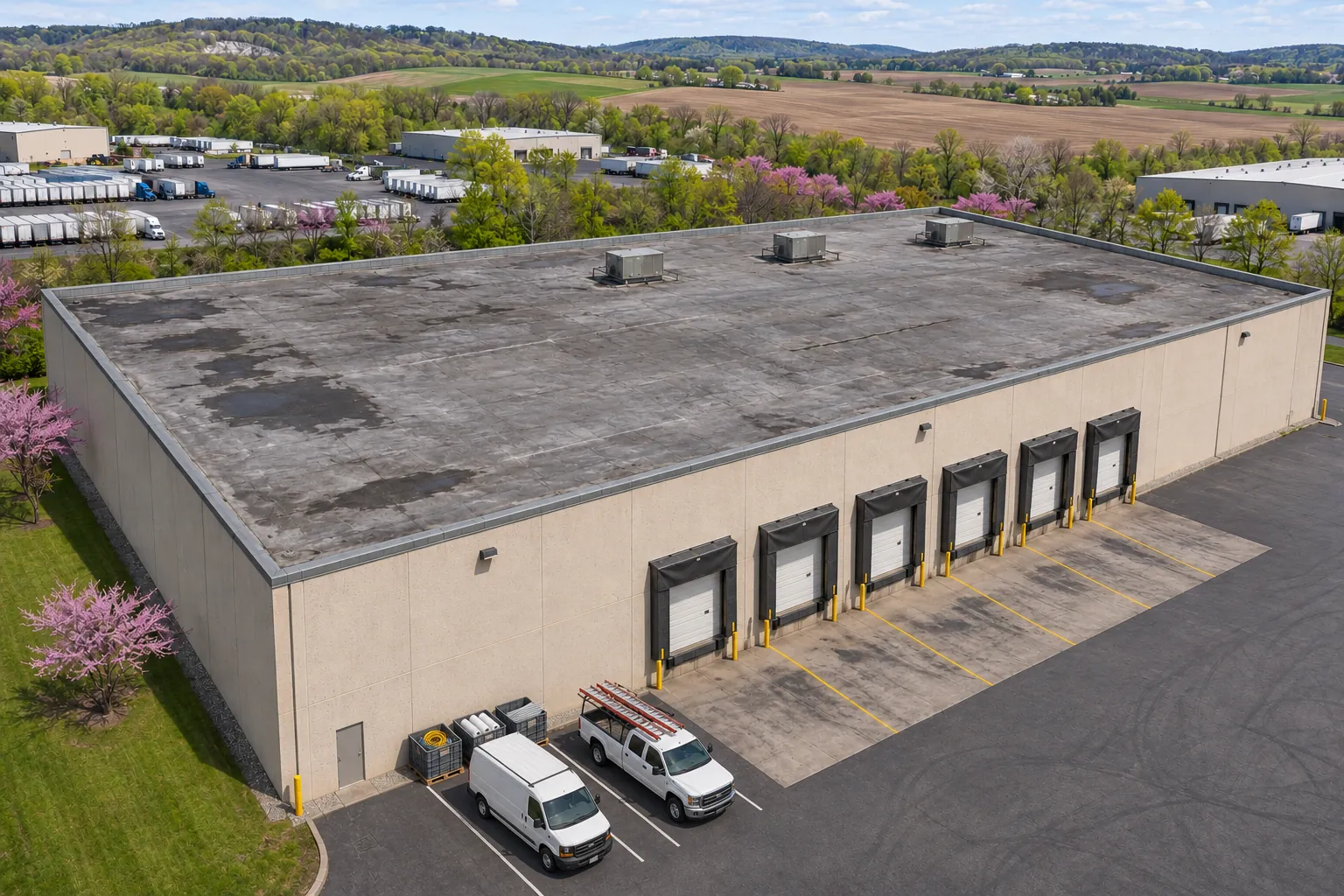
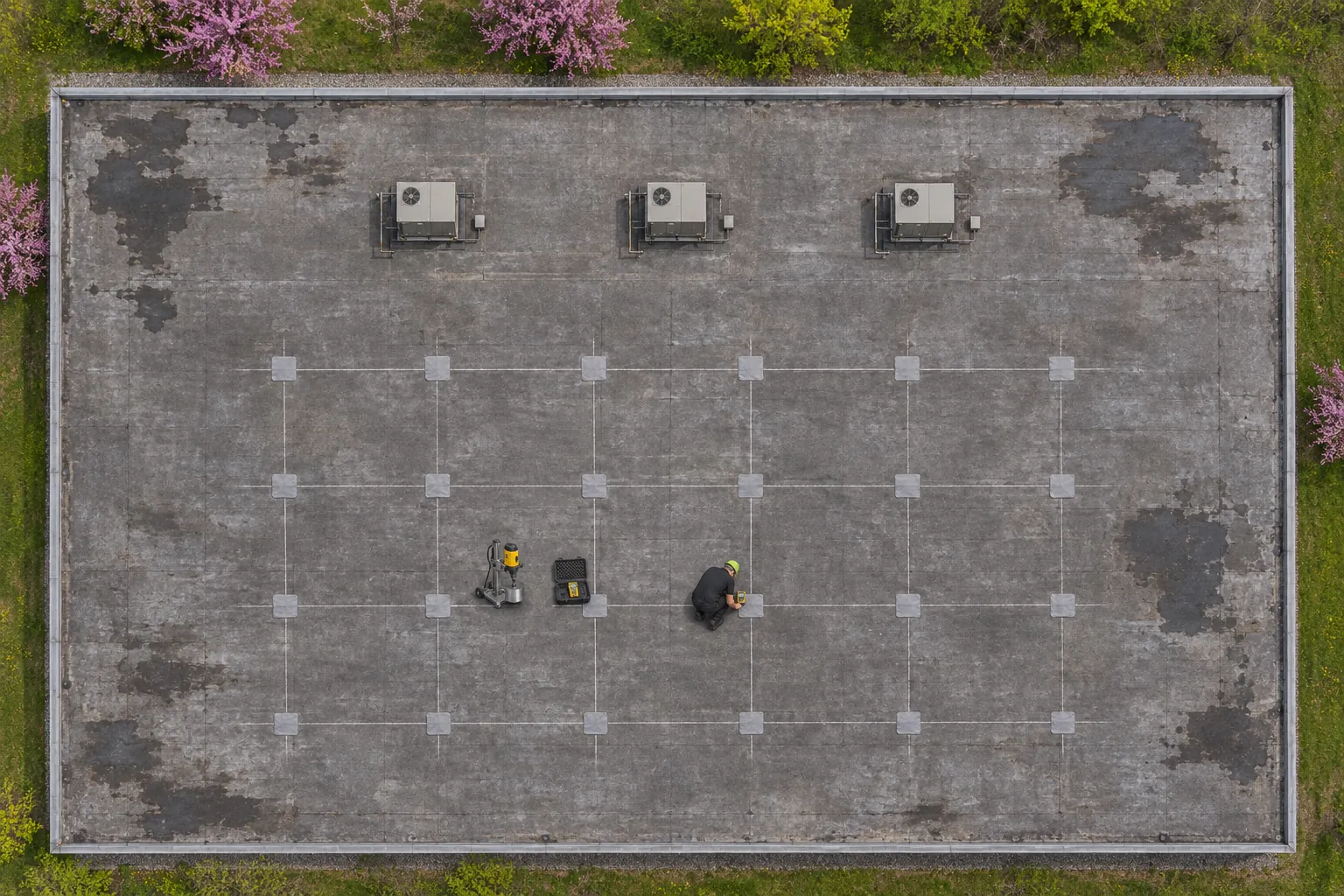
Core cuts and probing around the defect show where insulation is wet and where it is dry.
Wet areas, failed seams, and solid roofing are marked on a roof plan you keep.
The boundary runs through dry, well bonded roofing, with curbs and walls used as stopping points where they fit.
Inside the edge, damaged material comes out, new insulation and membrane go in, and every seam at the edge is welded or adhered to solid roofing.
Steelton sits within our six-town service area for commercial roof repair. For buildings outside it, call us or send us a message.
| Town | County | What We See On Roofs There |
|---|---|---|
| YorkHome Base | York County | Our home base, where plant roofs raise the same repair-or-rebuild boundary questions. |
| Hanover | York County | Machinery and equipment shops where leaks often show above overhead door tracks. |
| Elizabethtown | Lancaster County | Food plants with exhaust equipment that gets serviced on the roof. |
| Red Lion | York County | Older commercial roofs carrying unused antenna mounts and other leftover penetrations. |
| Oxford | Chester County | Equipment businesses finishing interior repairs after a roof leak. |
Answers on repair boundaries, wet insulation, and proposals for Steelton roofs.
Ask how each proposed edge relates to the moisture findings and to solid roofing. We show the damaged locations and explain which materials come out and which stay. A larger boundary is not automatically better, so the useful test is whether the scope covers the identified defect and ends at good connections.
Wet insulation, failed seams, deck damage, and the location of drains, curbs, and walls. The edge has to clear every wet board and land on well bonded, dry roofing so new seams have something firm to join. Core cuts mark that line before any material is removed.
Whenever core cuts or probing show the boards under a defect are wet. Membrane laid over wet insulation traps the water, which keeps rusting the deck and feeding leaks. The wet boards come out to their edge and are replaced before new membrane goes on.
The defect locations, moisture findings, the repair boundary, what material comes out and goes in, and how the edges connect to the existing roof. Photos and a marked plan let you check the proposal against the roof itself before you approve it.
Yes, when the roof along that line is dry and well bonded. Field seams can join new membrane to old roofing anywhere the material is firm. Curbs, walls, and expansion joints serve as edges when they fall near the damage.
Send us the roof details or the proposals you are weighing. We will inspect, mark the findings, and price a repair edge you can check.