Corroded Mount Bases
Steel bases rust where water sits against them, loosening anchors and cracking the flashing around each leg.
As a Red Lion commercial roof repair contractor, we check old antenna mounts and equipment supports for corrosion and flashing failure, then repair or remove them.
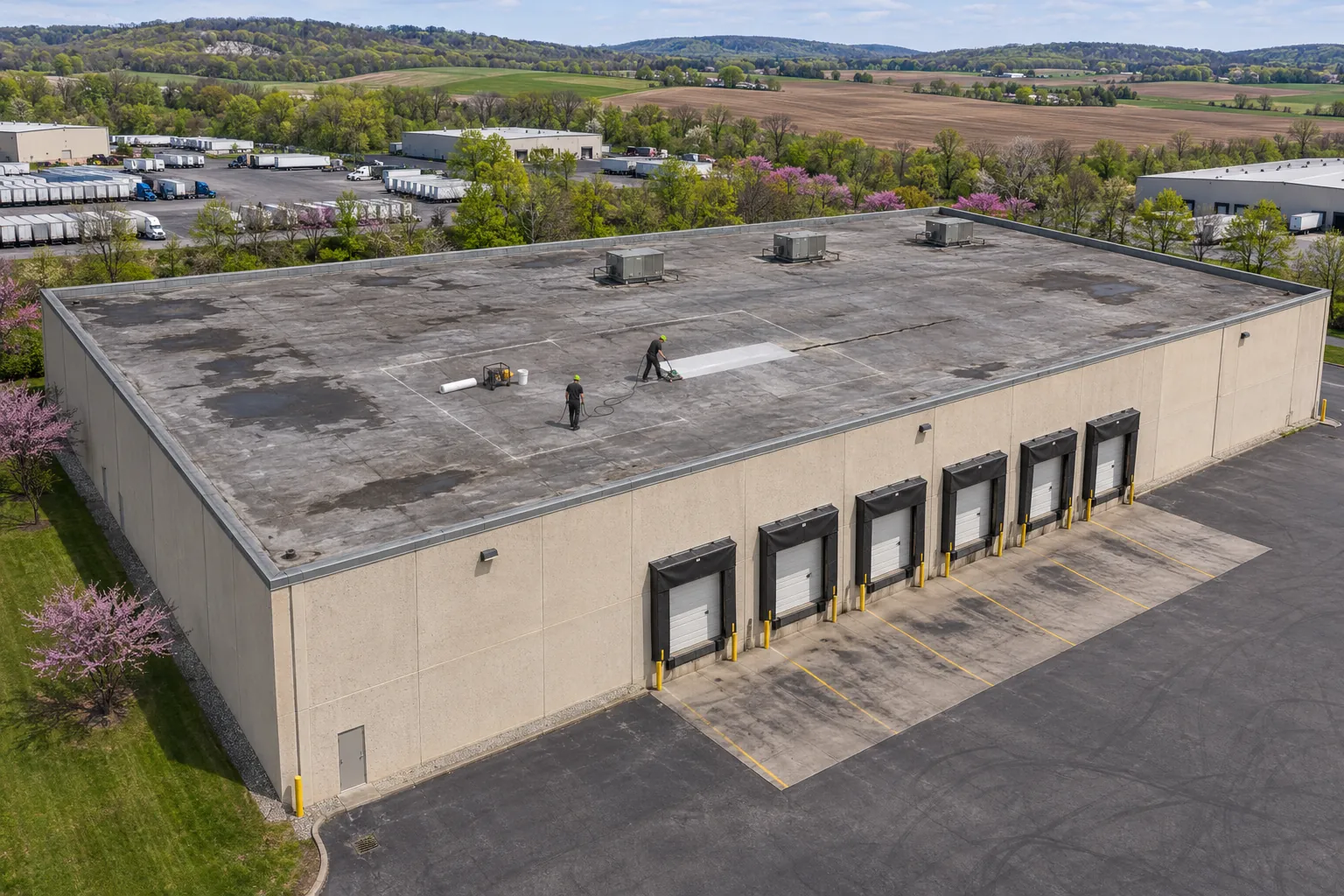
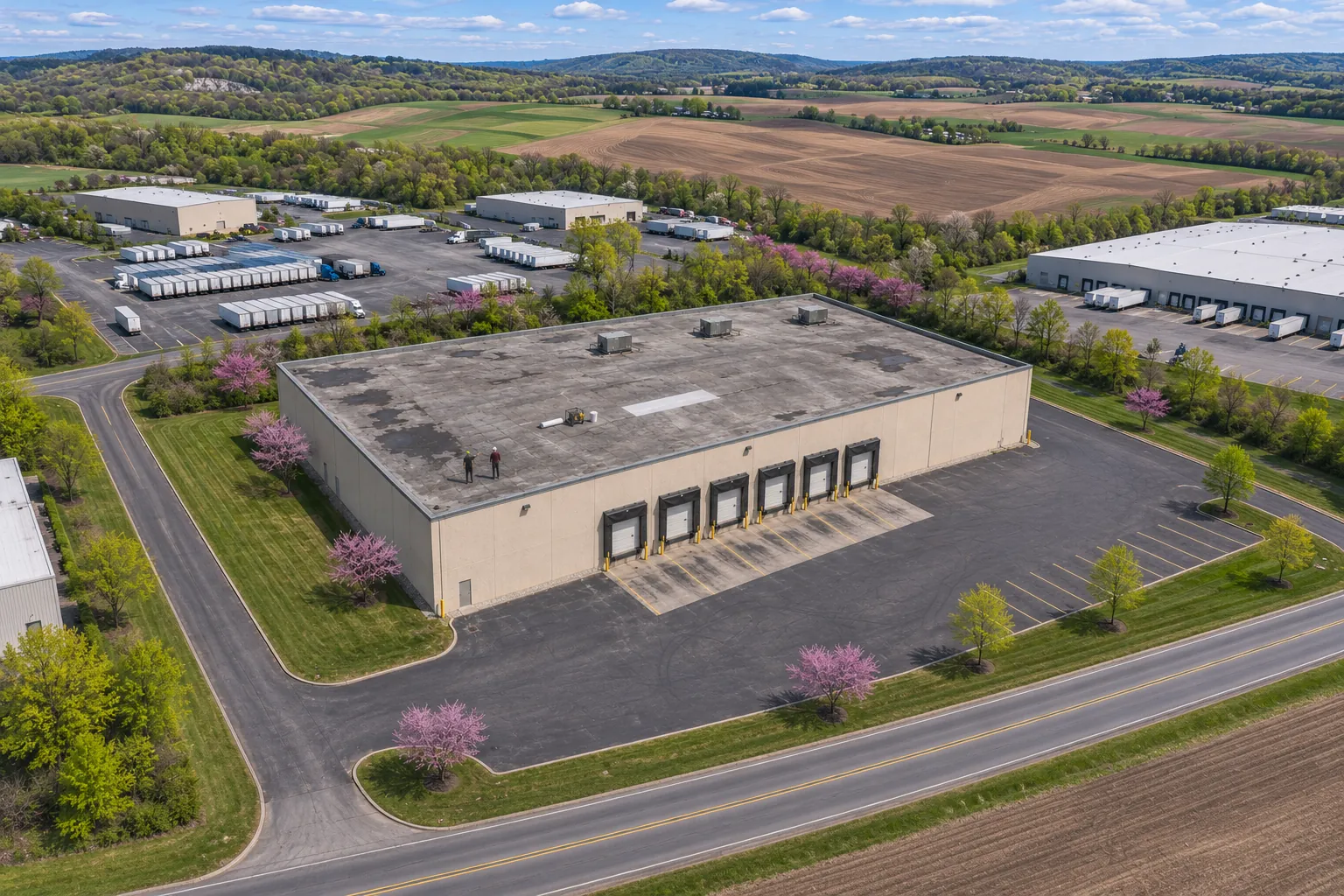
Red Lion commercial roof repair work on older buildings often centers on what has been bolted to the roof over the years.
Antenna mounts, sign braces, conduit stands, and old equipment supports each pierce the membrane. Their flashing ages, their bolts rust, and the owner who installed them can be long gone.
We first find out whether each mount is still in use. Active ones get new flashing and secure attachment. Unused ones can come off, and the opening is rebuilt into the roof assembly instead of being capped over.
Red Lion's older commercial roofs carry decades of attachments, and these are the conditions around them.
Steel bases rust where water sits against them, loosening anchors and cracking the flashing around each leg.
Roof openings from removed equipment are often covered with a sheet of metal and sealant that fails within a few seasons.
Wind loads on signs work their roof anchors loose, opening holes that leak in every storm.
Older pitch pockets around odd-shaped supports shrink away from the posts and hold water instead of shedding it.
Unpadded conduit blocks and straps rub through the membrane as they move with heat and cold.
Equipment left by former tenants or carriers sits on many roofs, and checking whether it is still in use comes before any removal.
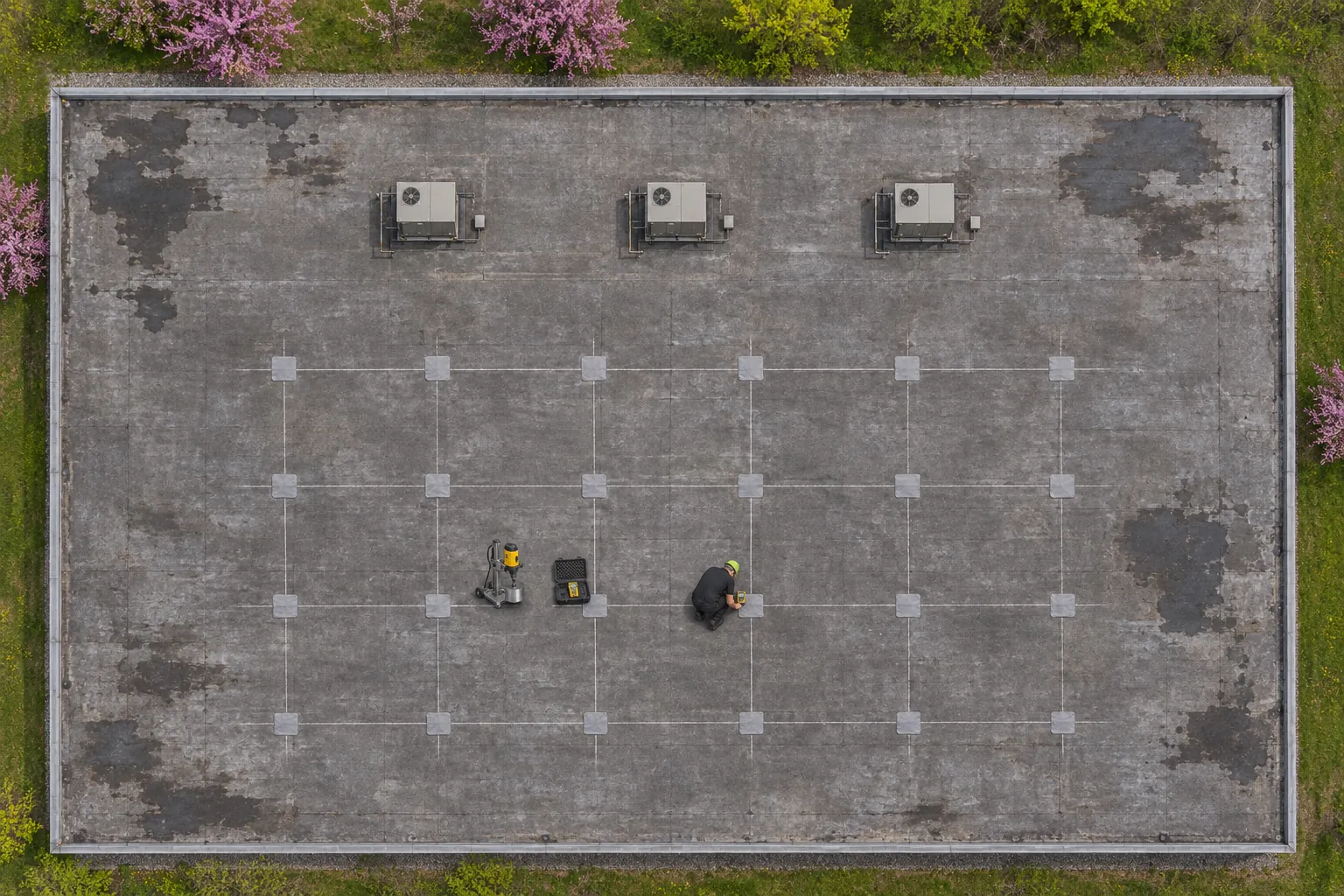
Dealing with old attachments properly protects the roof between them.
Mounts still in use get new anchors and flashing, so wind and weather stop working them loose.
Rebuilt openings from removed mounts become part of the roof instead of a patch waiting to fail.
Padding and new flashing at supports stop the slow wear that leads to leaks.
A record of each mount, its use, and its condition helps with leases, carriers, and future roof work.
How each repair service applies to Red Lion's commercial buildings.
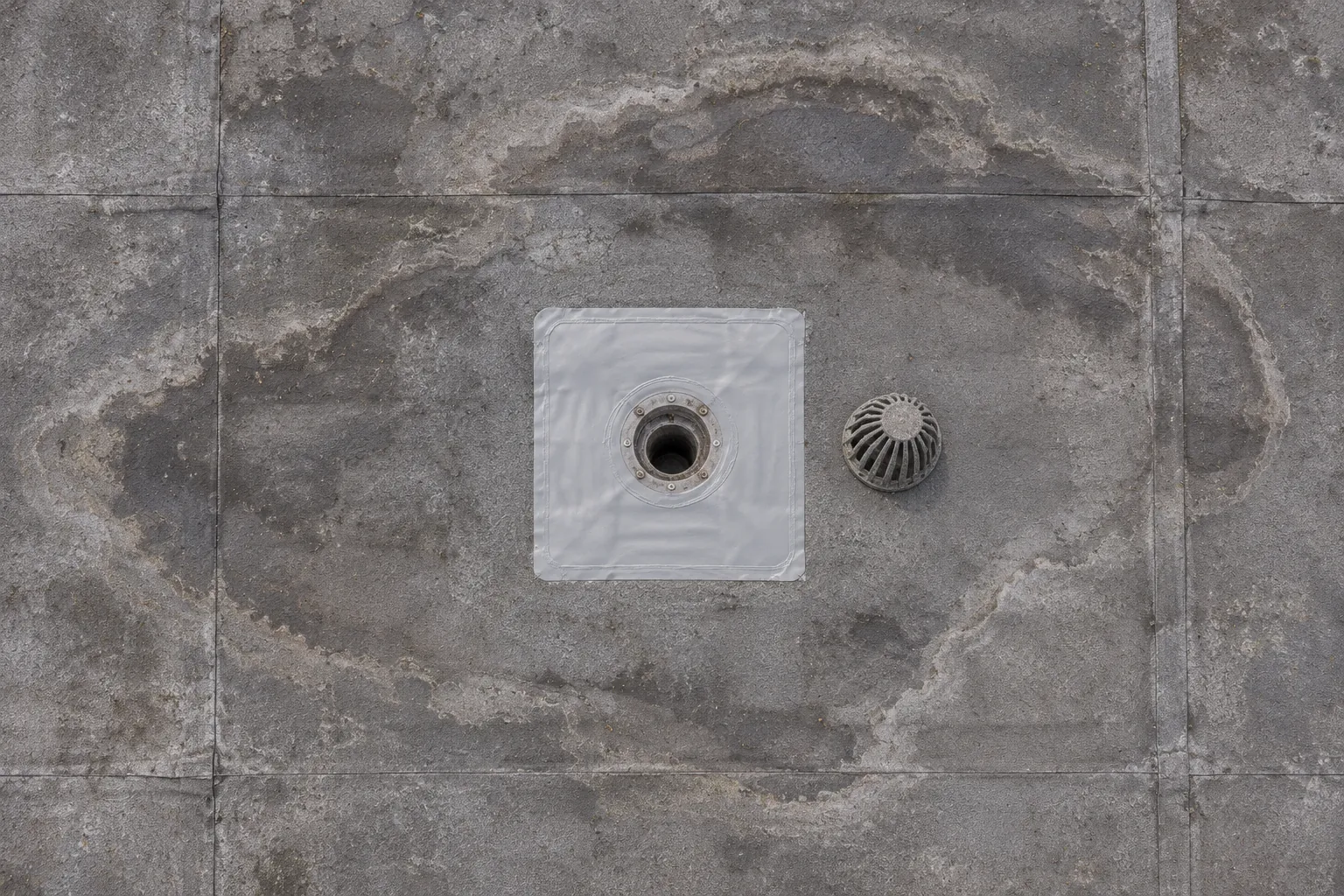
Older Red Lion flat roofs where seams and flashing around mounts and pitch pockets have opened.
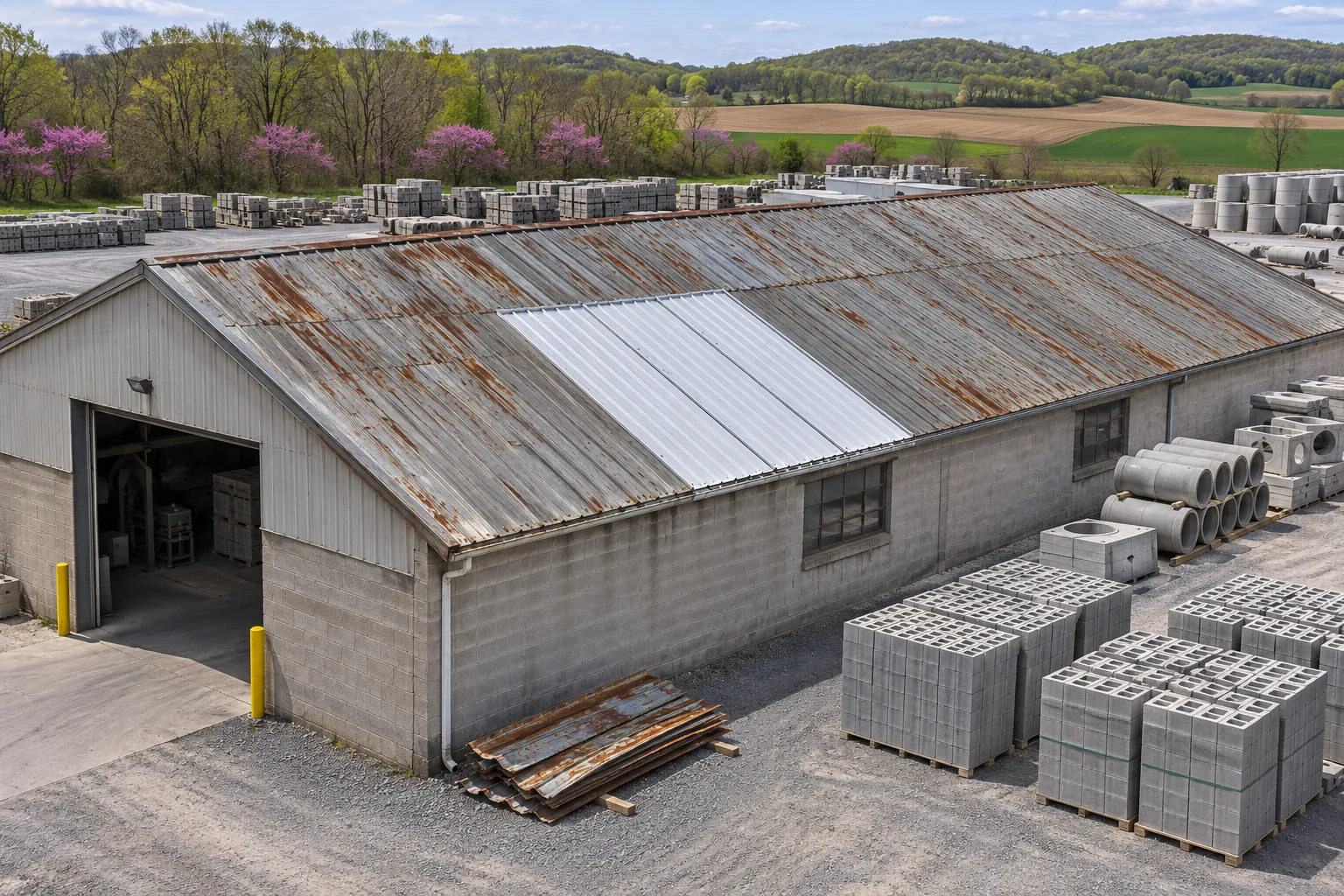
Red Lion metal roofs with sign braces or conduit stands fastened through the panels.
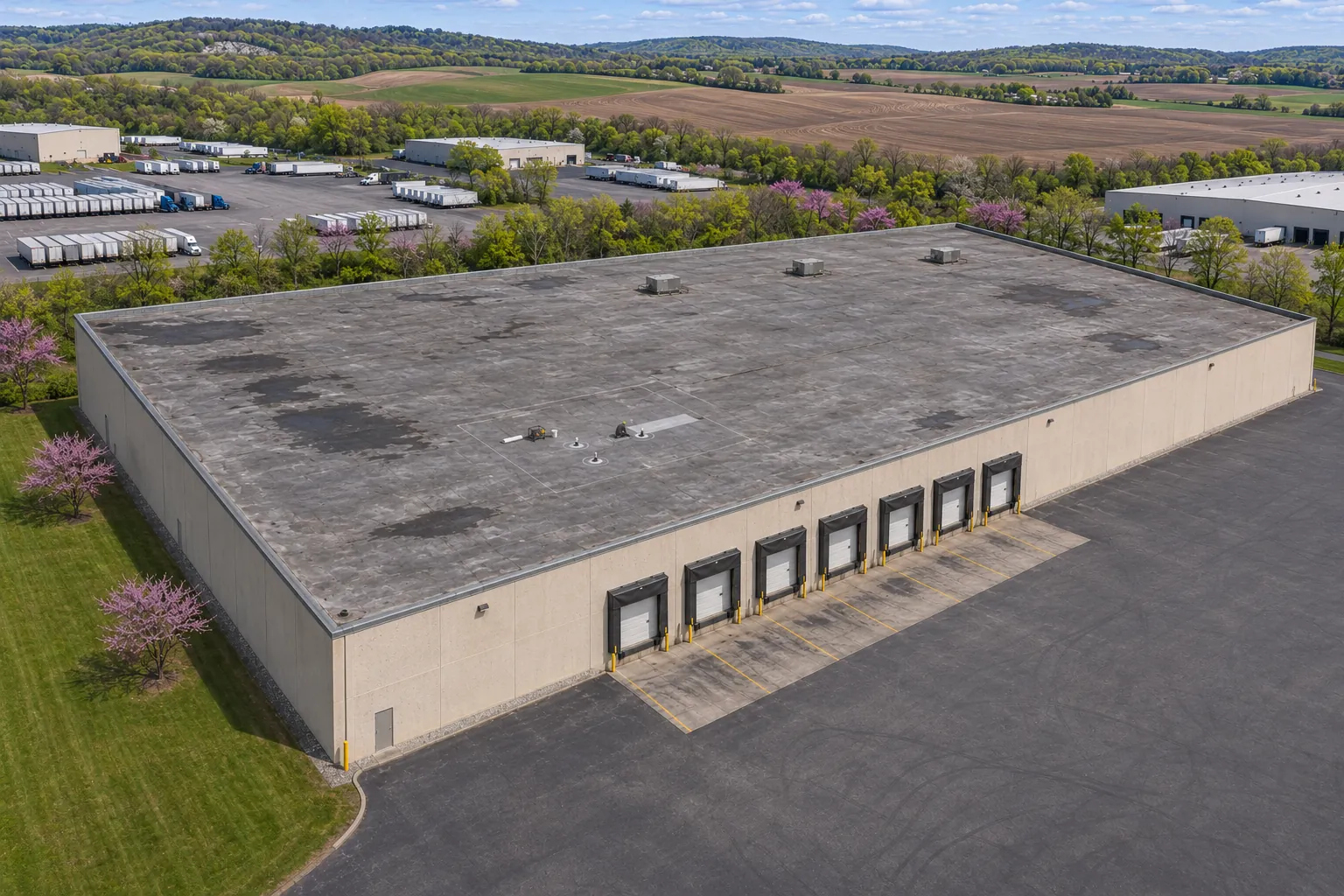
Leaks in Red Lion buildings traced to mount bases, braces, and capped-over openings.
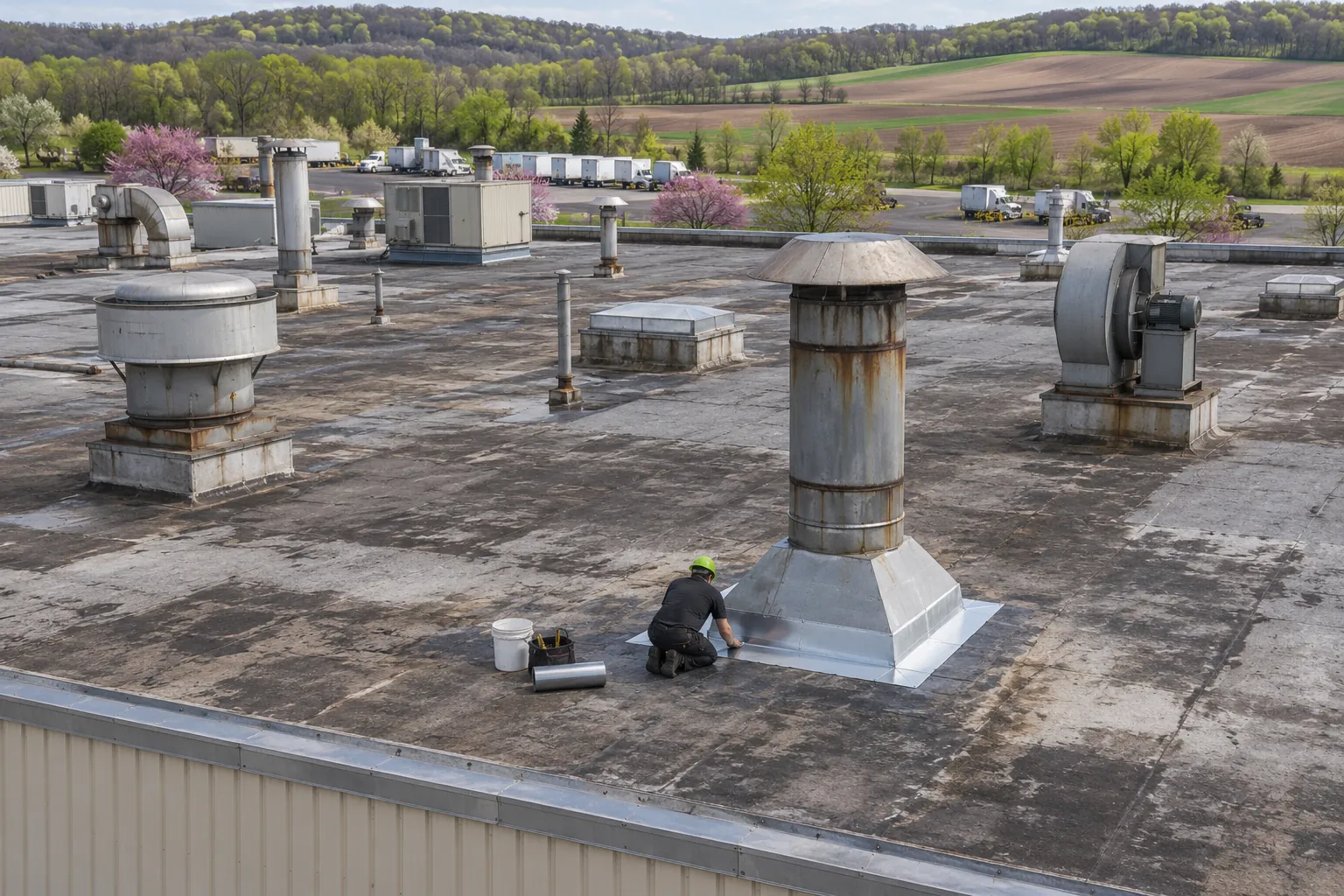
Plant roofs around Red Lion carrying equipment supports and stands that need flashing and attachment checks.
Call us with what is mounted on the roof and where water shows below it. We will check whether the mount is still needed.
Four steps sort the roof's old attachments and repair the openings around them.
We record each mount, brace, and support on the roof, along with its condition and whether anyone still uses it.
Bases, anchors, pitch pockets, and the membrane around each support are checked for corrosion, movement, and open flashing.
You decide with us which mounts stay. Active ones get new flashing and anchors, and unused ones are scheduled for removal.
Removed mounts leave openings that get new deck where needed, insulation, and membrane tied into the surrounding roof.
Red Lion is one of six places where we take commercial roof repair work. Building somewhere else? Call us or send us a message.
| Town | County | What We See On Roofs There |
|---|---|---|
| YorkHome Base | York County | Our home base, where older downtown and industrial roofs carry the same kinds of leftover mounts. |
| Hanover | York County | Machinery and equipment shops where leaks often show above overhead door tracks. |
| Elizabethtown | Lancaster County | Food plants with exhaust equipment that gets serviced on the roof. |
| Steelton | Dauphin County | Plant roofs where owners weigh competing repair boundaries. |
| Oxford | Chester County | Equipment businesses finishing interior repairs after a roof leak. |
Answers for Red Lion owners with older roofs and leftover rooftop equipment.
The mounts need an inspection of their attachment, corrosion, and flashing. We first establish whether each one is still in use before deciding to repair or remove it. An unused penetration can sometimes be eliminated, but its opening has to be rebuilt as part of the roof assembly instead of simply being capped.
After the owner confirms the mount is unused, the mount and its anchors come off, the opening is inspected, and any damaged deck is repaired. New insulation and membrane are then tied into the surrounding roof. Carriers or tenants with equipment on the roof should be contacted before anything is removed.
The old flashing and any sealant patches come off so the deck and insulation around the opening can be checked. The opening is filled with matching deck and insulation, and new membrane laps onto solid roofing on every side. A metal cap sealed over the hole tends to leak again because it never becomes part of the roof.
When the mount is firm and only its flashing has failed. If the base is corroded or the anchors are loose, the attachment is repaired first, since new flashing around a moving mount cracks again. We check both before recommending a repair, and we show you what we found at each mount.
Yes, as long as its attachment and flashing are kept in good repair. Many owners remove unused mounts during a repair visit because each one is another opening to maintain. We show you the condition of each mount so you can decide which ones to keep.
Tell us what is mounted on the roof and where leaks show inside. We will inspect each attachment and price the repair or removal.